Ruine Puxer-Loch, Cave castle in Teufenbach-Katsch, Austria.
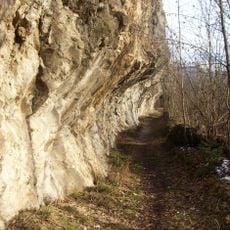
Ruine Puxer-Loch is a cave castle ruin on the southern slope of Pleschaitz mountain in Teufenbach-Katsch, Austria, made up of two structures cut into the limestone cliff. The walls and rooms are built directly into the rock face, combining natural cave openings with constructed elements.
Schallaun Castle is first documented in 1181, named for Machward of Schalun; Luegg was likely built at the same time by the Lueger family. Schallaun was sold to the Liechtensteins in 1472 and occupied by Hungarian troops in 1481–1490, while Luegg became a fief of the Counts of Cilli in the 15th century. From the 16th century both declined; Luegg was probably abandoned by the 1600s, and Hungarian soldiers cleared the caves in 1769. Both ruins and nearby Schloss Pux remain private property of the Pranckh family.
The name Puxer-Loch comes from a Middle High German word meaning hole or hollow, which points directly to what makes this place unusual. Visitors can still see how natural recesses in the rock were shaped into rooms and passageways.
A hiking trail starting near a parking area by the Mur River leads to the ruin in about half an hour. The last section is steep and rocky, so sturdy footwear is strongly recommended.
Local tales speak of hidden tunnels linking the two caves, but surveys found no secret passage between Luegg and Schallaun. The caves were instead joined along the cliff face by a bridge or wooden walk, of which no trace survives. Beam sockets and painted plaster inside Luegg still mark where multi-storey rooms stood.
The community of curious travelers
AroundUs brings together thousands of curated places, local tips, and hidden gems, enriched daily by 93,836 contributors worldwide.