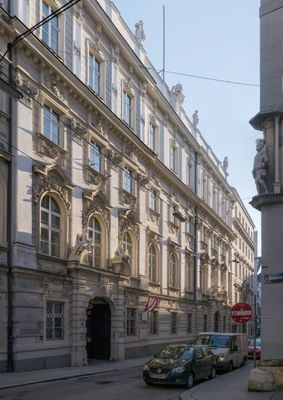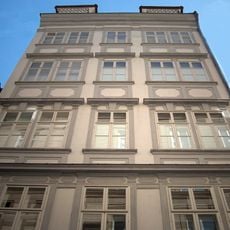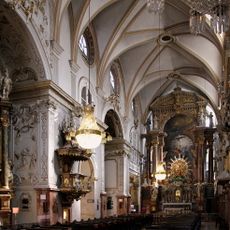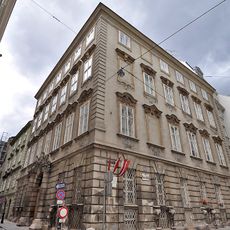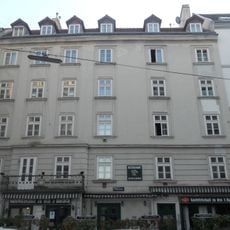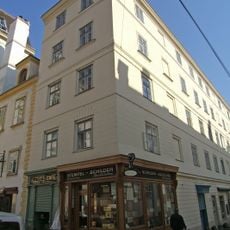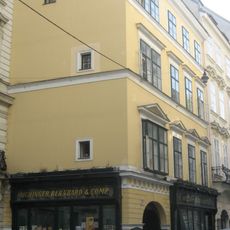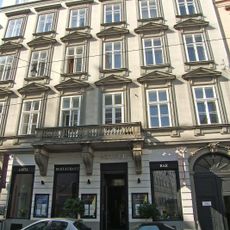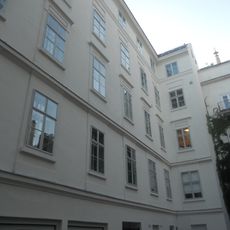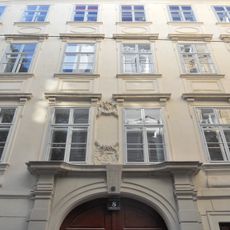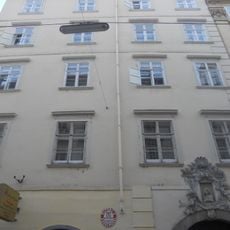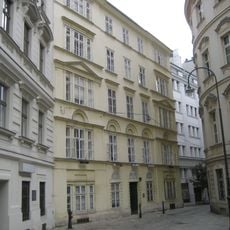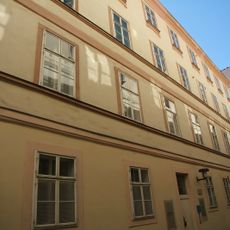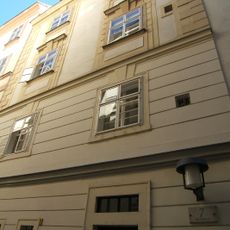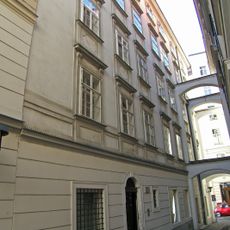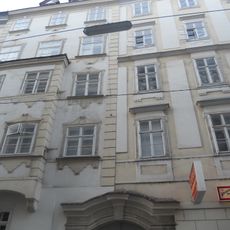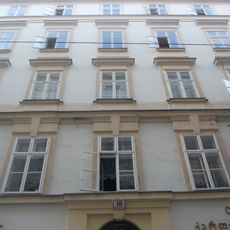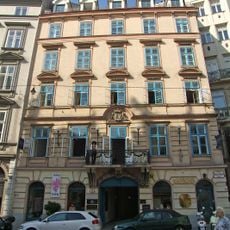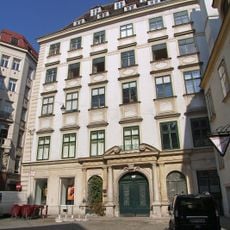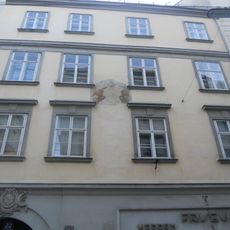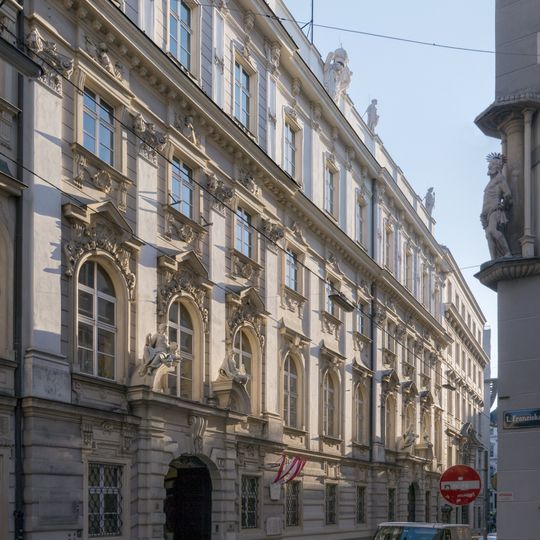
Palais Rottal, Baroque palace in Innere Stadt, Vienna, Austria.
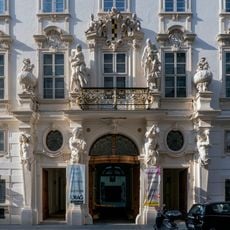
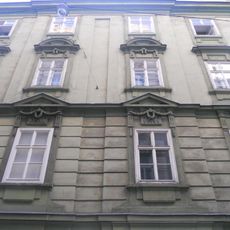
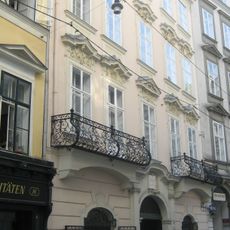
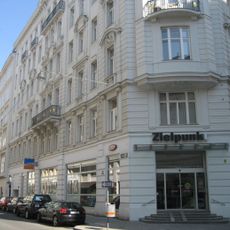
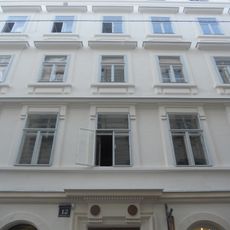
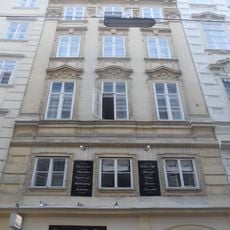
The Palais Rottal occupies the corner of Singerstraße and Grünangergasse, formed by merging a 17th-century palace with the Billiotte foundation house. Its baroque facade dates largely from Franz Anton Pilgram's 1752 rebuild, which added a storey and a central courtyard. The two original portals and the vestibule survive from the earlier building.
The original palace was probably built between 1667 and 1683 by converting an earlier structure; its architect is unknown but it is attributed to Giovanni Pietro Tencalla, who worked for the Rottal family. In 1752 Franz Anton Pilgram, a pupil of Johann Lucas von Hildebrandt, rebuilt it for the Wiener Stadtbank, adding a storey and a central courtyard. Only the two portals and the vestibule survive from the first building.
The name recalls the Rottal family, who commissioned the original palace; the neighbouring house was founded by Franz Billiotte, personal physician of Emperor Leopold I, who gave the poor lodging, food and free medical consultations there. Since 1983 the Volksanwaltschaft (Austrian Ombudsman Board) has used part of the building, while the Finanzprokuratur occupies the rest since 1981.
The palace occupies the corner of Singerstraße and Grünangergasse; the main entrance is on Singerstraße. It is not open to the public, but the baroque facade and the two surviving portals of the original building can be seen from the street. The Prunkstiege staircase is inside and not accessible.
The palace incorporates sculptures from Prince Eugene's former Winter Palace that were relocated to the roofline during 19th-century renovations, creating an unusual architectural fusion.
The community of curious travelers
AroundUs brings together thousands of curated places, local tips, and hidden gems, enriched daily by 92,722 contributors worldwide.