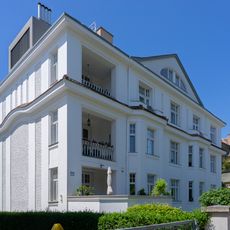
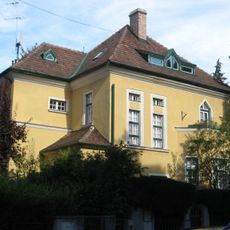
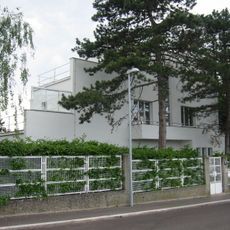
Villa Regenstreif, Manor house in Währing, Austria
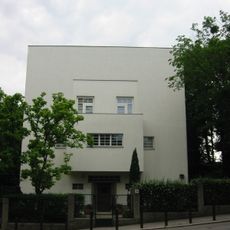
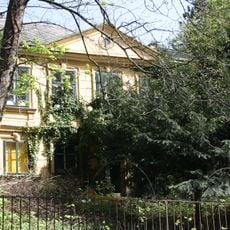
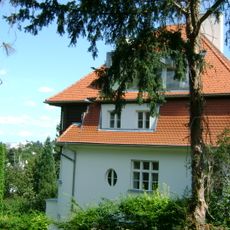
Villa Regenstreif was a villa in Vienna's 18th district, Währing, built from 1913 to 1917 by architect Friedrich Ohmann for industrialist Fritz Regenstreif. The main house stood mid-plot between Pötzleinsdorfer Straße and Starkfriedgasse, its salons and private rooms lined with wood panelling and marble. The basement held a private cinema, a bowling alley and an orangery.
Fritz Regenstreif, a timber industrialist, had architect Friedrich Ohmann build the villa from 1913 to 1917. In March 1941 he was forced to sell it far below value to the Nazi German Labour Front; he died that same year. After restitution to his heirs in 1953, the family sold it in 1958. A fire during renovations on 17 March 1964 led to its demolition.
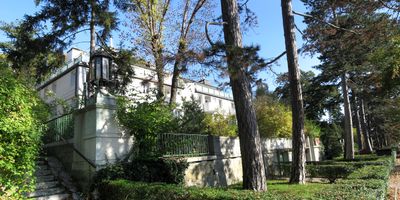
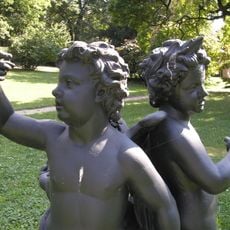
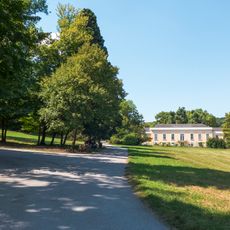
The garden served as a leisure space where exotic plants and sculptures could be enjoyed among traditional European landscaping. Such grand grounds reflected the owner's wealth and taste, inviting guests to spend time outdoors and admire the collection.
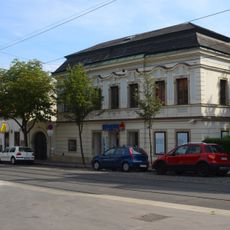
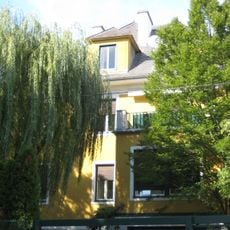
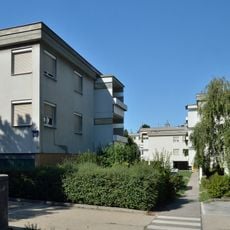
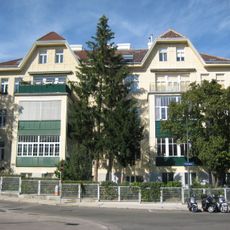
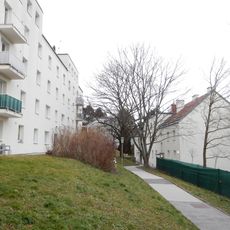
The site was located at the intersection of Pötzleinsdorfer Strasse and Starkfriedgasse in the Währing district. Today, the area is a typical residential neighborhood where you can walk through to understand the historical location and surrounding development.
The villa's name lives on in the writings of Ivan Illich, the philosopher and critic who spent 1932 to 1942 here as a boy and called the estate "Pötz". His 1938 account of the grounds, written when he was eleven, describes the days just before the Anschluss. His grandfather Fritz Regenstreif is buried at Pötzleinsdorfer Friedhof, where the gravestone gives his death date wrongly as 3 May instead of 8 May 1941.
The community of curious travelers
AroundUs brings together thousands of curated places, local tips, and hidden gems, enriched daily by 92,840 contributors worldwide.