Schloss Köppach, building in Atzbach, Austria
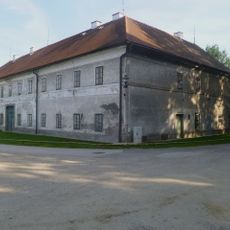
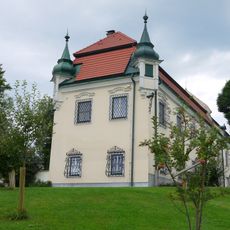
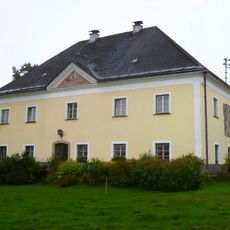
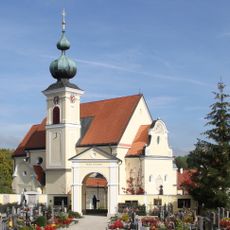
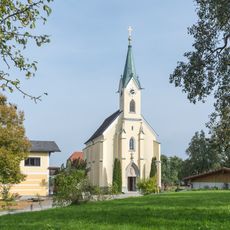
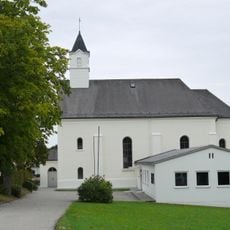
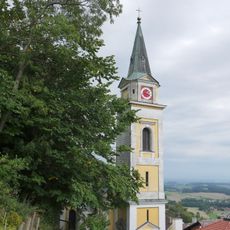
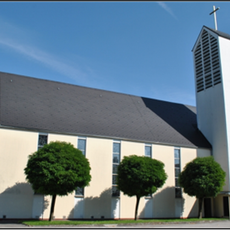
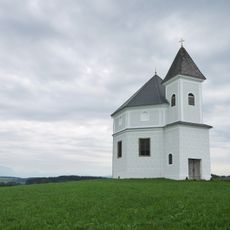
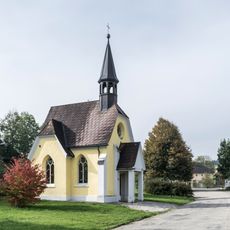
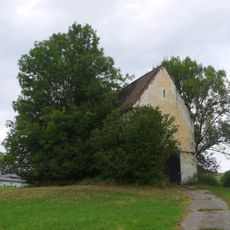
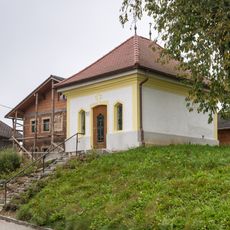
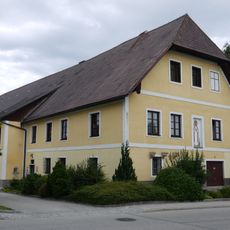
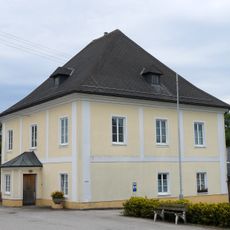
Schloss Köppach was a castle in the Atzbach district of Vöcklabruck, Upper Austria. A 1674 engraving by Georg Matthäus Vischer shows it surrounded by ponds, with a two-storey forebuilding, a five-storey main building with two flattened corner towers and a pointed central tower. After a lightning strike on 25 July 1858 it burned down and was rebuilt with only two storeys; it was demolished in 1962 down to the surviving buildings. What remains are the former castle chapel of St. Jakob, the renovated manor hospital now used as housing, the former court building and the Köppach mausoleum.
Köppach is first documented in 1344 as a Schaunberg fief held by Ulrich der Anhanger; after the Schaunbergs' defeat by Duke Albrecht III, feudal lordship passed to the Wallseer. In 1551 the castle came through Benigna Anhanger to Wolfgang Jörger, whose family held the estate until 1638. A lightning strike burned the multi-storey castle on 25 July 1858, after which it was rebuilt with only two storeys; in 1962 it was demolished down to the surviving buildings.
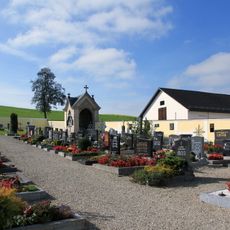
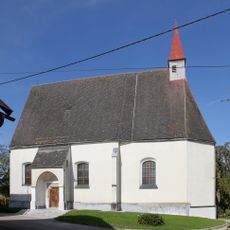
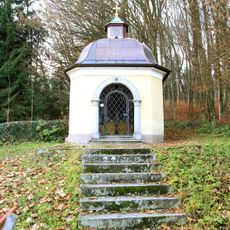
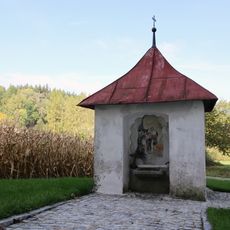
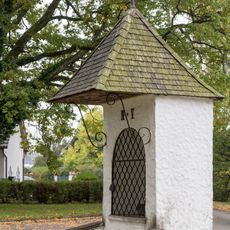
The name Köppach comes from the Schaunberg fief of Ulrich der Anhanger von Cottpach, first recorded in 1344. The former castle chapel of St. Jakob, the renovated Herrschaftsspital now used as housing, and the former court building survive. The Köppach mausoleum holds the owners' crypt; above its entrance is a coat of arms, and left of the altar a marble relief of the Resurrection.
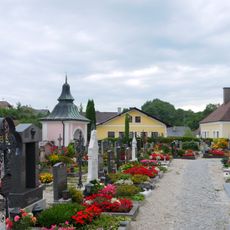
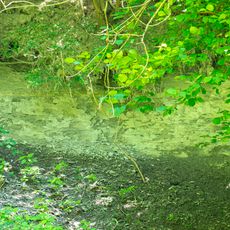
The castle no longer stands: it was demolished in 1962 down to the surviving buildings, and its remains lie buried under the meadow beside the pond. What visitors can see today are the former chapel of St. Jakob, the renovated manor hospital now used as housing, the former court building and the Köppach mausoleum, all in private ownership.
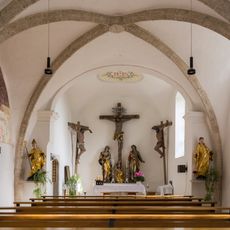
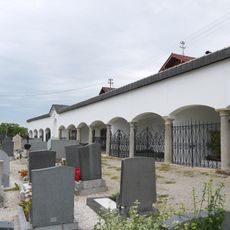
The Köppach mausoleum holds a marble relief of the Resurrection of Christ to the left of the altar. Behind the altar an inscription records that the caretaker Franz Blaschek had the chapel painted in 1845 by the Linz artist Johann Feichtinger and restored in 1948 by Stefan Rusche-Wolfsegg. A coat of arms sits above the entrance.
The community of curious travelers
AroundUs brings together thousands of curated places, local tips, and hidden gems, enriched daily by 92,882 contributors worldwide.