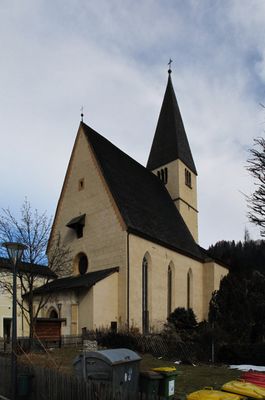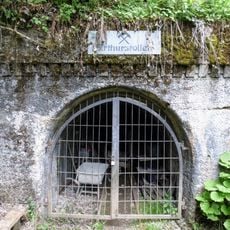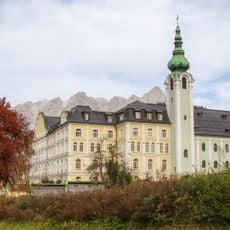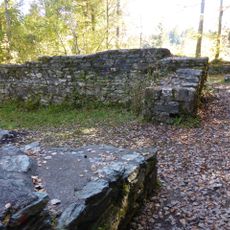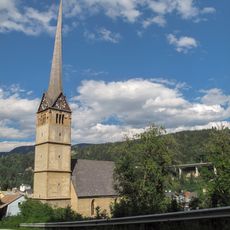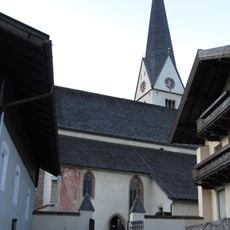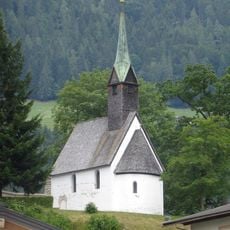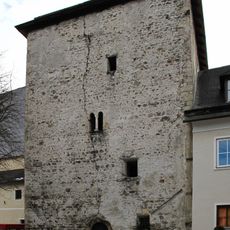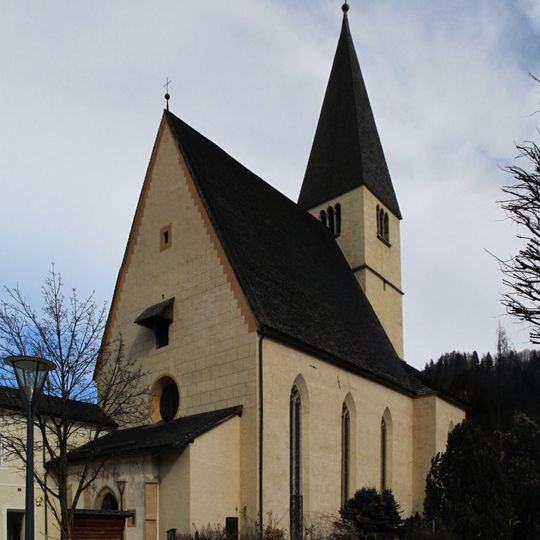
Kath. Pfarrkirche hl. Maximilian Bischofshofen, Parish church in Bischofshofen, Austria
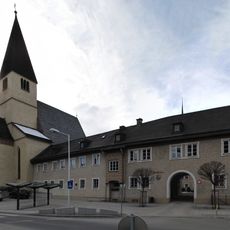
The Parish Church of St. Maximilian stands on the site of the Cella Maximiliana, founded in 711/12. Its rare Alpine layout has a transept and a crossing tower recalling Rhineland models; the transept dates from the 13th century, the choir from the 14th, and the present form from around 1450. The crossing is covered by a ribbed vault with eight ribs around a keystone, and the side rooms have mirrored star vaults.
Archaeological excavations in 1953 revealed foundations of an earlier monastery church dating to the 8th or 11th century. This discovery shows that this site served as a religious center from very early times.
The high altar, built in Bavaria around 1680, has a two-storey structure with twisted columns. Its lower part shows the Gnadenstuhl (Throne of Grace) carved like a late-Gothic altarpiece, flanked by figures of Emperor Henry II and his wife Saint Cunigunde, along with Saint Anne and Saint Joseph. The top holds a statue of Saint Maximilian, added by Johann Senoner in 1923.
The church welcomes visitors during regular service times and is easily accessible to the public. Those interested in viewing the interior and the organ should check when services take place or contact the parish office.
Above the tomb of Bishop Silvester Pflieger hangs an altarpiece of the Adoration of the Magi, painted in 1693 by Johann Friedrich Pereth. The Rupertus Cross, the oldest known Christian art object in Austria, was made in England or Ireland in the second half of the 8th century and came to Salzburg under Bishop Virgil; the original is now in the Salzburg cathedral museum.
The community of curious travelers
AroundUs brings together thousands of curated places, local tips, and hidden gems, enriched daily by 94,215 contributors worldwide.