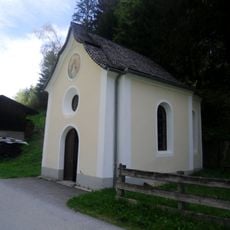
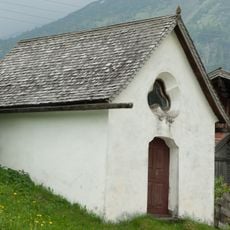
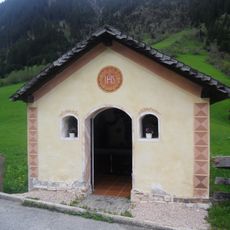
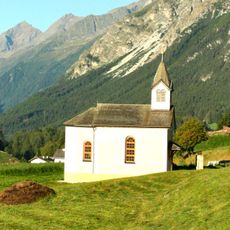
Sankt Magdalena im Gschnitztal, Pilgrimage chapel in Gschnitztal, Austria
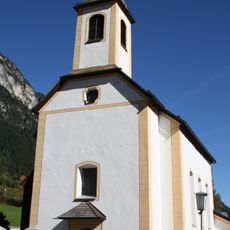
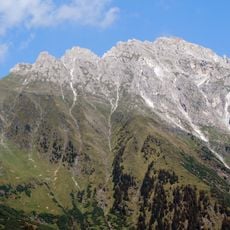
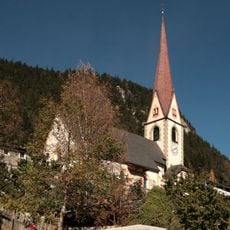
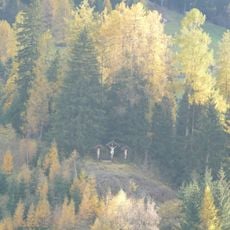
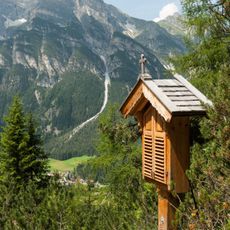
Sankt Magdalena im Gschnitztal is a small chapel perched on a rocky ledge high above a mountain slope. The structure sits between two valley systems and appears almost like a bird's nest clinging to the steep terrain.
The chapel was first documented in 1307. According to a legend recorded in the Gschnitz parish chronicle in 1766, a nobleman founded it in penance for his sins after a carved image of Saint Magdalene was found at the site; a folk tale names him a knight of Schneeberg who stayed on as a hermit. Pilgrimage flourished and was endowed by the Tyrolean princes, with Empress Maria Theresa donating 1000 gulden a year. Her son Joseph II abolished the pilgrimage in 1787; it revived after his death, and farmers from Ellbögen and Patsch kept up votive processions for a good harvest until 1938.
The name comes from a legend recorded in the Gschnitz parish chronicle in 1766: a nobleman doing penance for his sins wanted a church to Mary Magdalene, and a carved image of the saint was found at the chosen spot; a folk tale names him a knight of Schneeberg who stayed on as a hermit. Farmers from Ellbögen and Patsch held processions here for a good harvest until 1938.
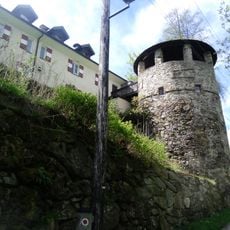
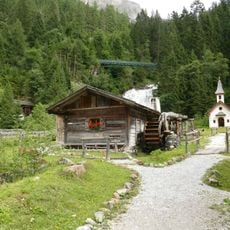
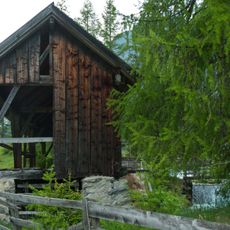
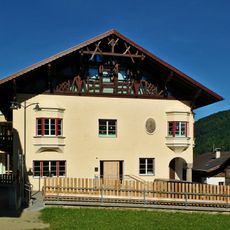
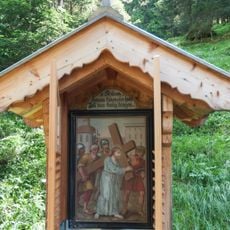
The chapel stands at 1661 m on a rocky spur about 400 m above the Gschnitztal valley floor. It is reached on hiking trails from Gschnitz and Trins, or via a via ferrata from Gschnitz; from Gschnitz a path with 14 Stations of the Cross leads up to it. The former hermitage beside the chapel now serves as a snack station.
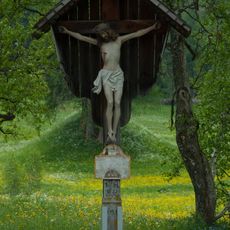
Inside the chapel are well-preserved wall paintings from the 13th century that lay hidden under plaster for centuries. The altar displays a modern crucifix from the mid-20th century, creating an interesting contrast with the ancient frescoes.
The community of curious travelers
AroundUs brings together thousands of curated places, local tips, and hidden gems, enriched daily by 94,071 contributors worldwide.