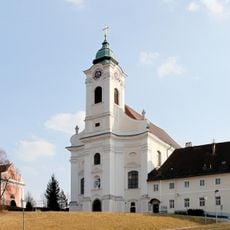
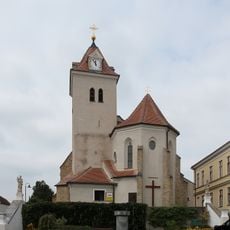
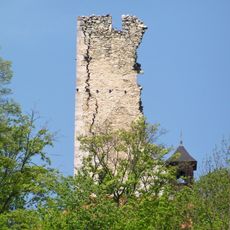
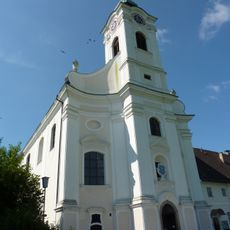
Schloss Gurhof, Heritage castle in Dunkelsteinerwald, Austria.
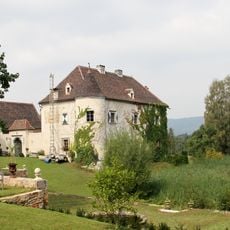
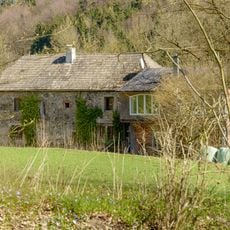
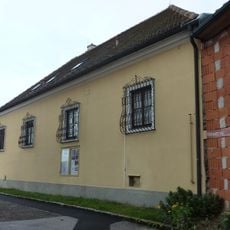
Schloss Gurhof is a long, rectangular castle complex centered around a grand courtyard with the main manor house and agricultural buildings extending along both sides. The buildings are arranged to form one unified compound that historically served as both a residence and working estate.
Jörg Hasiber von Hag, captain of Göttweig Abbey, built the first structure between 1483 and 1493 on land held by the Wolfstein lordship; half was a Bavarian fief and half his free property. In 1619 Emperor Ferdinand II confiscated the estate from the Protestant Starhemberg family, and by 1630 Göttweig Abbey owned it outright. Abbot Gottfried Bessel had it rebuilt as a symmetrical Baroque palace from 1723 to 1731 with architect Johann Lucas von Hildebrandt.
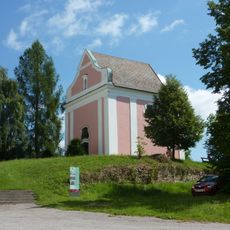
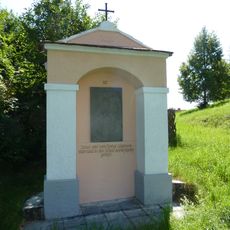
The chapel was built under Abbot Georg II. Falbius after Göttweig acquired the estate in 1630. Its portal, set at an angle, carries the coats of arms of Abbot Johannes V. Dizent and of Göttweig Abbey, and a wide oval window lights the interior. The estate is marketed as a film location, and some rooms can be rented for private celebrations.
Schloss Gurhof stands about 1.5 km south of Gansbach's centre, directly on the road from Gansbach to Kicking. The grounds are private and can only be viewed from outside during public events; some rooms are rented for private celebrations. The west wing holds guest apartments and staff flats, while the east wing is largely used by a riding centre.
The two slender square towers flanking the south facade lost their original roofs and two uppermost storeys in the 1970s; they now carry tent-shaped helms with weather vanes. The chapel portal, set in the eastern part of the central wing, bears the coats of arms of Abbot Johannes V. Dizent and of Göttweig Abbey.
The community of curious travelers
AroundUs brings together thousands of curated places, local tips, and hidden gems, enriched daily by 94,302 contributors worldwide.