Schloss Ginselberg, Castle in Scheibbs, Austria
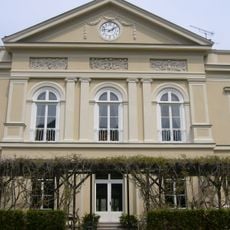
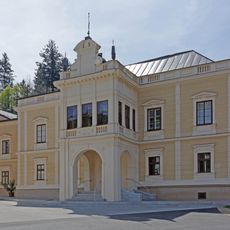
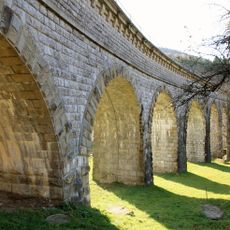
Schloss Ginselberg, also known as Schloss Schönfeldt, is a broad two-storey building with a hipped roof, a central risalit and side risalits, standing on a small hillside terrace above a tuff quarry in the Erlauftal southwest of the Neustift factory settlement. The plain structure has flat ceilings inside and is partly opened on the ground floor by vaulted arcades.
The building originally opened in 1827 as a mirror factory and was transformed into a castle in 1863 through extensive renovations by Anton Graf von Schönfeld. This fundamental redesign marked a shift from industrial to aristocratic use.
The name Ginselberg alternates in the sources with Schönfeldt, after the family that has owned the estate since Anton Reichsgraf von Schönfeld bought it in 1863; his descendants still hold it today under Carl Ludwig Schönfeldt. In the outbuilding Ginselberg 12, a Schlosspension opened in 1935, later a home for the blind, and since 1975 the Buddhist Centre Scheibbs, one of the oldest Buddhist institutions in the German-speaking world.
The castle stands on a hillside terrace above a tuff quarry, southwest of the Neustift factory settlement in the Erlauftal valley, away from the town centre of Scheibbs. The two-storey building has a hipped roof and a central risalit with side risalits; the ground floor opens in places into vaulted arcades. The chapel installed in 1881 no longer exists, so visitors should not expect to find it.
Heinrich Graf Schönfeldt, born at the castle in 1884, was a racing driver and driver of the world's first tank; he lived at Ginselberg until his death in 1963. After that the building decayed and was only renovated in 2009/10. The estate has stayed in the family's hands since 1863, now held by Carl Ludwig Schönfeldt.
The community of curious travelers
AroundUs brings together thousands of curated places, local tips, and hidden gems, enriched daily by 94,335 contributors worldwide.