Onze-Lieve-Vrouwekerk, Baroque church in Sint Pieters, Ghent, Belgium
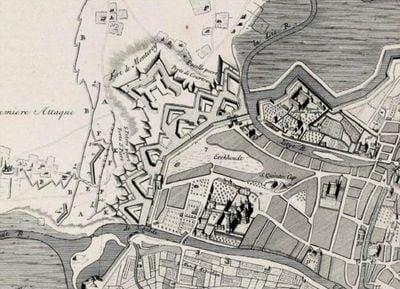
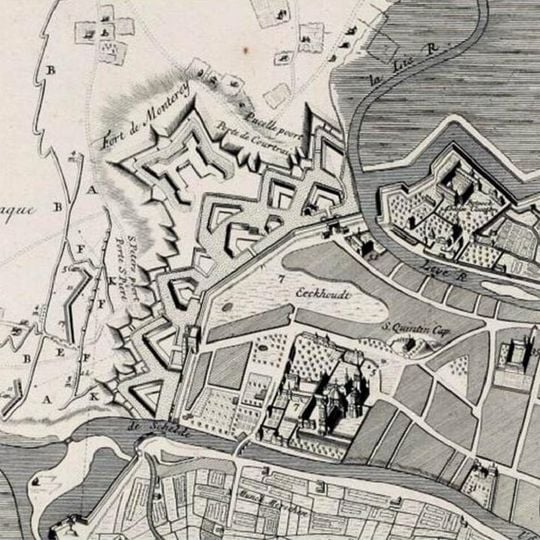
Onze-Lieve-Vrouwekerk was a three-aisled Gothic church with a transept and a complex choir, demolished in 1799 during the French occupation and never rebuilt. Old images show its cross-shaped footprint; recent archaeological research places the whole three-aisled lower church under today's Sint-Pietersplein, the square laid out in the 19th century on the space freed by the demolition.
The Onze-Lieve-Vrouwekerk stood near the Sint-Pietersabdij in Ghent as a three-aisled Gothic church with a transept and a complex choir. It was demolished in 1799 during the French occupation and never rebuilt. Archaeological research has located its entire nave beneath today's Sint-Pietersplein, a square laid out in the 19th century on the cleared site.
The church was demolished in 1799 during the French occupation and never rebuilt. Its name passed to the Sint-Pieterskerk of the Sint-Pietersabdij, now called Onze-Lieve-Vrouw-Sint-Pieterskerk. The nearby Tweekerkenstraat recalls both churches, and the 19th-century Sint-Pietersplein covers the site of the former nave.
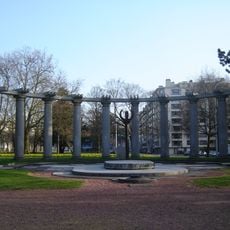
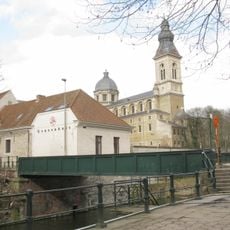
The church no longer exists: it was demolished in 1799, and its site lies under the present Sint-Pietersplein, laid out in the 19th century. The square is open and level, with the Escaut river band along its edge. Look for the Tweekerkenstraat beside the Sint-Pieterskerk, whose name recalls both churches.
The church was demolished in 1799 under the French occupation and never rebuilt, like the cathedrals of Bruges and Liège and St Michael's Abbey in Antwerp. Archaeology places its three-aisled nave under today's Sint-Pietersplein, laid out in the 19th century on the cleared ground; the name passed to the abbey church, now Onze-Lieve-Vrouw-Sint-Pieterskerk.
The community of curious travelers
AroundUs brings together thousands of curated places, local tips, and hidden gems, enriched daily by 94,573 contributors worldwide.