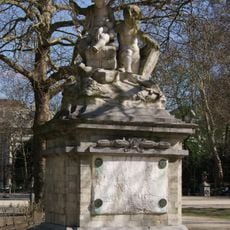
Brussels Park, Protected heritage site in Royal Quarter, Belgium
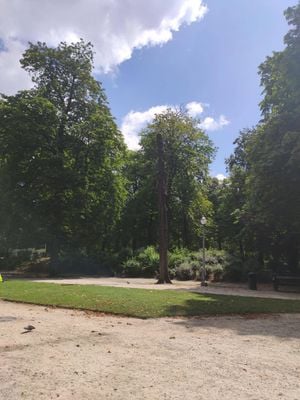
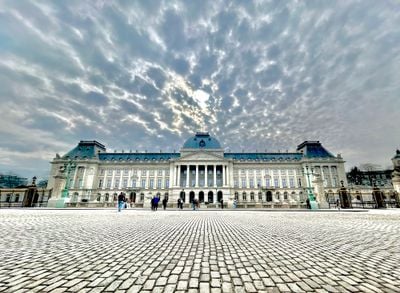
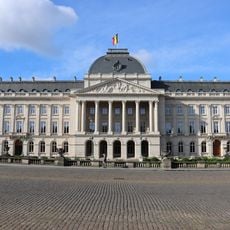
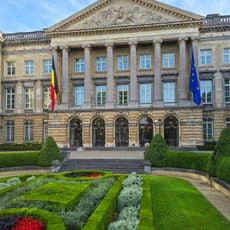
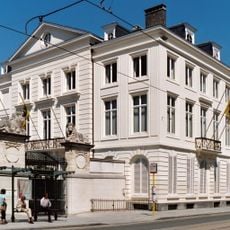
Brussels Park is a rectangular, 13.1-hectare public park in the Royal Quarter, bounded by Rue Royale, Rue de la Loi, Rue Ducale and Place des Palais. Its main entrance on the north side faces the Palace of the Nation, the Belgian House of Parliament. From there an avenue leads to the main pond, and three further avenues open views to the Palace of Justice, the Royal Palace and the Place du Trône. The park is enclosed by a double row of lime trees.
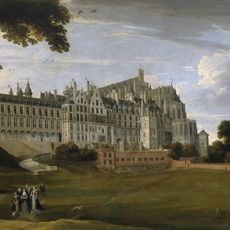
Brussels Park occupies the site of the gardens of the Palace of Coudenberg, a ducal residence that burned down on the night of 3 February 1731. The park was laid out between 1776 and 1783 by architect Gilles-Barnabé Guimard and landscape architect Joachim Zinner, as part of a plan including the Place Royale. In 1793 French revolutionaries destroyed its statues, and in 1830 the park served as a refuge for the army of the United Kingdom of the Netherlands during the Belgian Revolution.
The park's name comes from the Warande, the old ducal game reserve on this site. Its straight avenues are laid out in a patte-d'oie, framing views of the Palace of Justice, the Royal Palace and the Place du Trône. Since the 19th century a double row of lime trees has lined its edges.
The park has multiple entrances from different directions, with nearby metro stations making it easy to reach. Visitors should expect flat pathways and can explore the grounds freely at any time of day.
The grounds underwent a massive replanting project that removed over a thousand mature trees and introduced new plantings, reflecting the determination to reshape the space. This large-scale approach to vegetation was uncommon for its era and later influenced how other European cities designed their parks.
The community of curious travelers
AroundUs brings together thousands of curated places, local tips, and hidden gems, enriched daily by 93,783 contributors worldwide.