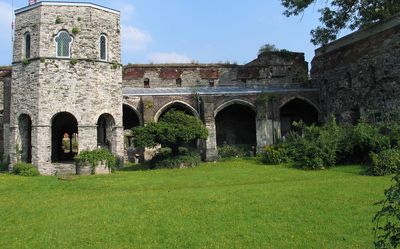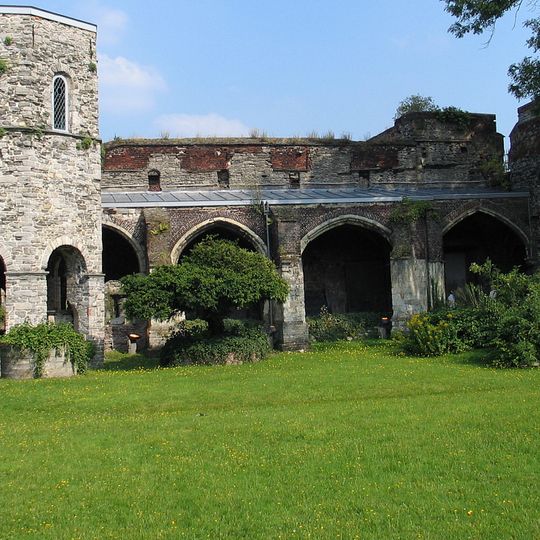
St Bavo's Abbey, Ghent, Romanesque abbey ruins in Ghent, Belgium.
St Bavo's Abbey is a monastery ruin in Ghent, Belgium, where stone walls, arches, and an octagonal lavatorium from the 12th century still stand. The grounds also house a lapidary museum with tombstones and stone carvings from the monastic period.
The abbey was founded in the 7th century by Saint Amandus and grew into one of the most important religious centers in the region. In 1540, Emperor Charles V ordered it demolished as punishment after Ghent rebelled against his rule.
The name Ganda, of Celtic origin, means "river mouth", referring to where the Leie meets the Scheldt. The abbey church was long a setting for diplomacy and dynastic events: John of Gaunt, fourth son of Edward III, was born here in 1340, and Philip the Bold married Margaret of Male here on 19 June 1369.
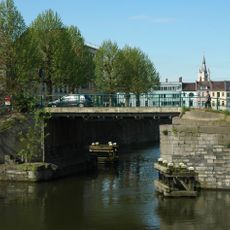
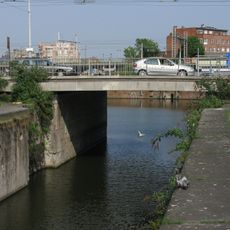
The ruins are freely accessible and managed by Historische Huizen Gent. Only part of the Romanesque and Gothic convent buildings survives, so the remains are compact and can be walked through without a fixed route. The site lies near the confluence of the Leie and Scheldt, in the area still called Ganda after the Celtic word for river mouth.
The abbey's name Ganda comes from a Celtic word for river mouth, referring to the Leie flowing into the Scheldt. The monks founded Saint Bavo Church in Aardenburg in 959. Abbot Raphael de Mercatellis, from 1478, used abbey money to commission lavish illuminated manuscripts.
The community of curious travelers
AroundUs brings together thousands of curated places, local tips, and hidden gems, enriched daily by 93,391 contributors worldwide.