Museum of Ixelles, Art museum in Ixelles, Belgium.
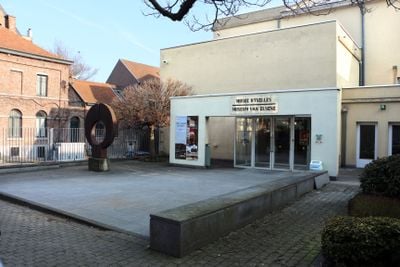
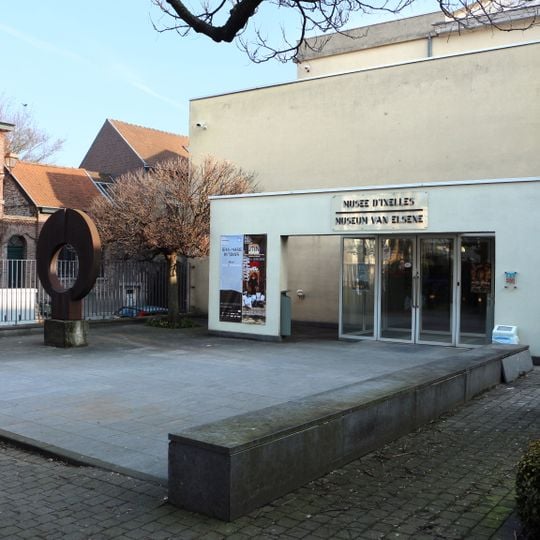
The Museum of Ixelles occupies a former slaughterhouse converted for the 1892 opening, at 71 rue Jean Van Volsem. Its flat-roofed, pale beige facade has a projecting entrance with glass doors and a panel reading "MUSÉE D'IXELLES" above "MUSEUM VAN ELSENE". A windowless upper wall rises behind, and a 1973 wing added exhibition halls and storage.
The museum was established in 1892 when a local painter donated his art collection to the city. Later patrons and collectors significantly expanded the holdings over the following decades.
The museum's name appears in both French and Dutch on its facade, reflecting the bilingual municipality of Ixelles. Its poster collection includes nearly all the lithographs of Henri de Toulouse-Lautrec, the largest such holding worldwide, alongside about 700 works by Belgian and European artists from the Belle Époque to the 1950s. The sculpture section centres on Rik Wouters, with a version of his work Het zotte geweld.
The museum stands at 71 rue Jean Van Volsem/Jean Van Volsemstraat in Ixelles, a short walk from the Bailli/Baljuw stop on Brussels tram lines. It has been closed since 2018 for renovation and expansion into the neighbouring building acquired in 2009; the reopening is planned for 2025, so confirm access before travelling.
The museum holds nearly all of Henri de Toulouse-Lautrec's lithographic posters, described in its Dutch-language documentation as the largest such collection in the world. A separate bequest came from Joseph Botte, a grenadier who left 576 posters to the museum in 1906. The poster holdings also include work by Alphonse Mucha and Henri Privat-Livemont.
The community of curious travelers
AroundUs brings together thousands of curated places, local tips, and hidden gems, enriched daily by 93,454 contributors worldwide.