Hôtel Albert Ciamberlani, Art Nouveau mansion in Ixelles, Belgium
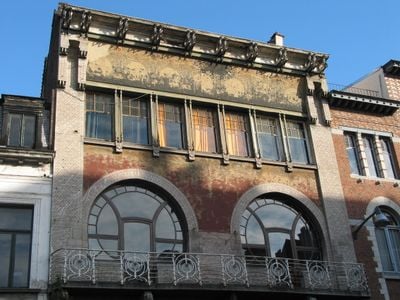
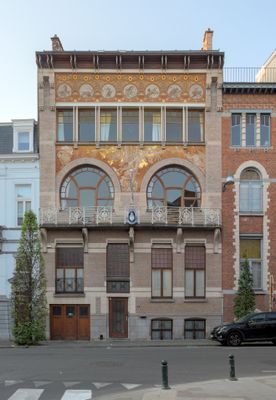
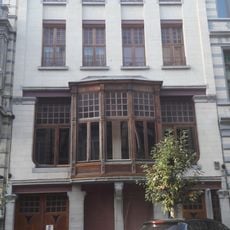
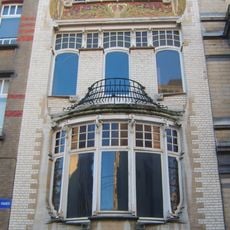
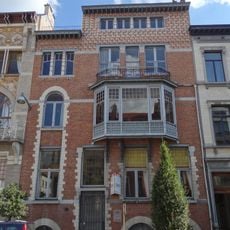
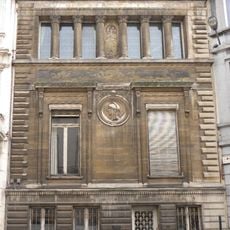
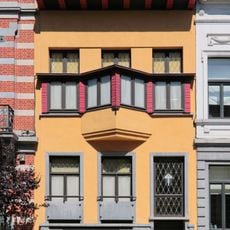
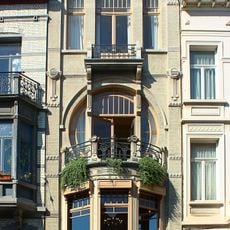
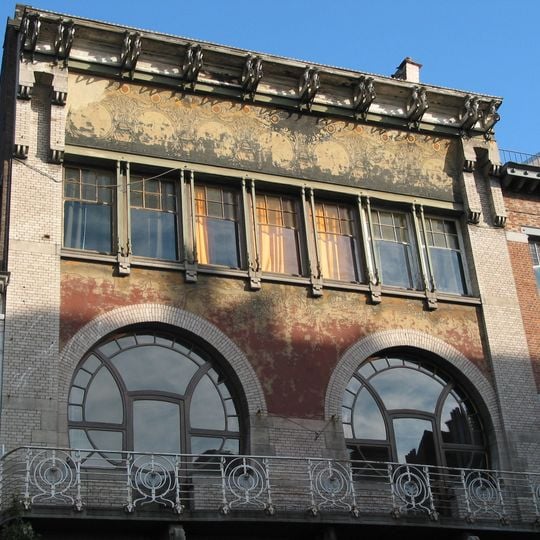
The Hôtel Albert Ciamberlani is a narrow brick Art Nouveau house on Rue Defacqz in Ixelles, built in 1897 by Paul Hankar for the symbolist painter Albert Ciamberlani. Its light brown facade, banded with darker brick, carries a frieze of circular medallions at the top and a large golden-brown sgraffito mural by Adolphe Crespin between two arched wooden-framed windows. A white wrought-iron balcony runs before the arches, and the entrance door sits off-centre at street level.
Belgian architect Paul Hankar designed the house in 1897 for painter Albert Ciamberlani during the rise of the Art Nouveau movement in Brussels. This project became a turning point, demonstrating how far residential design could push boundaries by experimenting with new materials and forms.
The building shows how artists and wealthy residents of that era chose to live, rejecting ornate decoration for modern design that was bold and unconventional. The exposed metal beams and geometric patterns represented a complete break from the traditional homes surrounding it.
The residence sits on a quiet residential street and is easy to view from outside, as the entire facade is visible from the road. Spending time examining the details is worthwhile, since the architectural features are not always obvious at first glance.
The front door is not positioned in the center of the facade but tucked to one side, completely reworking how the interior flows. This asymmetrical arrangement was highly unusual for private homes and shows how far the architect was willing to challenge conventional design.
The community of curious travelers
AroundUs brings together thousands of curated places, local tips, and hidden gems, enriched daily by 94,047 contributors worldwide.