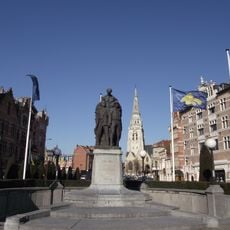
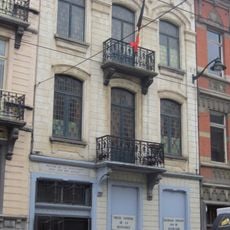
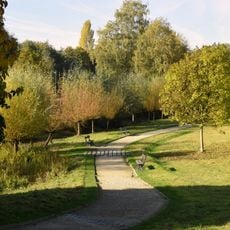
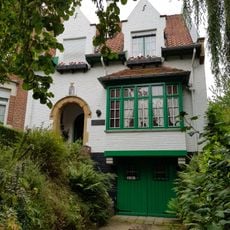
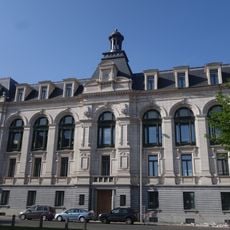
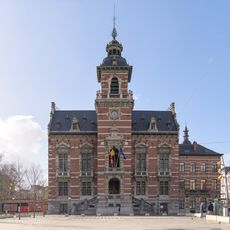
Beguinage of Anderlecht, Renaissance religious community in Anderlecht, Belgium
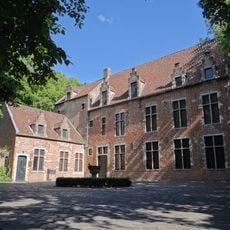
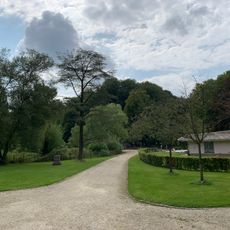
This beguinage in Anderlecht is a residential complex built around an enclosed courtyard where a central well still stands among the garden areas. The buildings display Renaissance details mixed with additions from later periods, creating layers of construction in brick, white stone, and older wooden sections.
Founded in June 1252, the beguinage was one of the smallest in the southern Netherlands to keep its buildings. Statutes of 1611 limited it to eight women presented by a canon. The French Revolution ended the beguines' presence, and the buildings became a hospice for poor women; a museum opened in 1930.
The women living here maintained their own rules and kept their independence while supporting the community through crafts and care work, a way of life visible in how the courtyards and workshops are still arranged.
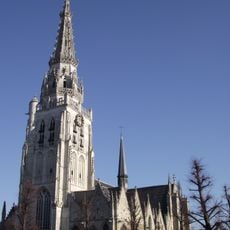
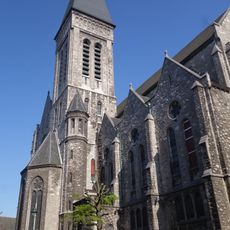
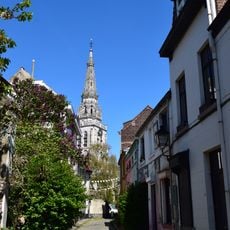
The museum closed for restoration work in 2021, and its reopening was expected in 2025; check the current status before travelling. The site lies at the foot of the Saints-Pierre-et-Guidon collegiate church, on the north side of the rue du Chapelain, a short walk from the Erasmus House.
The west wing keeps remains of a half-timbered building dated by carbon-14 to 1430-1460, extended westward in 1510-1514 according to dendrochronology. The beguinage is among the smallest in the southern Netherlands whose buildings survive. In 1780 beguine Isabelle de Wit taught poor girls of Anderlecht and won a years-long lawsuit against the local schoolmaster.
The community of curious travelers
AroundUs brings together thousands of curated places, local tips, and hidden gems, enriched daily by 94,368 contributors worldwide.