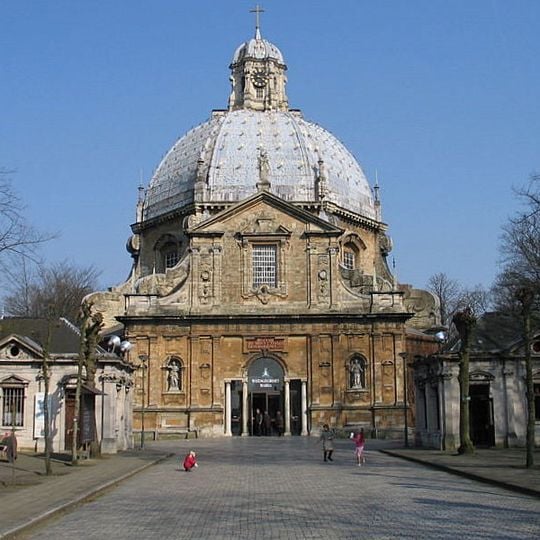
Basilica of Our Lady of Scherpenheuvel, Minor basilica in Scherpenheuvel-Zichem, Belgium
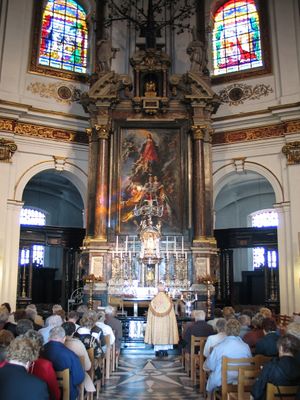
The Basilica of Our Lady of Scherpenheuvel is a domed Baroque church built on a seven-sided plan, with the main altar standing on the site of the original oak tree. Six chapels surround the central space, and a seventh side opens onto a vestibule flanked by two more chapels. An ambulatory links the side chapels, and the unfinished square bell tower stands opposite the vestibule.
Construction started in 1609 under architect Wenceslas Cobergher and marked the first major baroque church building in Flanders. The project emerged during a period of growing devotion to Mary in the region and influenced the design of later religious buildings.
The name Scherpenheuvel means "sharp hill", after the hill where a Virgin Mary statue hung in an oak tree. In the 16th century, Zichem families walked three times around the tree praying when someone was ill. The main altar now stands on that tree's site, and pilgrims still walk the ambulatory around the central space.
The church stands at the centre of a seven-pointed star plan laid out in 1605, with the main altar on the site of the original oak tree. An ambulatory behind the side chapels lets pilgrims walk around the central space without entering it. The unfinished square bell tower holds a 49-bell carillon and an internal staircase.
The dome has no windows and is sealed with lead; its interior is decorated with 298 gilded seven-pointed stars. The main altar stands on the spot where the oak tree with the original statue once grew. The statue itself is not in the dome.
The community of curious travelers
AroundUs brings together thousands of curated places, local tips, and hidden gems, enriched daily by 93,641 contributors worldwide.