Ommerstein Castle, Protected castle in Rotem, Belgium
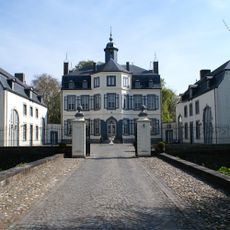
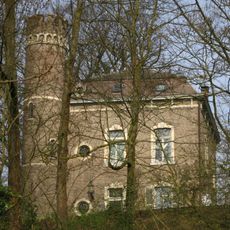
Ommerstein Castle is a rectangular stone structure with two parallel service buildings connected by wrought iron gates and surrounded by grounds that still contain sections of the original moat. The property sits within a park that features mature trees and walking paths throughout the landscape.
The building first appeared on the Ferraris map of 1771 as Château de Kessel before undergoing major renovation in 1786. This transformation changed its layout from an L-shaped to a U-shaped design.
The estate was recorded as Kesselhof in the 14th and 15th centuries, named after the Van Kessel family, first mentioned with Jan van Kessel in 1380. From 1428, after Catharina van Kessel married Arnold van Kriekenbeek, it was called Kriekenbeek. By the mid-17th century Elisabeth van Goldstein styled herself lady of Ommerstein and Rothem, and the lane beside the castle is named after Baron de Schiervel, who died there in 1866.
The grounds are accessible through walking paths that wind through the park, offering views of the building and landscape from multiple perspectives. Visitors should be prepared for varied terrain and wear appropriate footwear.
The park holds several giant sequoias and cedars of Lebanon; one cedar is believed to be the thickest in Belgium. Several ponds lie around the castle. The castle itself keeps an older tower, or donjon, that predates the 18th-century neo-classical main block.
The community of curious travelers
AroundUs brings together thousands of curated places, local tips, and hidden gems, enriched daily by 94,900 contributors worldwide.