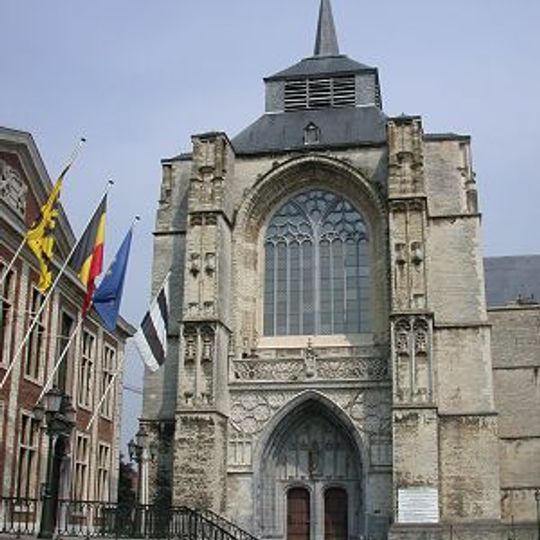
Sint-Sulpitius en Dionysiuskerk, Gothic parish church in Diest, Belgium.
Sint-Sulpitius en Dionysiuskerk is a Gothic church with pointed arches, stone vaults, and decorative tracery windows that reach toward the sky. The interior displays slender columns and ribbed vaults that create a sense of height and light throughout the building.
Construction began in 1321, replacing an earlier Romanesque building, with French architect Pierre de Savoye designing it based on cathedral models. The church gradually became an important religious and administrative center for the city.
The church is named after Saint Sulpitius the Pious, a 7th-century saint. Since 2008 a Mass for the repose of Philip William's soul has been held again, reviving a provision in his 1618 will. The church also holds a museum of religious art and a 47-bell carillon in the crossing tower nicknamed the "Mosterdpot".
The church stands on the Grote Markt, its main entrance under the pointed-arch portal of the west facade. The museum of religious art is housed inside the church itself, so a single visit covers both. The building is a protected monument; the four wax paintings by Edward Dujardin are in the chapel of Saint John Berchmans.
The church contains the tomb of Prince Philip William of Orange-Nassau, marking an important connection between this city and the Dutch nobility. This burial reflects how closely Diest was tied to prominent figures from the region's past.
The community of curious travelers
AroundUs brings together thousands of curated places, local tips, and hidden gems, enriched daily by 93,781 contributors worldwide.