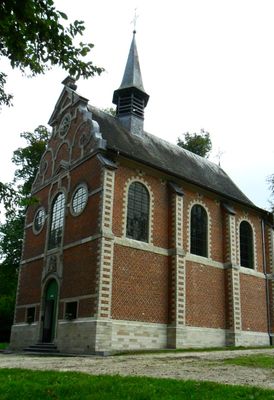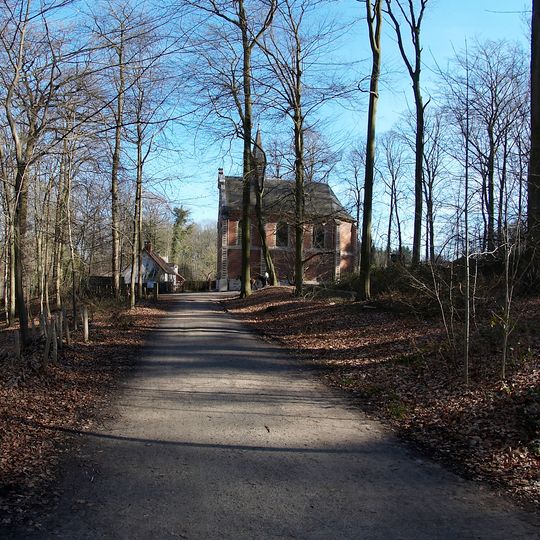
Onze-Lieve-Vrouw van Steenbergenkapel, Baroque chapel in Oud-Heverlee, Belgium.
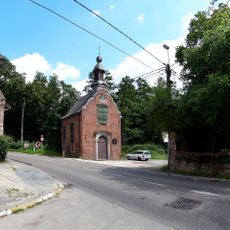
The Onze-Lieve-Vrouw van Steenbergenkapel is a baroque structure built from brick with white sandstone detailing that sits modestly in the Oud-Heverlee landscape. Its small, rectangular interior is marked by carved altars and stuccoed ceilings decorated with religious paintings.
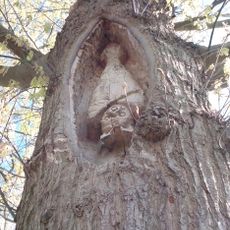
A wooden chapel was built in 1606 after healings were reported near a small Mary statue hung in an oak. Hendrik van Dongelberghe, lord of Steenbergen, replaced it in 1651 with the present brick and sandstone chapel, consecrated in 1652 by Archbishop Jacobus Boonen. His coat of arms remains above the entrance.
The chapel serves as a pilgrimage site for visitors drawn by its connection to Mary veneration. People come to this space to experience religious devotion while surrounded by ornate baroque decoration.
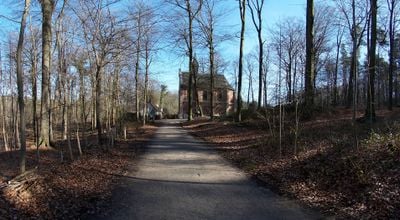
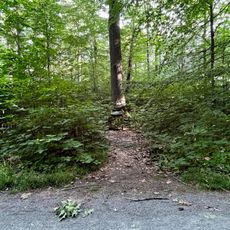
The chapel stands south of Oud-Heverlee at the end of the Kapellendreef, a path running from the Maurits Noëstraat between the Hertsvijver and Geertsvijver ponds, a few hundred metres east of the Spaans Dak. Its entrance faces the ponds, so the choir points south rather than east. The annual procession takes place on 15 August, and the Sint-Hubertus celebration on the first Sunday of November.
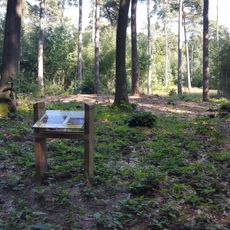
This site is connected to a natural spring called the Minnebron, long revered for its healing qualities. The water source existed long before the chapel was built and helped draw people to this location.
The community of curious travelers
AroundUs brings together thousands of curated places, local tips, and hidden gems, enriched daily by 94,306 contributors worldwide.