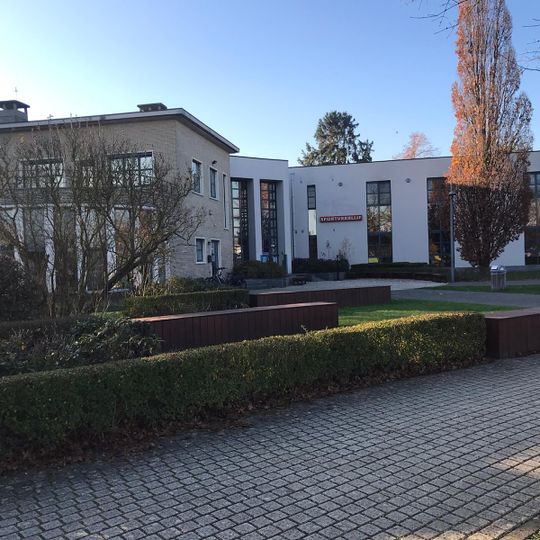
Domein Hofstade, recreation park in Hofstade, Zemst, Belgium
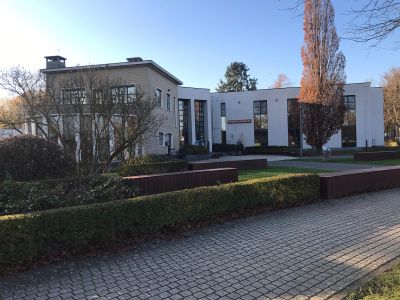
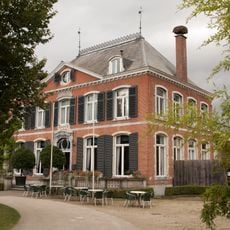
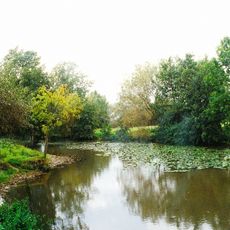
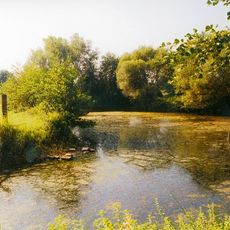
Domein Hofstade is a 160-hectare recreation park in Zemst, owned by Sport Vlaanderen. It is mostly water: two lakes of 35 and 25 hectares, the larger with an 800-metre-long, 30-metre-wide sand beach on its east side. Paths run around the lakes and through woods, and the grounds also hold a 42x28 sports hall, a multifunctional sports field, a sports hotel with 64 beds, and the Sportimonium museum.
Pits dug around 1907 for a raised railway line south of Hofstade filled with water and formed two lakes. Hofstade-Plage opened in 1932, and King Albert I inaugurated it in 1933. Architect Victor Bourgeois completed the park master plan in 1937, adding a 100 by 50 metre open-air pool; the domain passed to Sport Vlaanderen in 1983.
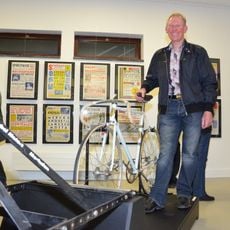
The nickname 'Hofstade Plage' or 'Hofstade-Bains' dates from the 1930s resort era, when a Vieux Marché square of cafés and dance halls stood here. That square was demolished under Victor Bourgeois's 1937 master plan, which turned the site toward sport. The Sportimonium museum, devoted to the history of sport, now occupies part of the grounds.
The domain lies about 15 km north-east of Brussels, just south of Mechelen and Planckendael, and is split into Hofstade-Strand (beach and lakes) and Hofstade-Heide (sports complex). Entry was free before 2012; since then adults pay 5 euros and children 1 euro from April to September. The grounds are open to the public all year.
When the railway pits were dug around 1900, bones of prehistoric animals were found, including a mammoth; they went to the Royal Institute of Natural Sciences in Brussels and were studied in the 1980s, dating mainly to the Eemian and Weichselian. The Sportimonium, a museum devoted to sport, is housed on the domain.
The community of curious travelers
AroundUs brings together thousands of curated places, local tips, and hidden gems, enriched daily by 94,286 contributors worldwide.