Zwalmmolen, Munkzwalm, Protected watermill in Munkzwalm, Belgium
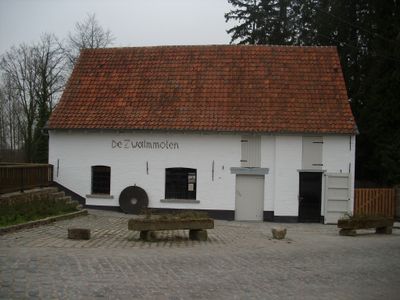
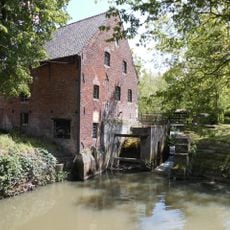
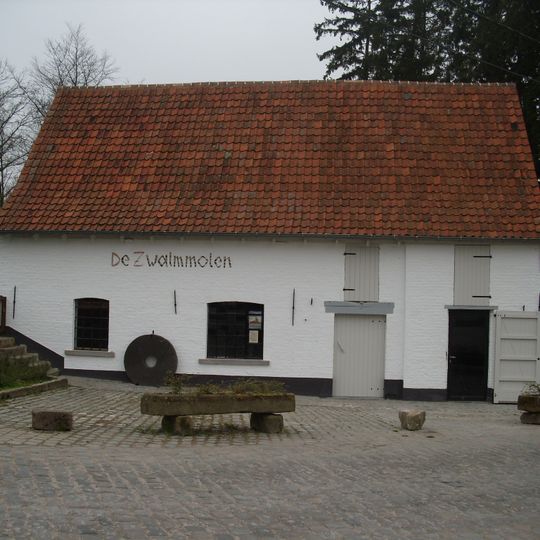
The Zwalmmolen is a watermill on the Zwalmbeek in the Zwalm valley at Munkzwalm. It is a long single-storey building with a steep pitched roof of reddish-brown clay tiles, white masonry walls with a dark grey band along the base, and the painted lettering "De Zwalmolen" on the facade. Three dark-framed barred windows sit left of centre, two tall doors with small upper hatches to the right, and a large circular stone wheel with a central hole leans against the wall below the leftmost windows.
The Zwalmmolen is first mentioned in 1040 as the watermill "Ten Berge". It was first called "Sualme Meulen" on a map drawn up for bishop Antonius Triest (1621-1657). It originally ground grain and flaxseed, later also chicory, maize, rice, tobacco and grain, and remained in operation until 1970.
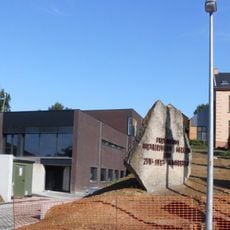
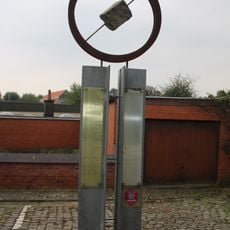
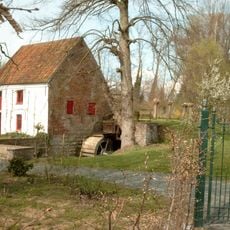
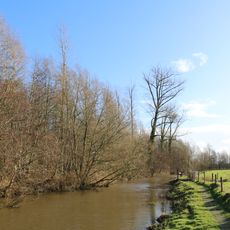
The mill's name appears as "Sualme Meulen" on a figurative map made for bishop Antonius Triest (1621-1657). A memorial stone at the site honours Omer Wattez, and beavers are now spotted on the Zwalm and around the mill. The old mill house opposite once served as a tavern-restaurant with bicycle rental.
The site is located in Munkzwalm along the waterway and can be visited while walking through the area. It is helpful to contact ahead to learn about visiting hours or guided tours so you can plan your visit properly.
The large circular millstone leaning against the white facade below the leftmost windows is a spare stone, a detail many visitors walk past. The mill kept working until 1970, and the province of East Flanders bought it in 1990 to restore it and make it grind again. Beavers have been spotted on the Zwalm around the mill.
The community of curious travelers
AroundUs brings together thousands of curated places, local tips, and hidden gems, enriched daily by 94,610 contributors worldwide.