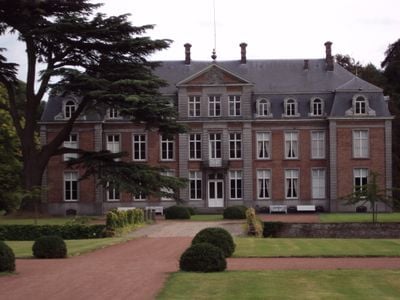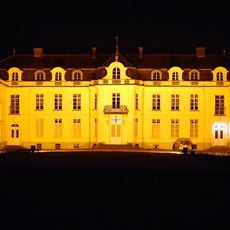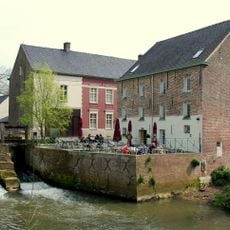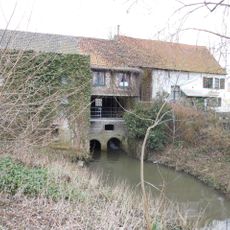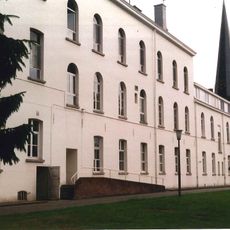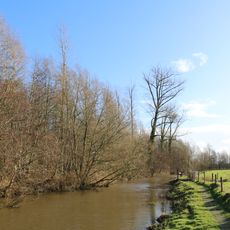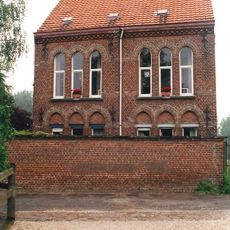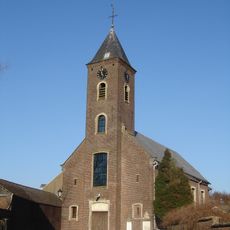
Kasteel Ten Bieze, Rococo castle in Beerlegem, Belgium
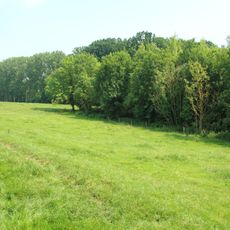
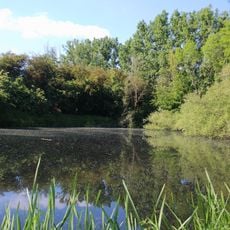
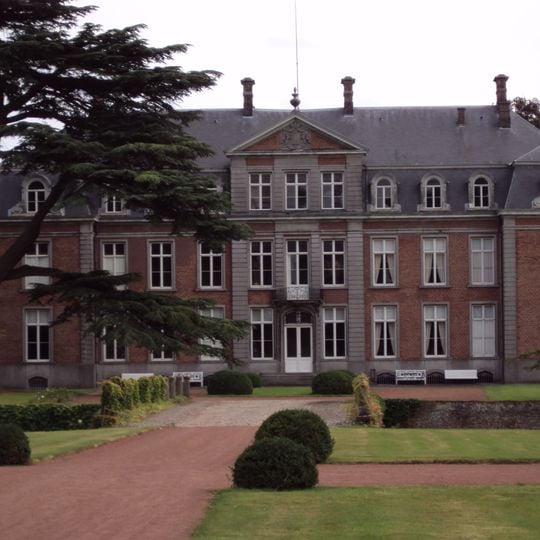
Kasteel Ten Bieze is a rectangular structure with double staircases leading to central doors and eleven frontons decorated with heraldic symbols. The building sits within a 60-hectare private estate that includes gardens, ponds, and historical service buildings.
The castle of Beerlegem is first mentioned in 1096 under Lord Diederik van Beerlegem. In 1680 Lupus Maria Rodriguez d'Evora y Vega bought the lordship after his castle Ter Saelen in Destelbergen was plundered by troops of Louis XIV. The present rococo-baroque castle was built around 1730 on the site of the earlier castle, and two one-bay side wings were added between 1862 and 1867.
The stone pillories scattered across the grounds each bear heraldic lions from different lordships, representing the administrative power that once radiated from this location. They stand as reminders of how nobility governed the surrounding areas.
The castle domain is not open to the public; it belongs to the Count d'Ursel de Bousies, a descendant of the Rodriguez d'Evora y Vega family, and is lived in by Hubert d'Ursel de Bousies. The monumental wrought-iron gate of 1861 and the four pillories on the castle square can be seen from outside. The 60-hectare park and woods, with their beech and oak avenues, stay closed to visitors.
The Lebanon cedar in front of the castle is said by legend to have been brought back from the Holy Land by John the Fearless after the last crusade; dendrological study dates the tree to around 1400. The estate also holds a wisteria garden with many varieties, described as unique in Europe.
The community of curious travelers
AroundUs brings together thousands of curated places, local tips, and hidden gems, enriched daily by 94,015 contributors worldwide.