Ouren Castle, Archaeological site and castle ruins in Burg-Reuland, Belgium
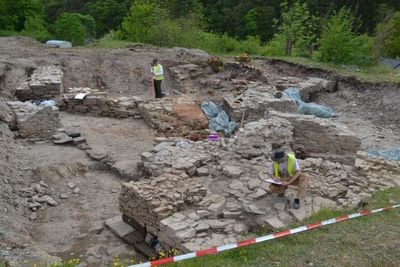
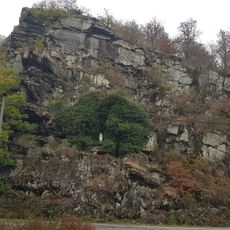
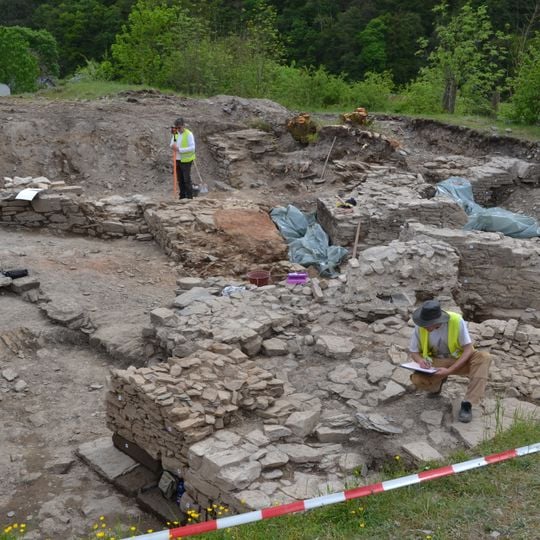
Ouren Castle is a medieval fortified residence in Burg-Reuland standing on a shale outcrop that overlooks the Our river valley. The remaining foundation walls reveal the floor plans of residential buildings, defensive towers, and a chapel spanning multiple construction periods.
The castle is first documented in a deed of 1190–1198, when Henry of Sponheim was enfeoffed with his share by Archbishop John I of Treves. In 1394 it was besieged and taken by Eberhard of the Mark during a feud, then retaken the same year. After 1733 it passed to the House of Dobbelstein, and French Revolutionary troops destroyed it in 1794; it was auctioned in 1844 and 1845.
The ruins reveal how the nobility organized their household and which spaces mattered for everyday living. Visitors can observe how the structure evolved and adapted to the needs of its residents over time.
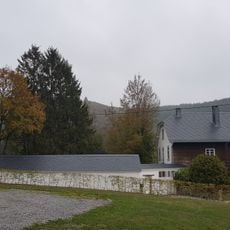
The ruin lies on a shale spur in a hollow, with the Our river wrapping it on the north, west and east; access comes from the south through a shallow depression. Excavations by the Archaeological Service of the German-speaking Community have run since 2012, and blue-grey sheeting still covers some masonry. Ground is uneven and partly rubble-strewn, so wear sturdy shoes.
The only known depiction of Ouren Castle is a pen drawing after a lost watercolour by Joseph-Ernest Buschmann (1814-1853), made in the first half of the 19th century. It shows the site as a Baroque castle, probably romanticised. Excavations by the Archaeological Department of the German-speaking Community began in 2012; earlier probes by S.O.S. fouilles in autumn 1988 and January 1989 were barely documented.
The community of curious travelers
AroundUs brings together thousands of curated places, local tips, and hidden gems, enriched daily by 93,618 contributors worldwide.