Palais des Beaux Arts de Charleroi, Museum and theatre complex in Charleroi, Belgium.
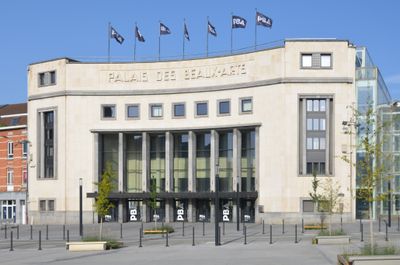
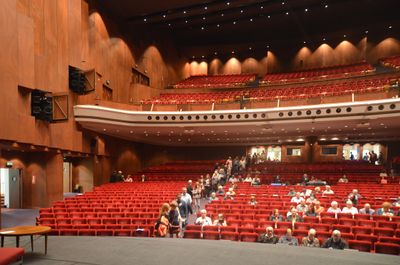
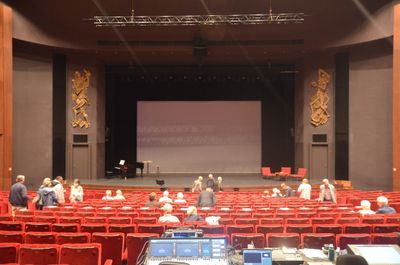
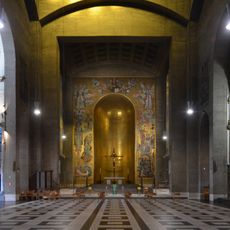
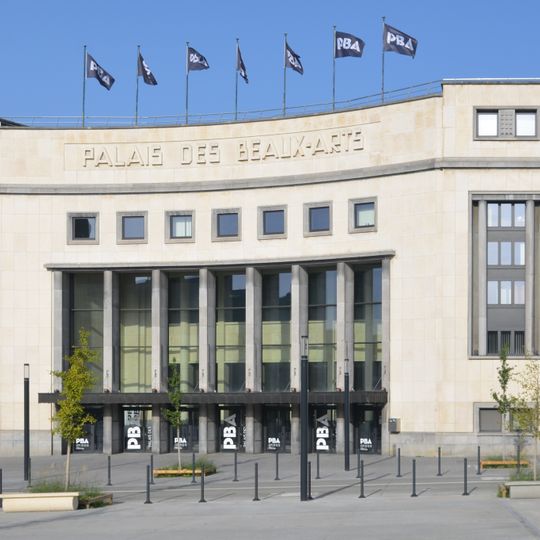
The Palais des Beaux-Arts is a 1957 building by architect Joseph André, with a slightly curved facade pierced by seven doors leading into an 18 m by 17 m vestibule. Beyond it, a rotunda of eight black marble columns opens onto the 1,800-seat auditorium, whose walls and balustrades are clad in wood with red velvet floors and seats. The stage measures 20 m wide by 28 m deep under a 23 m technical ceiling.
The building opened in 1957, designed by architect Joseph André, and replaced the earlier Théâtre des Variétés that had operated since 1901. This construction represented a modernization of the city's cultural facilities.
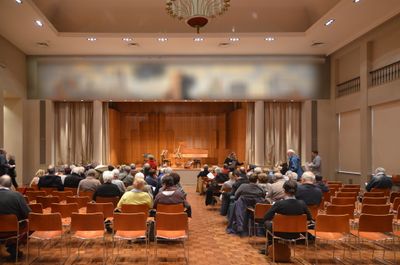
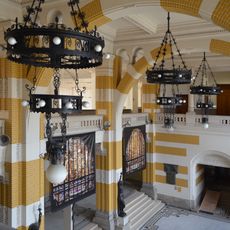
The hall was designed for lyric performances, and its stage opening and orchestra pit proved too small in use. From 1958 to 1979 it hosted the annual exhibitions of the Cercle artistique et littéraire de Charleroi. The entrance hall holds Marino Marini's sculpture Il Miracolo, flanked by reliefs by André Hupet and Alphonse Darville.
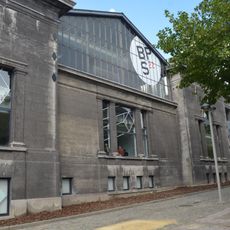
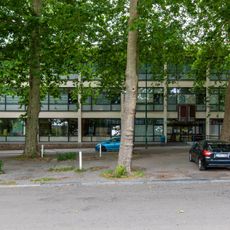
The main entrance on place du Manège opens into an 18 by 17 metre vestibule; a rotunda with eight black marble columns then leads to every level of the theatre, the exhibition halls and the brasserie. The basement space La Réserve has its own entrance from outside. The site slopes down to the Lodelinsart stream at the rear, so the rear extension by Lhoas & Lhoas, with its glass and steel facade, provides a second public access.
The basement dancing "La Réserve" was run by Herman Bernard, son of Gustave Bernard, who had bought the Variétés theatre around 1919. Its dance floor was made of illuminated glass from the start, and the space is reached from an outside entrance rather than through the main hall.
The community of curious travelers
AroundUs brings together thousands of curated places, local tips, and hidden gems, enriched daily by 94,143 contributors worldwide.