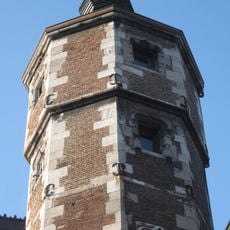
Neufmoustier abbey, Augustinian abbey ruins in Huy, Belgium
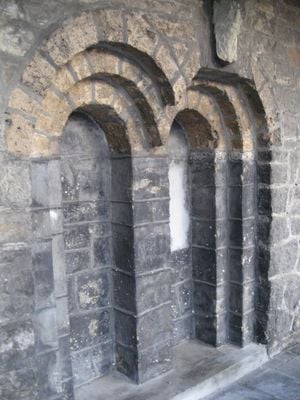
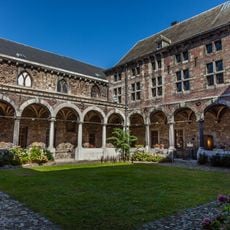
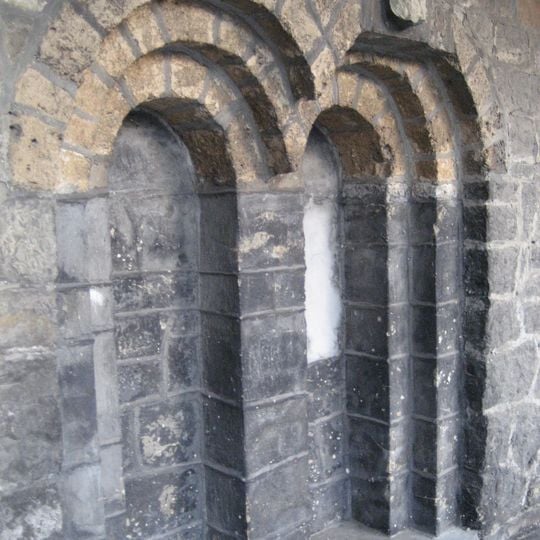
Neufmoustier Abbey is a former Augustinian monastery in Huy, Belgium, now reduced to two surviving wings of a Gothic cloister. The walls are built of grey and black stone blocks, with two tall, narrow arched openings framed by lighter tan-brown stone. The right opening is filled by a flat, pale surface, while the left recedes into shadow.
Peter the Hermit founded a religious community at Neufmoustier around 1100, on marshy ground near the Meuse at Huy. The priory church was consecrated on 21 September 1133 by Alexander of Juliers, prince-bishop of Liège, fixing the community under the Rule of St Augustine. It became an abbey in 1208. The monks left in 1797 and the property was sold as a national asset on 6 May 1798.
Local legend held that pilgrims unable to reach Jerusalem could earn the same spiritual benefits by travelling the shorter distance to the abbey. Peter the Hermit, a preacher of the First Crusade, lived here and was buried at Neufmoustier after his death on 8 July 1115.
The site is best explored on foot with sturdy shoes since you will walk over uneven ground and among partial structures. Take time to examine the remaining stonework and read any information panels to better understand how the different sections once functioned together.
The statue of Peter the Hermit, holding a cross, was inaugurated on 21 November 1858 at the initiative of Charles Godin. The Liège sculptor Jean-Joseph Halleux made it. Peter died at Neufmoustier on 8 July 1115 and was buried there.
The community of curious travelers
AroundUs brings together thousands of curated places, local tips, and hidden gems, enriched daily by 94,611 contributors worldwide.