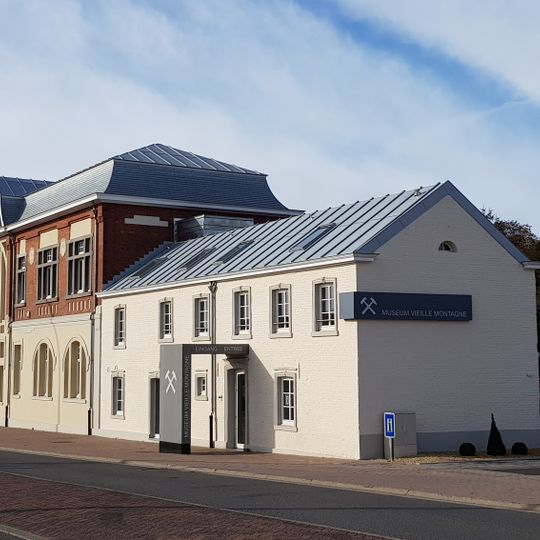
Museum Vieille Montagne, Mining heritage museum in Kelmis, Belgium.
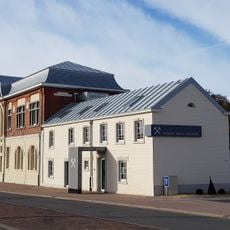
Museum Vieille Montagne is housed in a former administrative building and presents exhibitions on zinc production and the region's industrial development. The building displays through its collections the history of metal extraction and its importance to the local economy.
Zinc spar was mined in an open pit here from at least 1344, and the site lay inside the quarry that closed in 1884. In 1806 the chemist Jean-Jacques Dony bought the mines and began professional extraction; after his insolvency in 1819, François-Dominique Mosselman took over and founded the Vieille-Montagne company in 1837. The museum opened in the former 1910 director's building on 14 September 2018.
The museum's name comes from the Vieille-Montagne zinc company, whose former directors' building it occupies. Displays trace the company's European expansion and its product range, from buckets and washboards to roof gutters and ornaments. A room on Neutral Moresnet presents the territory's tax and customs privileges, its smuggling problem and the plan of doctor Wilhelm Molly to make Esperanto its official language.
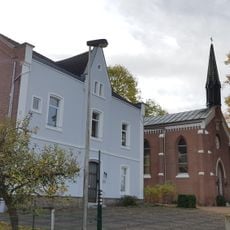
The museum occupies the former Vieille-Montagne director's building, with the neighbouring former Kelmis station also part of the site. The building was extensively renovated to be wheelchair accessible before reopening in 2018. Labels are in German and French; handheld devices carry the same texts in Dutch and English, and animations play in all four languages.
The museum occupies the former director's building of the Vieille-Montagne zinc company, constructed in 1910 with a roof entirely of zinc. Its address lies on the road from Liège to Aachen, which was cut straight through the open-pit mine in the 18th century.
The community of curious travelers
AroundUs brings together thousands of curated places, local tips, and hidden gems, enriched daily by 94,022 contributors worldwide.