Fortifications of Brussels, Medieval fortifications in Brussels, Belgium
The Fortifications of Brussels comprised two concentric defensive walls that enclosed the city with stone construction. The inner structure protected the early medieval core while the outer wall defended the expanded urban area as the city grew.
The first walls were begun in the early 13th century under Henry I, Duke of Brabant, and took several decades to complete. After Louis II of Flanders seized Brussels in 1356, the city built a second, 8 km wall between 1356 and 1383. The first walls were dismantled from the 16th century onward; the second were torn down in the 19th century and replaced by the Small Ring boulevards.
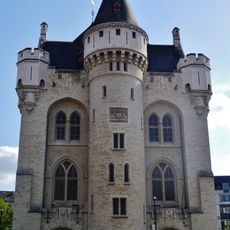
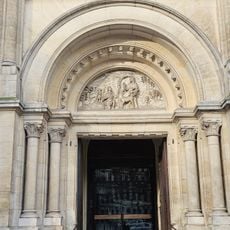
The Halle Gate and remaining sections show how the city controlled entry points and movement between neighborhoods. These gates were gathering places where travelers and traders passed through rather than purely military structures.
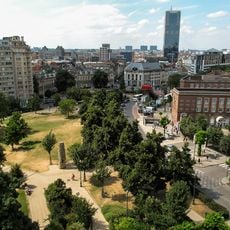
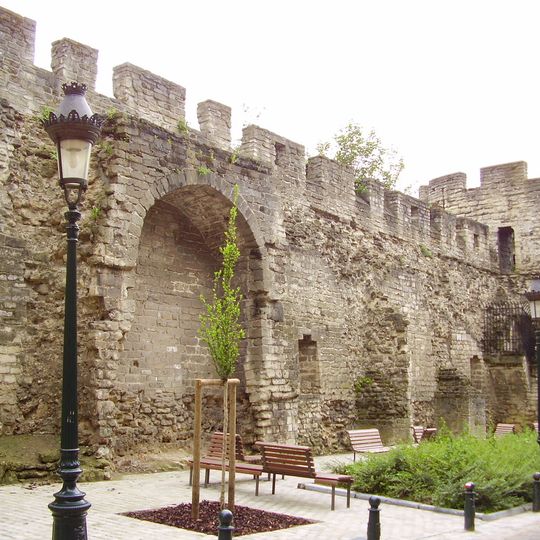
The Small Ring boulevard traces the line of the second wall, demolished in the 19th century, so walking it links the surviving fragments. Only the Halle Gate of the eight gates remains, kept because it served as a prison and later a museum. Sections of the first wall survive inside later building blocks, including the Anneessenstoren, Plebaantoren, Zwarte Toren and Villerstoren.
The outer wall featured roughly 72 defensive towers spaced closely together with seven main gates, creating an integrated control system across the perimeter. The tower spacing allowed guards to see and communicate with neighboring positions along the entire circuit.
The community of curious travelers
AroundUs brings together thousands of curated places, local tips, and hidden gems, enriched daily by 93,506 contributors worldwide.