Nepomucenusbrug, Medieval stone bridge in Bruges, Belgium
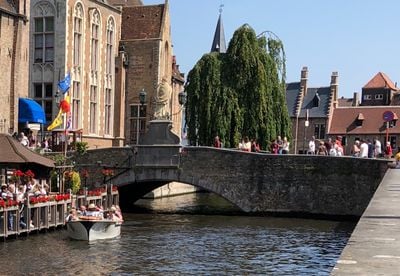
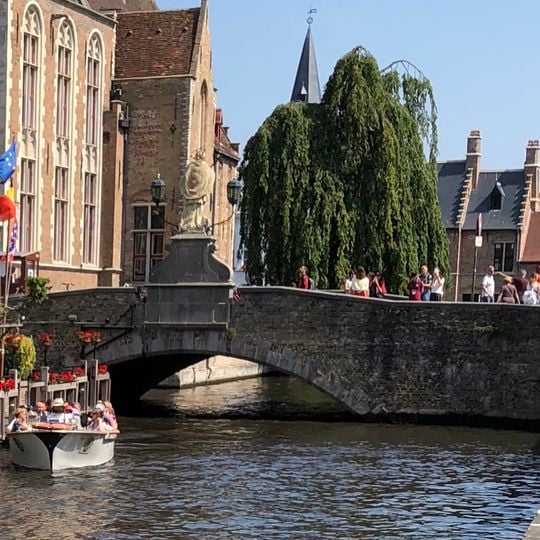
The Nepomucenusbrug is a stone bridge that crosses the Dijver canal, built with solid masonry that has withstood centuries of use. A statue of Saint John of Nepomuk stands at its center, creating a focal point that draws the eye as you cross.
A bridge at this spot is documented in 1282 as the Grote Eeckhoutbrug, linking the city centre with Bruges' suburbs. In 1357 the mason Jan Slabbaerd built a new bridge, renovated in 1642. In 1767 a chapel on the span was replaced by Pieter Pepers senior's statue of Saint John of Nepomuk, giving the bridge its name; the statue was thrown into the canal in 1795 and re-erected on 1 May 1811. Flattened and widened in 1859, the bridge has been a protected monument since 28 March 2002.
The bridge takes its name from Saint John of Nepomuk, whose white statue replaced a chapel here in 1767. The Latin inscription on the pedestal is an anagram of his name, reading "See, a pious mute one / See, a mouth that does not accuse" — a reference to his refusal to break the seal of confession. The statue was restored in 1980.
The bridge connects walking routes through the historic district and is easy to find near the Pandreitje car park. You can cross at any time, though early morning or late afternoon visits offer fewer crowds and better views for photographs.
The Latin inscription on the pedestal is an anagram: the letters of Saint John of Nepomuk's name are rearranged into a phrase about a mouth that does not accuse, alluding to his refusal to break the seal of confession. The statue was thrown into the Dijver on the night of 6–7 October 1795 and re-erected on 1 May 1811.
The community of curious travelers
AroundUs brings together thousands of curated places, local tips, and hidden gems, enriched daily by 94,551 contributors worldwide.