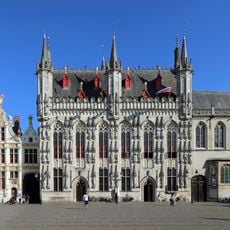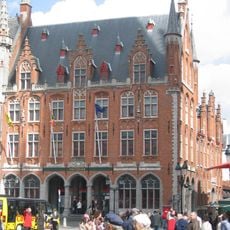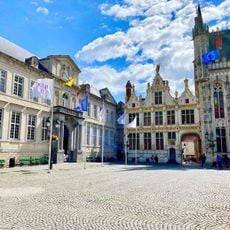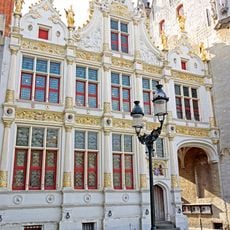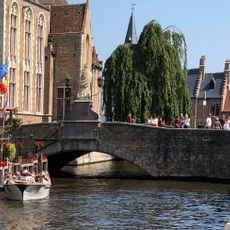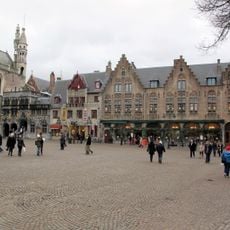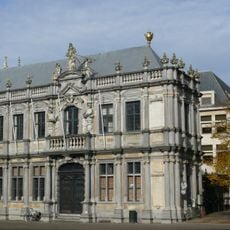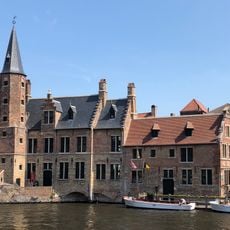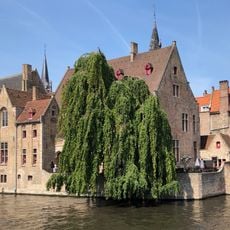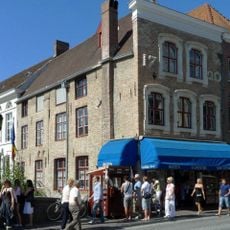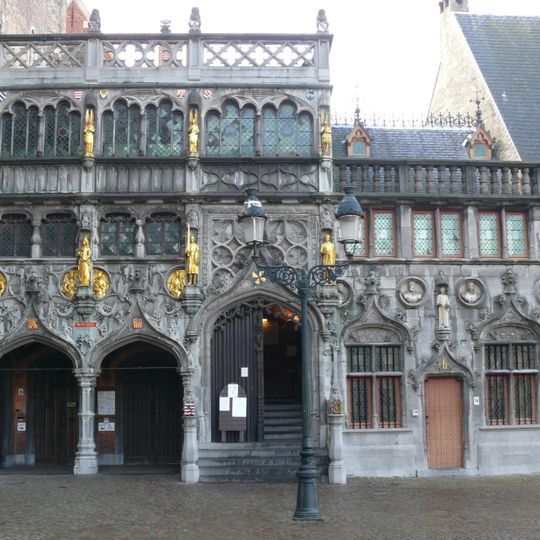
Museum van het Heilig Bloed, Minor basilica in Burg Square, Bruges, Belgium.
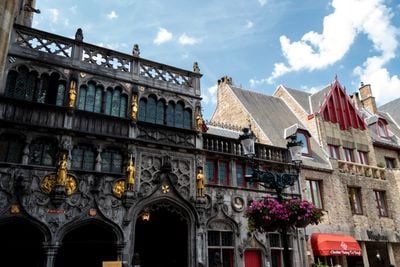
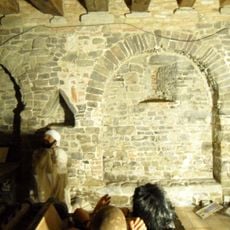
Museum van het Heilig Bloed is a church building and museum on Burg Square in Bruges, Belgium, composed of two chapels stacked one above the other. The lower chapel displays rounded Romanesque arches and thick stone walls, while the upper chapel shows pointed Gothic arches and elaborate stone decoration.
In 1134 Count Thierry of Alsace began a private double chapel beside the Oud Steen, the counts' first residence, now Bruges town hall. The lower Chapel of St. Basil was built from 1134 to 1149; the upper chapel became the Chapel of the Holy Blood in the first half of the 13th century. It was rebuilt in Gothic style at the end of the 15th century and again in 1823, then given its Gothic Revival interior in the 19th century.
The church takes its name from a relic venerated by believers for centuries and kept inside an ornate silver container. Every Friday a public ceremony allows visitors and pilgrims to view the relic up close.
The church opens daily from 10:00 AM to 5:15 PM and entry to the chapels is free. The treasury chamber displaying liturgical objects and reliquaries can be visited for a small fee.
The globe-shaped pulpit, carved by Henry Pulinckx in 1728, illustrates the missionary command of Mark 16:15. Near the high altar, the tintinnabulum and the yellow-and-red silk umbraculum are displayed, the traditional marks of a minor basilica. The relic is shown every Friday and daily in the two weeks before Ascension Day.
The community of curious travelers
AroundUs brings together thousands of curated places, local tips, and hidden gems, enriched daily by 93,358 contributors worldwide.