See the monuments around you in AROpen chests in the app
Around Us is built for your phone — point your camera at the streets and discover the monuments and places around you in augmented reality.Around Us is built for your phone — chests unlock when you walk, explore and capture nearby places.
Bruges : historic landmarks, medieval architecture, must-visit spots
Bruges contains a notable set of buildings that tell the story of the city in the Middle Ages. From stone-faced churches to small paved squares, and canals winding between old houses, these places show how important trade and culture were during the 13th to 15th centuries. Every building and street corner bears the marks of this lively time.
Walking through the city, you will see impressive churches like Saint-Saviour Cathedral, open spaces where markets and trade shaped daily life, and museums that keep traces of that past. The canals, part of the city’s features, were used for trade for many years and are still one of the most easy to recognize parts of Bruges.
This set of sites offers a clear look at what a large medieval city was like. Walking in Bruges means following the paths of art, trade, and daily life from long ago. These monuments are not separate. They come together to show how people lived, worked, and gathered in this important town.
Bruges : historic landmarks, medieval architecture, must-visit spots
Bruges contains a notable set of buildings that tell the story of the city in the Middle Ages. From stone-faced churches to small paved squares, and canals winding between old houses, these places show how important trade and culture were during the 13th to 15th centuries. Every building and street corner bears the marks of this lively time.
Walking through the city, you will see impressive churches like Saint-Saviour Cathedral, open spaces where markets and trade shaped daily life, and museums that keep traces of that past. The canals, part of the city’s features, were used for trade for many years and are still one of the most easy to recognize parts of Bruges.
This set of sites offers a clear look at what a large medieval city was like. Walking in Bruges means following the paths of art, trade, and daily life from long ago. These monuments are not separate. They come together to show how people lived, worked, and gathered in this important town.
The Lake of Love in Bruges is a medieval body of water that once formed part of the city's fortifications and infrastructure. This water feature sits within the historic urban landscape, providing a quiet spot among the old buildings and streets. The lake has long held stories and local tales passed down through generations. Today, this place invites visitors to walk along its banks and understand how water shaped daily life in the medieval city.
The Musée de l'Église Notre-Dame occupies a Gothic church built between the 13th and 15th centuries. Its brick tower reaches 115.5 meters high and ranks among the tallest of its type. The museum houses a marble sculpture by Michelangelo. This building reflects the craftsmanship of the Middle Ages and Bruges' importance during that period as a major trading hub. The tower rises above the city and once signaled the power and prosperity of this community.
The Quai du Rosaire is a street along the canal in Bruges where merchants sold religious objects during the Middle Ages. The stone buildings reflect in the canal water. This place shows how the city functioned as an important trading center at that time. The old architecture and the water continue to shape this street's character today.
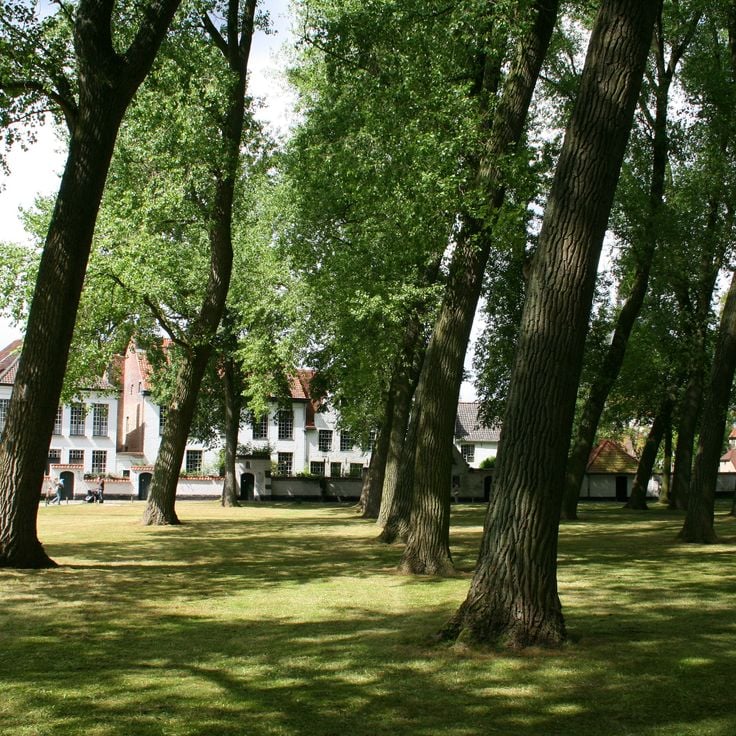
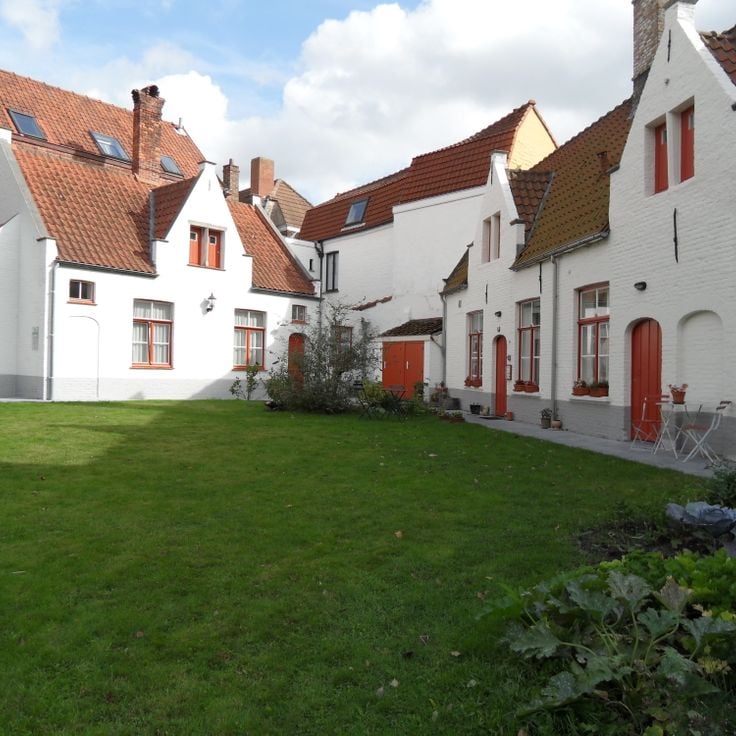
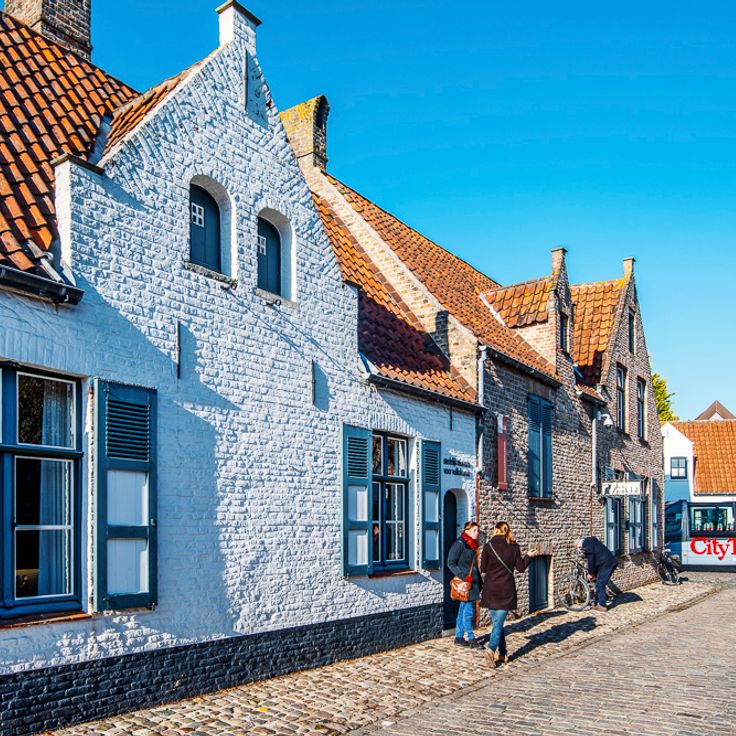
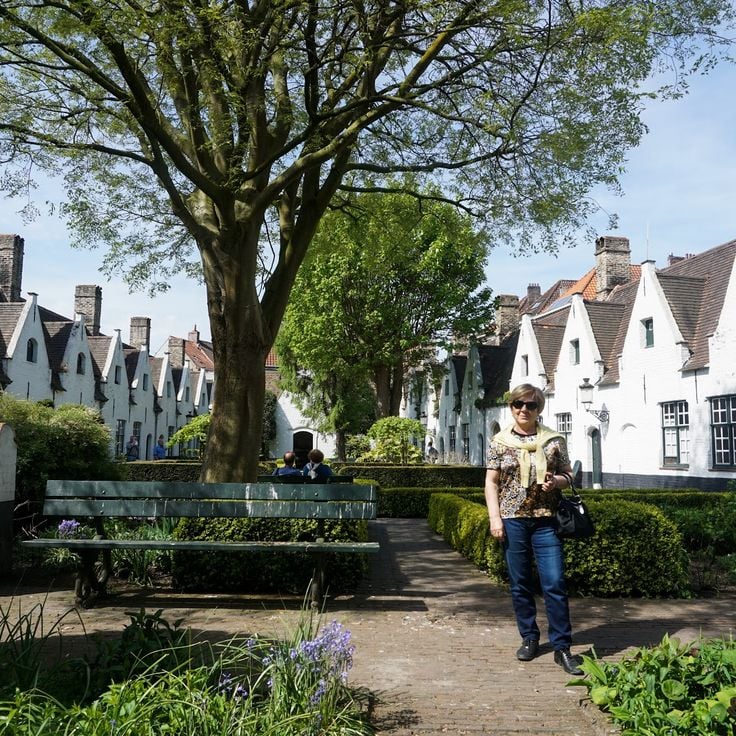
The Princely Beguinage Ten Wijngaarde is a religious community in Bruges founded in 1245. Women lived here in small houses arranged around a central courtyard. The buildings feature white walls typical of the period. This place shows how women organized their daily lives in a structured community separate from large monasteries. The tight arrangement of houses and the open central courtyard reveal the layout of this unique medieval way of living.
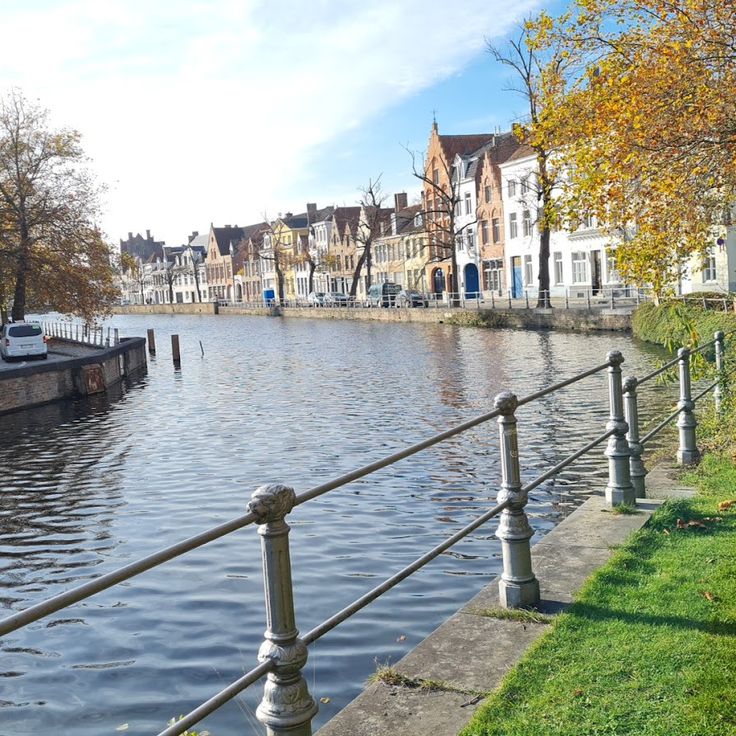
The canals of Bruges are waterways built in the Middle Ages that connect different parts of the city. They wind through the town and are crossed by stone bridges you can walk on or pass under by boat. These channels were once vital for trade and remain one of the most recognizable features of the city. Walking through Bruges, you encounter them throughout the streets. Traveling by boat lets you explore these waterways and see the old buildings from a water perspective.
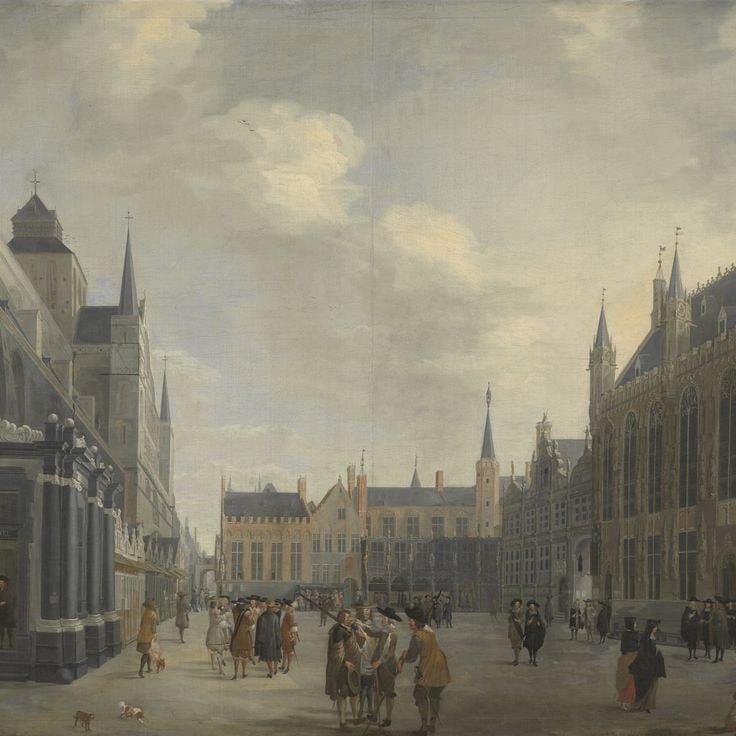
This square in Bruges was home to the city's first fortress in the 9th century and now features the Gothic Town Hall and the Basilica of the Holy Blood. The Town Hall displays fine architectural details and stands as a symbol of civic power. The Basilica holds religious importance and draws visitors seeking to understand the spiritual life of medieval Bruges. The square itself is surrounded by old stone and brick buildings that frame centuries of history. Walking across these paving stones, you can sense how this was once the heart of the city's government, commerce, and community life.
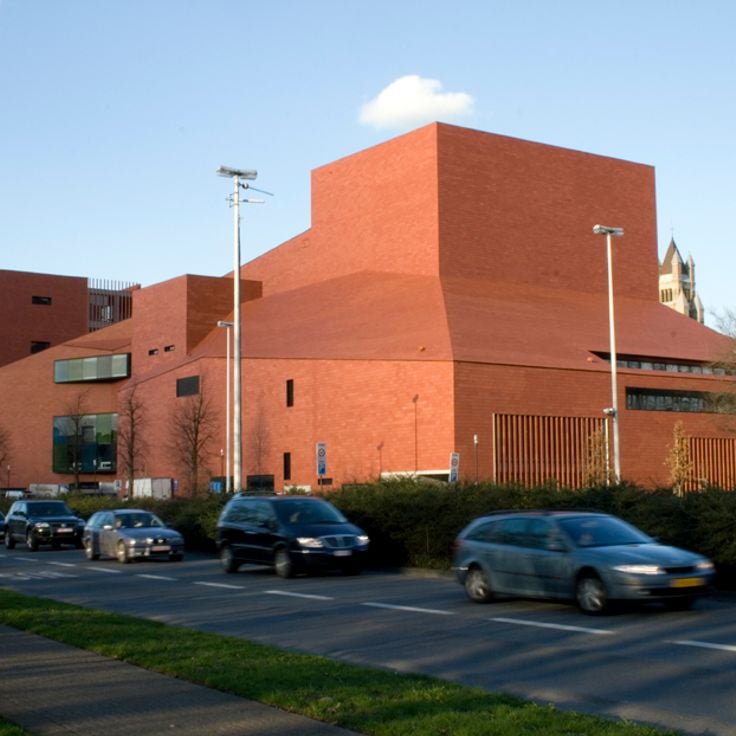
The Salle de Concert in Bruges is a modern venue with two performance spaces dedicated to classical and contemporary music. It regularly hosts orchestras and chamber music throughout the year. This concert hall adds to the cultural vitality of the city and complements Bruges' medieval heritage with contemporary artistic expression.
These hospices in Bruges were built to provide shelter and care for elderly and poor residents. The buildings show Flemish architecture at its most practical and human, with interior courtyards where daily life unfolded and private chapels for residents to use. These hospices reveal how medieval Bruges took care of its vulnerable people, and they remain important records of the city's social past.
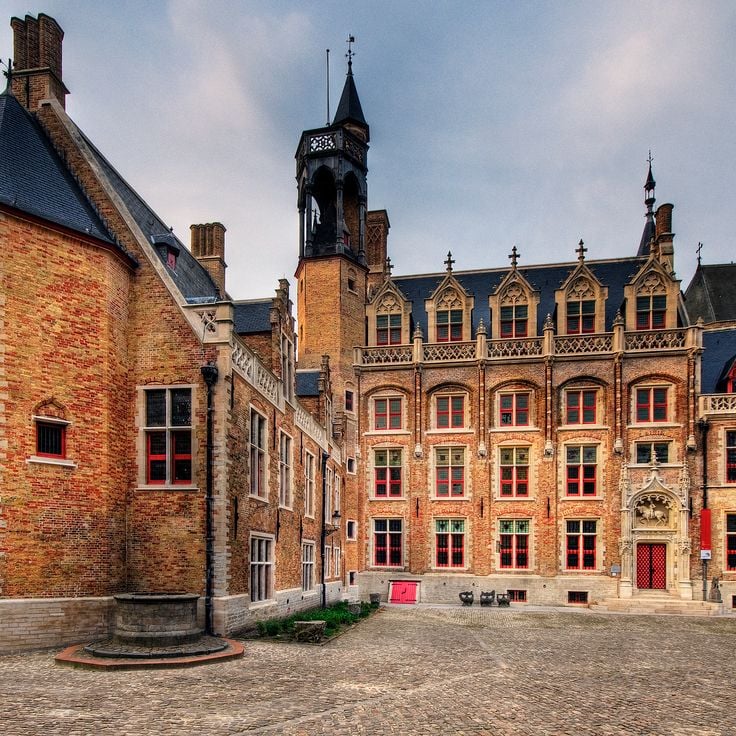
The Musée Gruuthuse displays arts, crafts, and domestic objects from the 15th to 19th centuries within a restored Gothic palace. The building once housed a wealthy merchant family and preserves their history to this day. The collections allow visitors to understand daily life and craftsmanship from past centuries. The rooms themselves tell the story of commerce's importance in Bruges' past.
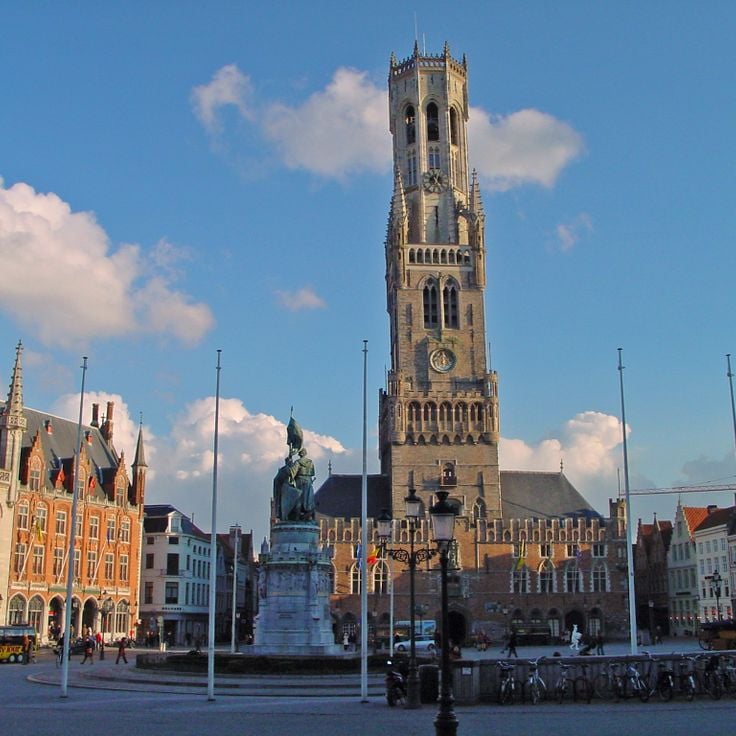
The Grand-Place is the heart of Bruges, dominated by the Belfried, a medieval tower that has watched over the city for centuries. Stone buildings with ornate facades line the square, reflecting the prosperity of the Middle Ages. This was once the center of public life, where markets were held and merchants gathered. The old architecture and cobblestones tell the story of a busy trading city. Today, locals and visitors still gather here, making it the gathering place for the city.
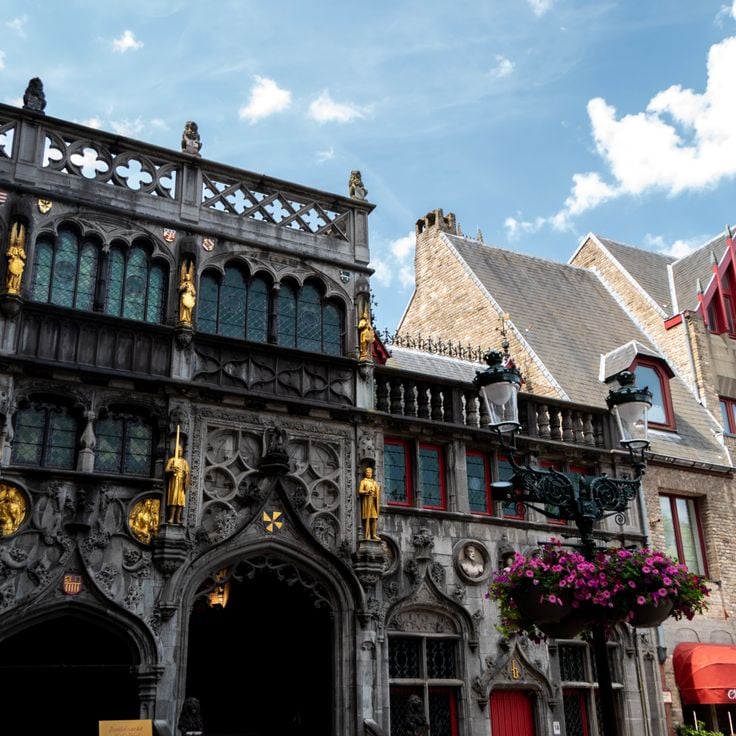
This basilica in Bruges dates back to the 12th century and holds a cloth believed to contain holy blood. The relic is displayed to the public once a year during a procession on Ascension Day. Visitors can explore the medieval architecture of the church and learn about the religious history that has drawn people to this place for hundreds of years.
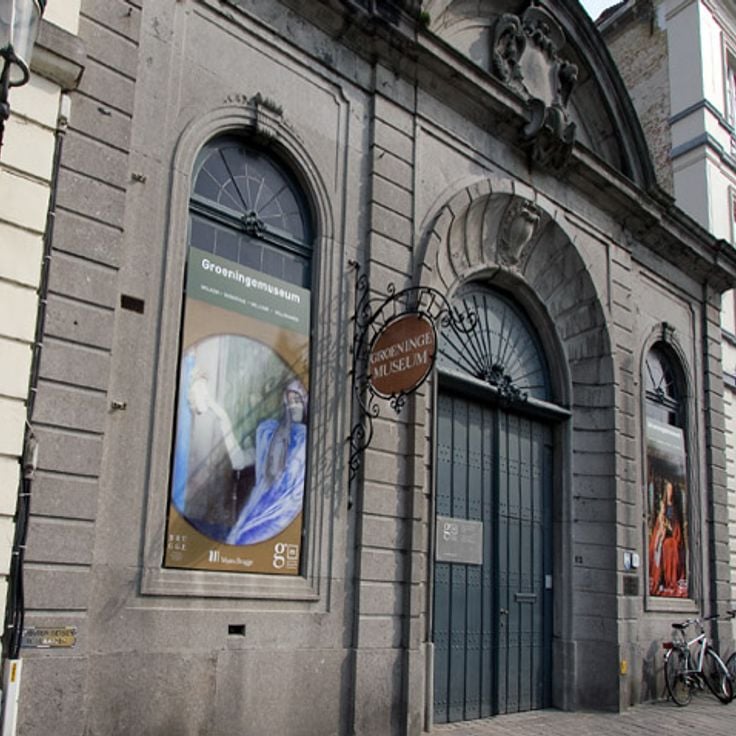
The Groeninge Museum in Bruges displays paintings from Flemish and Belgian art history from the 15th century to today. The collection shows how art developed in this region over hundreds of years. Here you find works by artists who lived or worked in Bruges, as well as paintings that reveal how the city kept its artistic importance through the centuries. The museum helps you understand Bruges cultural history through the eyes of its artists.
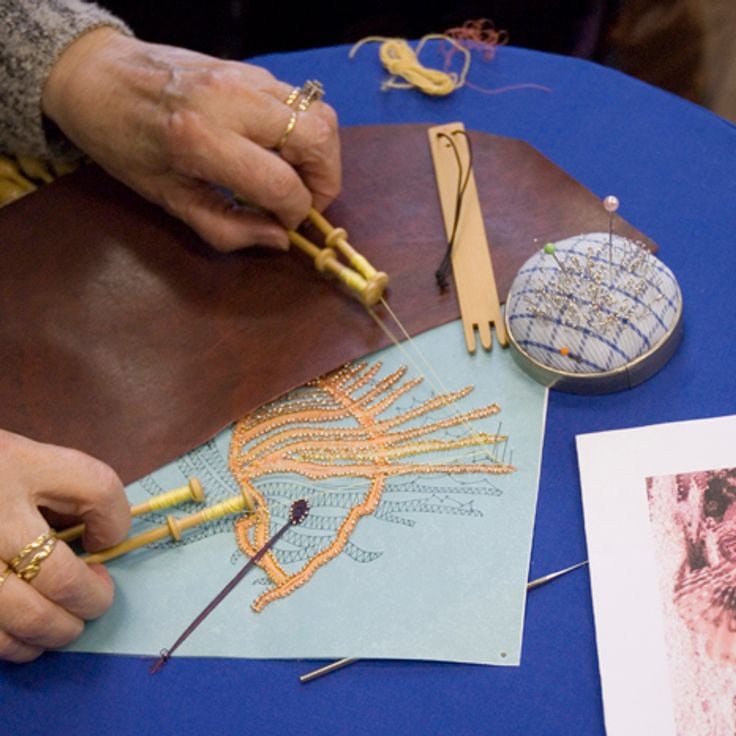
The Lace Centre in Bruges shows how lace has been made from the 16th century to today. Artisans work here and demonstrate their craft. The collection holds historical laces from Bruges and tells the story of this important craft that shaped the city.
The Museum of Popular Life in Bruges occupies former hospice buildings and shows how ordinary people lived in western Flanders. The collections display crafts, clothing, furniture, and everyday objects that belonged to residents over the centuries. Walking through these rooms gives you a sense of daily life away from the grand churches and public squares, revealing the homes and routines of the people who built this medieval city.
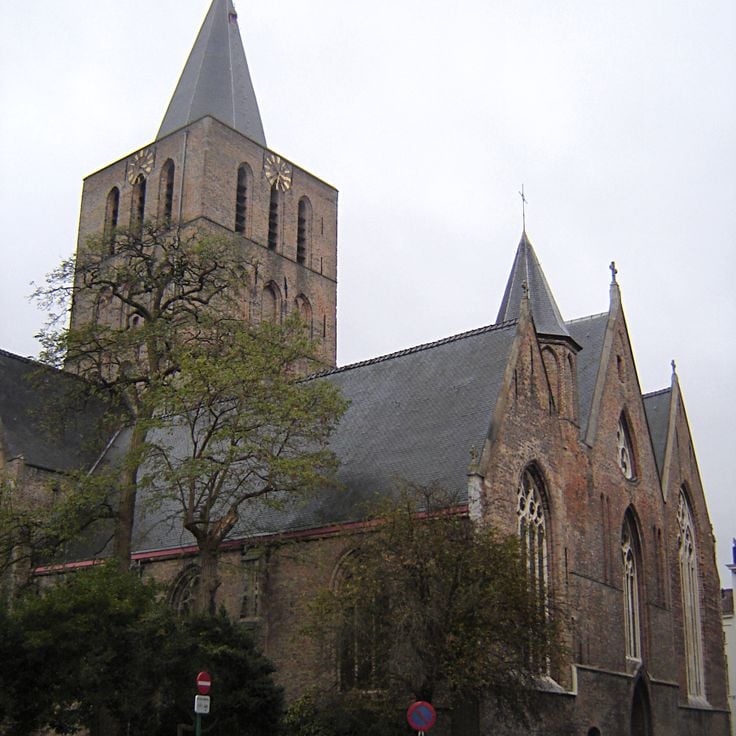
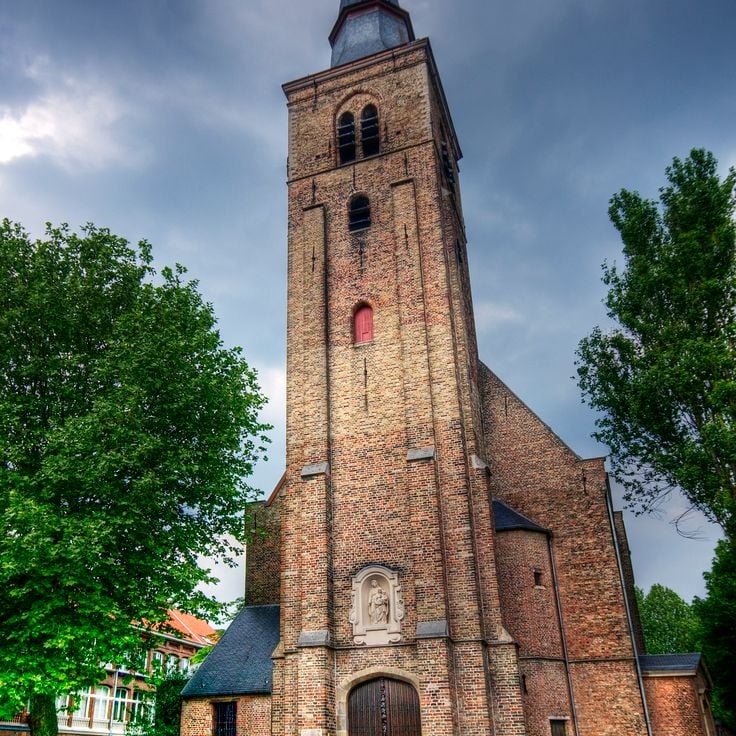
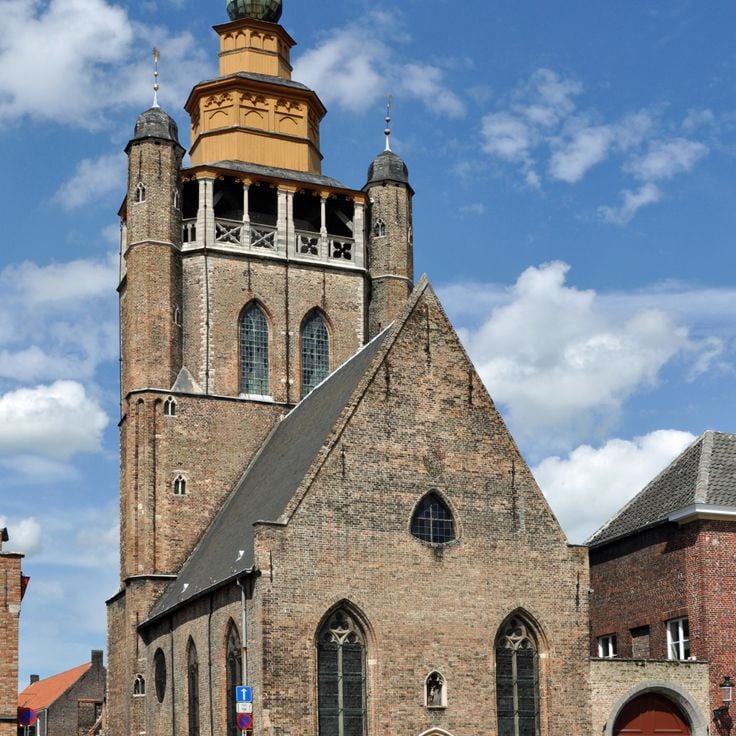
Saint-Gilles Church is a 15th century place of worship in Bruges that stands out for its impressive crossing tower and Gothic architectural features. This church represents the building style that shaped the city during its prosperous period. The tower rises above the surrounding houses and was a sign of the importance of religious institutions in medieval Bruges. The church reflects the craftsmanship and artistic ambitions that the inhabitants showed during the 15th century.
The Church of Sainte-Anne in Bruges was built between 1611 and 1628, with its interior decorated in the Baroque style between 1657 and 1661. This church reflects the artistic and religious life of Bruges during the early modern period. Walking through its doors, you encounter the craftsmanship of its time, visible in every detail of the space. The church stands as part of Bruges' layered history, showing how the city developed beyond its medieval foundations.
The Adornes estate is a noble residence from the 15th century in Bruges, showing the economic power of the wealthy merchant families who shaped the city during its prosperous years. Built before 1452, this building with its L-shaped layout and square staircase tower reflects how wealthy families lived and worked during the medieval period. Its design reveals the daily life and status of those who controlled Bruges' commercial life.
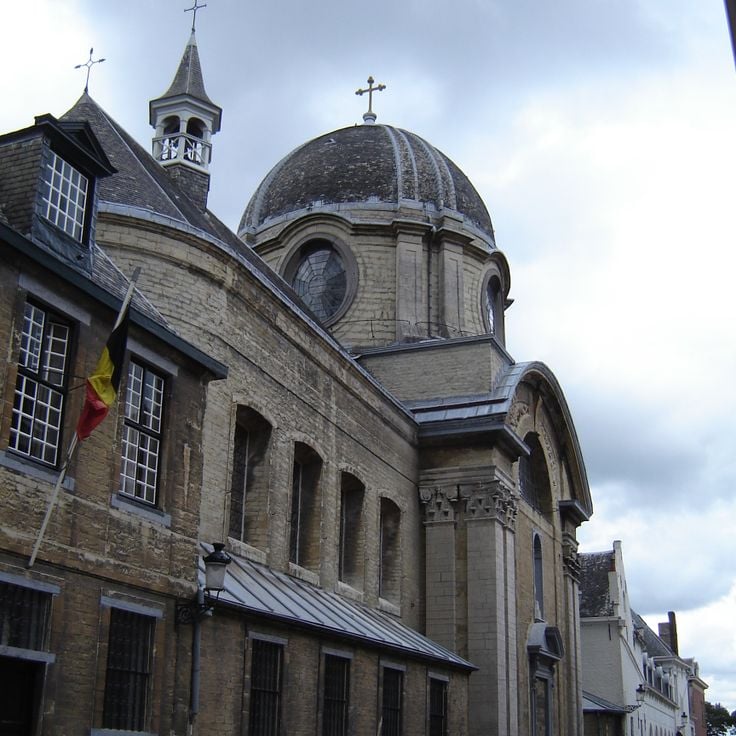
The English Convent in Bruges is a religious complex built in the 17th century with a church, cloisters, and a dome designed by architect H. Pulinx the Elder between 1736 and 1739. This building shows how religious communities lived and prayed within the city walls. The architecture blends earlier building styles with 18th-century design elements. Today, visitors can experience the quiet of this place and observe the careful craftsmanship in each room and corridor.
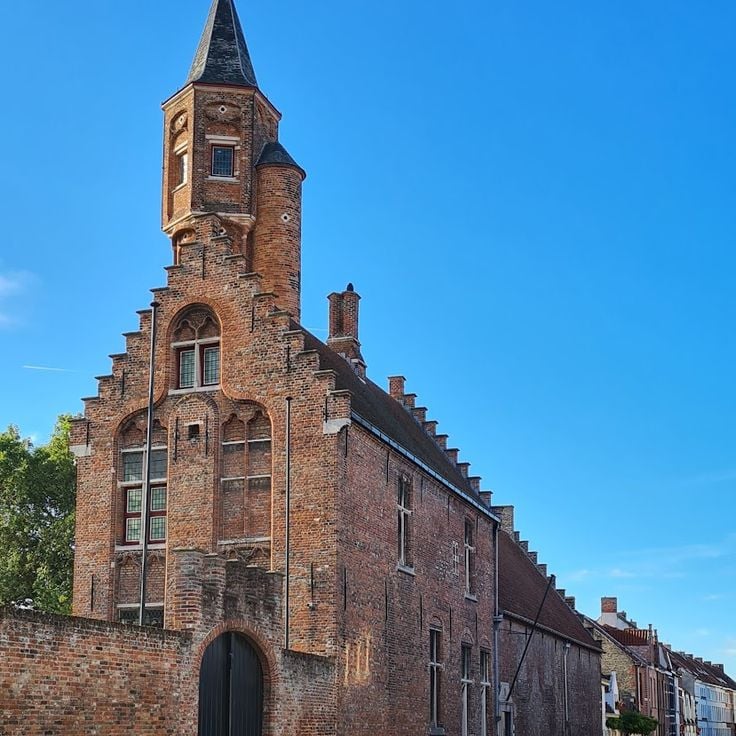
The Guild of Saint Sebastian in Bruges is a historic guildhouse of archers built in 1573. The building stands out for its distinctive polygonal staircase tower. It tells the story of guild traditions and craftsmanship in medieval Bruges, showing how organized groups of citizens created meeting spaces and shaped their communities. The structure reflects how important these guilds were to the social and economic life of the city.
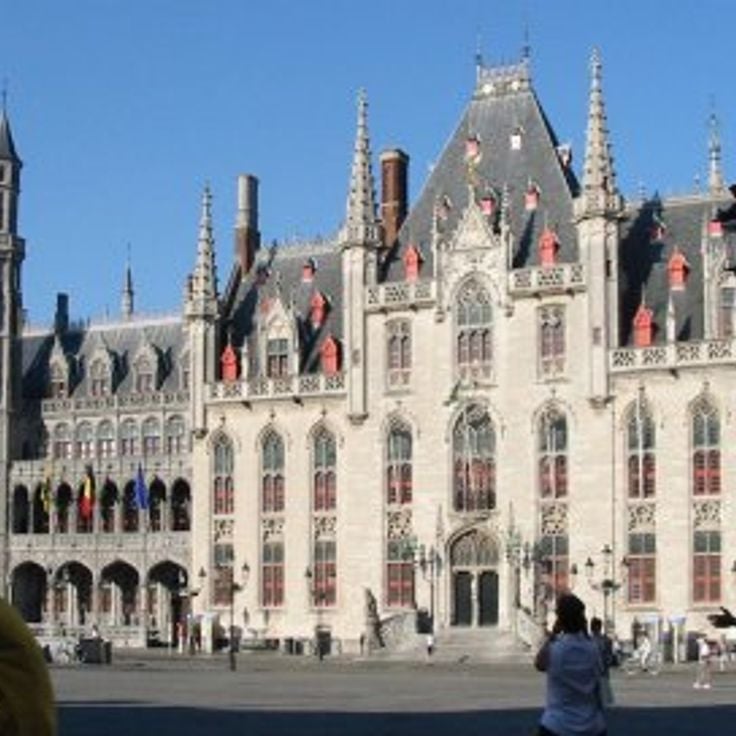
This 19th-century neoclassical provincial palace stands on Bruges' main square and serves as an administrative center. The facade features elaborate stone ornaments that reflect the building's importance. The Hotel Provincial shapes the appearance of the square and connects with the medieval structures of the city.
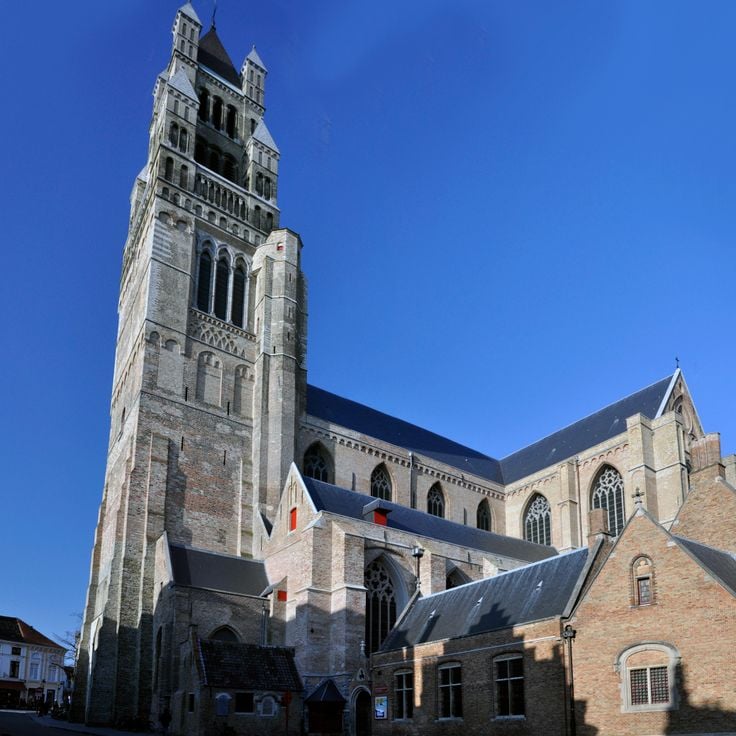
The Cathedral of the Holy Saviour in Bruges is a religious building spanning nine centuries, with stone walls and massive towers that reflect the city's importance during the Middle Ages. Pointed windows mark its exterior. Inside, medieval tombs and Flemish paintings cover the walls, showing how this cathedral served both spiritual and artistic purposes in this major trading city.
The Beer Museum in Bruges spreads across three floors and tells the story of Belgian beer through the centuries. Visitors can see brewing equipment on display and experience a tasting room on the top floor. The museum reveals how beer production shaped the city and remains a place where visitors learn about this craft that is central to Belgian culture.
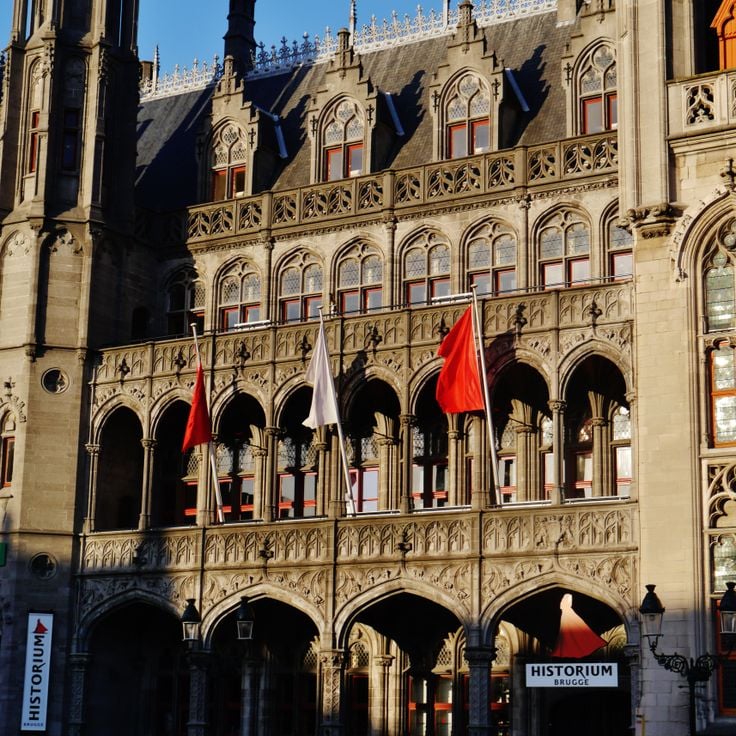
Historium in Bruges is an interactive museum that brings medieval Bruges to life through multimedia experiences and historical reenactments. Visitors discover how people lived and worked during the Middle Ages. The museum tells the story of when Bruges was a thriving trading center, with its streets filled with craftspeople, merchants, and citizens. The exhibitions move through different rooms displaying scenes from daily life, from the homes of townspeople to markets and workshops. It is a place where the city's history becomes real and tangible.
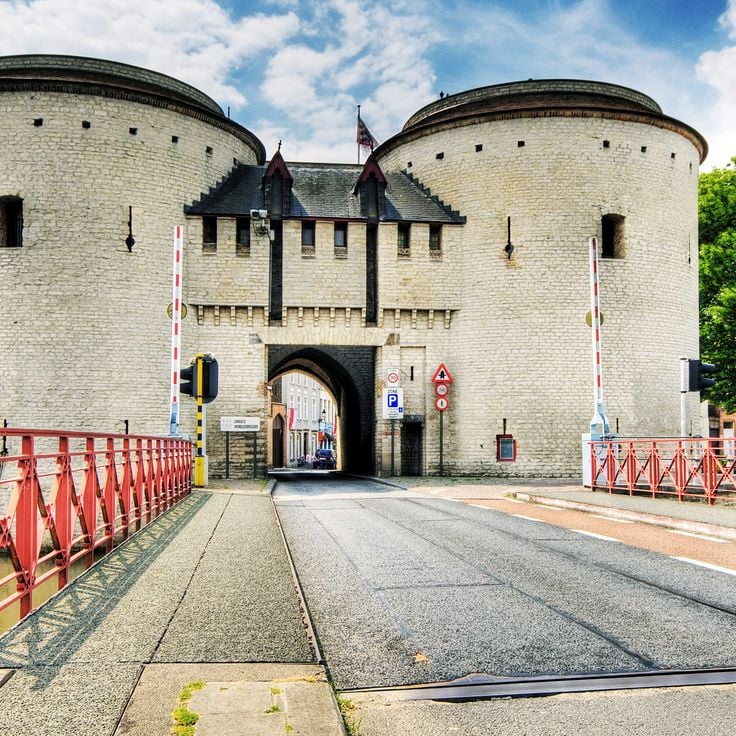
The Kruispoort is a key gateway that once protected medieval Bruges. Built around 1400, this stone gate still stands at the eastern edge of the old town. Its octagonal towers and barrel-vaulted passage show how builders of that era constructed their defenses. The gate was part of the city walls that kept Bruges secure and managed who entered and left. When you pass through it today, you can picture merchants and travelers arriving from the east centuries ago.
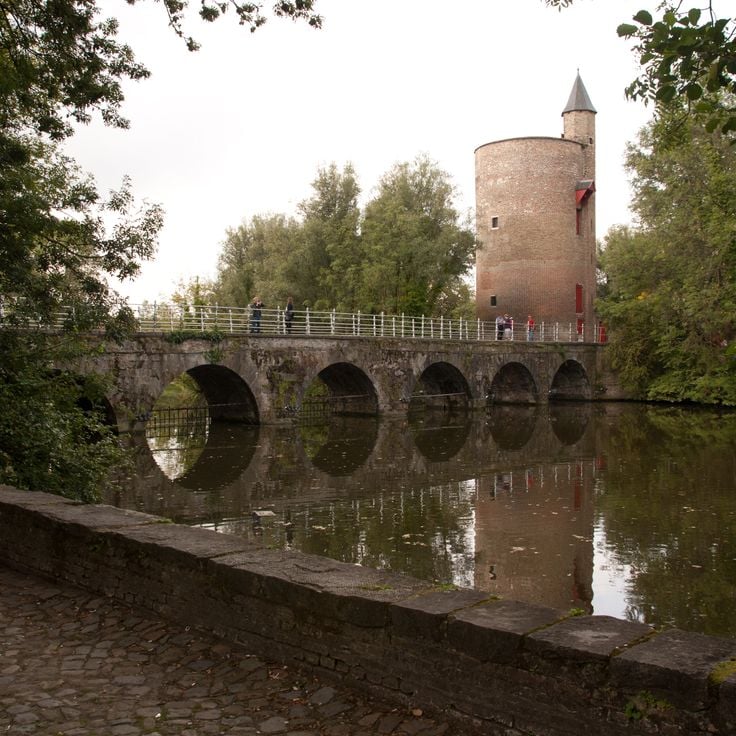
The Minnewater is an 18th-century stone bridge linking two important areas of medieval Bruges. With its iron railings, this crossing spans one of the city's characteristic canals and has become a quiet gathering spot for locals and visitors. The structure reflects the practical engineering of its time and shows how the city used its waterways to connect different neighborhoods.
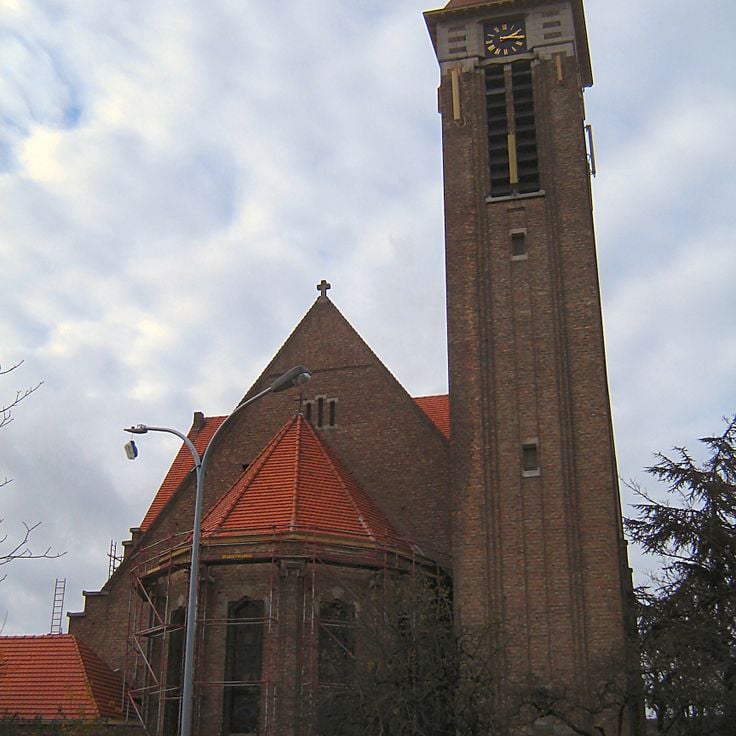
This church was built between 1851 and 1864 in the neo-Gothic style and ranks among the first neo-Gothic churches in Belgium. The building features a tall spire and characteristic pointed arches. It stands in Bruges, a city with a remarkable medieval history, and contributes to the rich architectural heritage that reflects the importance of this city from the 13th to 15th century. The church exemplifies the architectural variety of Bruges, where historical layers from different periods overlap.
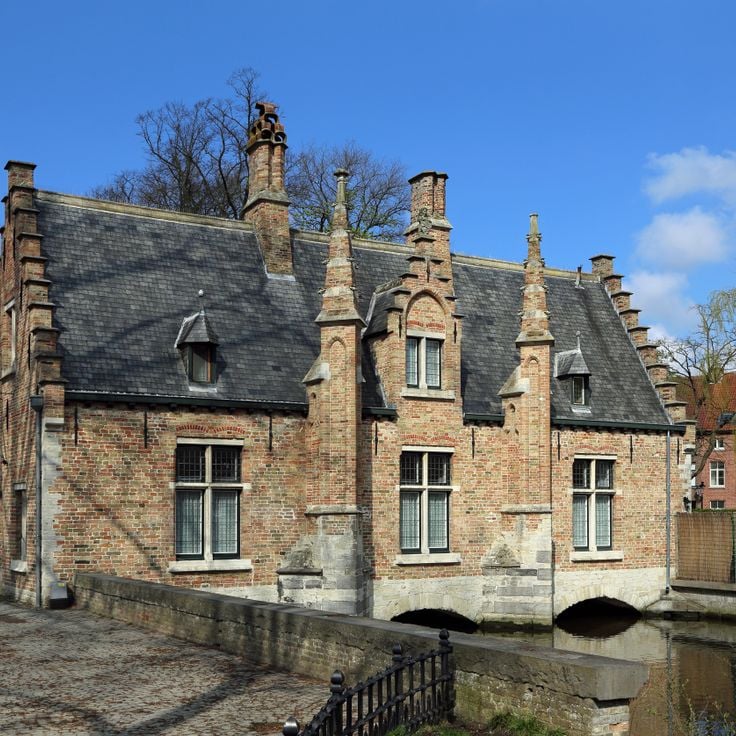
The Sashuis is a sluice house built in 1519 in Bruges to control water levels in the inner canals. The building displays typical late Gothic features with pointed gables and stepped dormer windows. Its purpose was crucial for managing the water system that runs through the medieval city. This structure combines practical engineering with architectural craft and shows the technical innovations that made Bruges prosper in the Middle Ages.
The Godshuis De Meulenaere is a hospice complex built in 1613 in Bruges, featuring a central chapel and two wings of single-room dwellings. This building shows how Bruges took care of its poor and sick during the 17th century. The structure is part of Bruges' medieval heritage and reveals the social organization of this prosperous trading city. Walking through this complex, you can understand how charity and daily life were managed in an important urban center of that era.
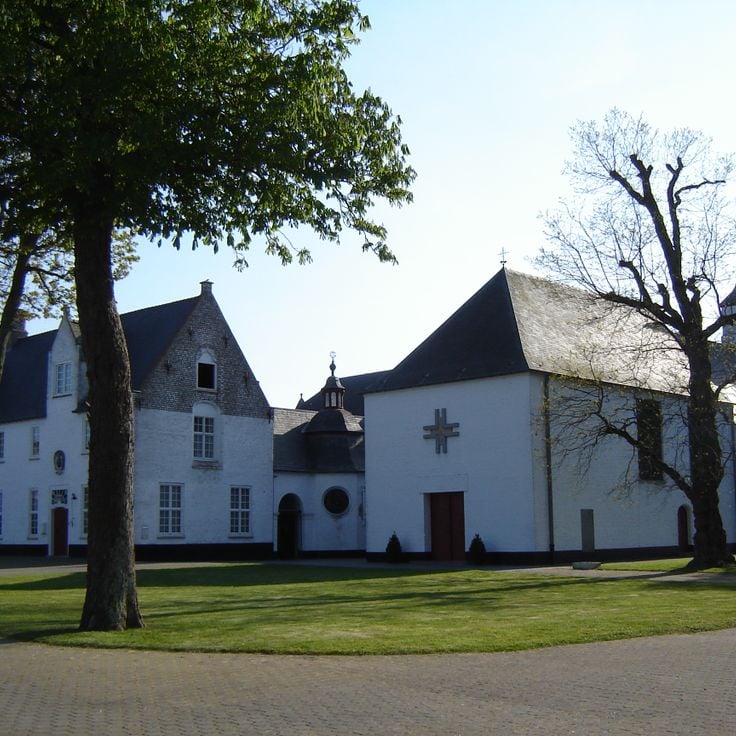
The Abbey of Sainte-Godelieve is a female monastery located in the historic center of Bruges. Its convent buildings date to the 17th century and were built according to plans from 1626. The abbey shows how religious communities lived and worked during this period. The church and cloister buildings are part of the medieval and early modern history of Bruges. Walking through these spaces reveals how monastic life developed in this prosperous city.
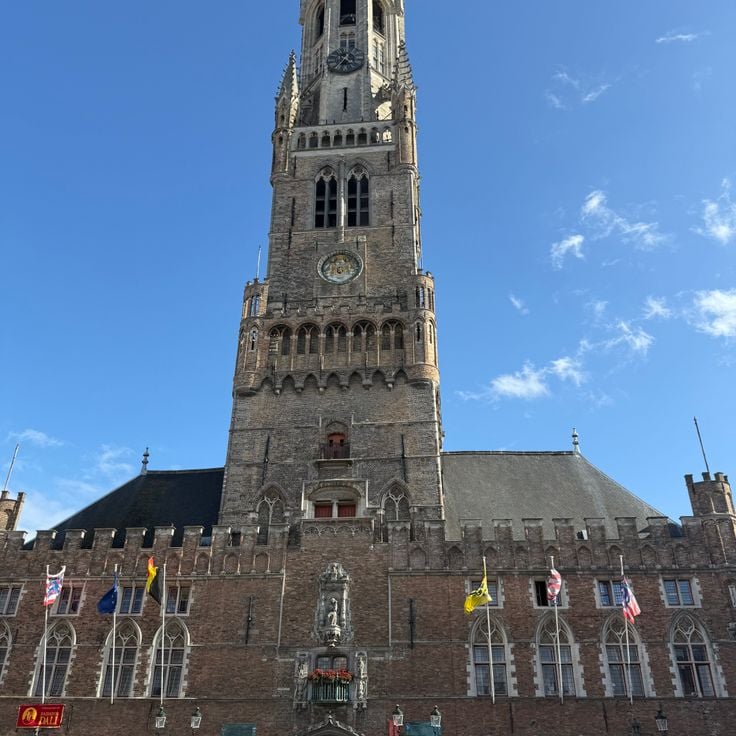
The Belfry and Cloth Hall form the heart of Bruges. This medieval structure combines a tall tower with a marketplace building beneath it. The tower served as the center of city life, acting as a watchtower, bell tower, and treasury vault. Below it, trade activities took place, especially the cloth trade that made Bruges wealthy between the 13th and 15th centuries. The carillon rings out regularly over the city. Together, these buildings show how closely economic power and city government were linked in that time.
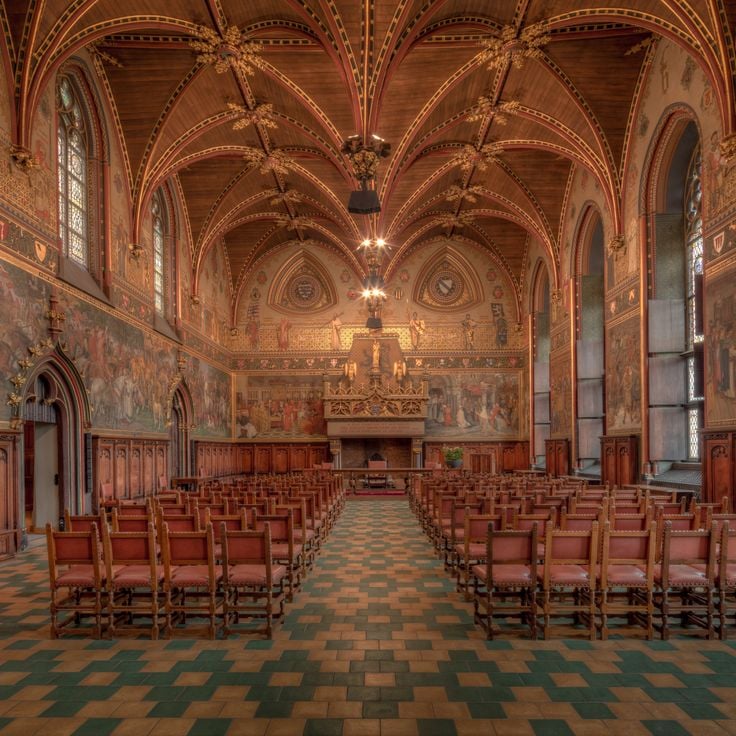
The Town Hall of Bruges is a Gothic building constructed between 1376 and 1420. Its facade displays six pointed-arch windows and 48 niches filled with statues of Flanders' counts. This structure stands at the heart of the city and reflects Bruges' importance as a wealthy medieval trading center. The Town Hall served as the seat of city government and power, where major decisions affecting the community were made.
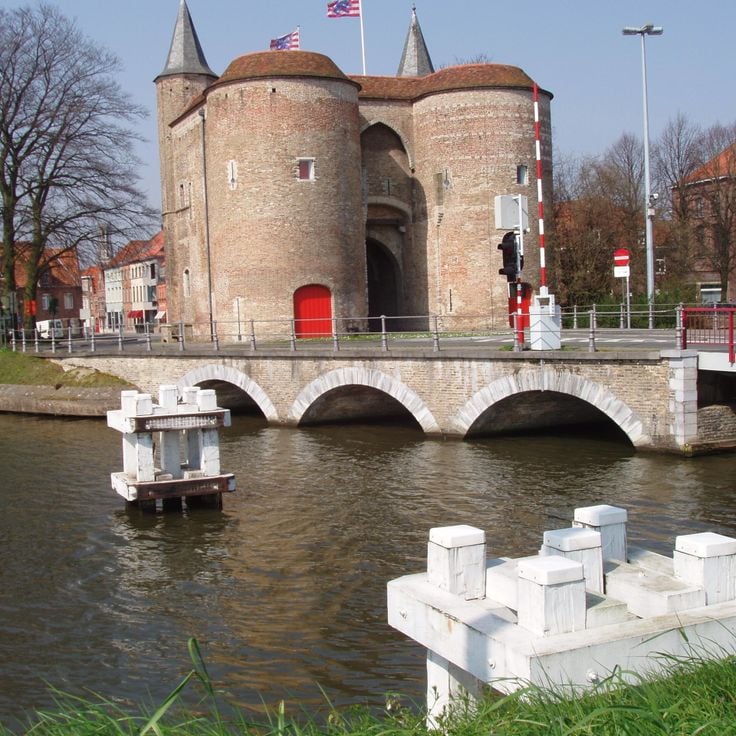
The Gand Gate in Bruges is a fortified gateway dating from the 13th century, once serving as one of the four principal entrances to the city walls. This stone structure features medieval defensive architecture including loopholes and a drawbridge. As part of Bruges' extensive fortifications, the gate reflects the defensive needs of a prosperous trading city during its peak era. Today, this monument stands connected to the other buildings and public spaces of Bruges, telling the story of the city's commercial importance and urban life in this significant medieval community.
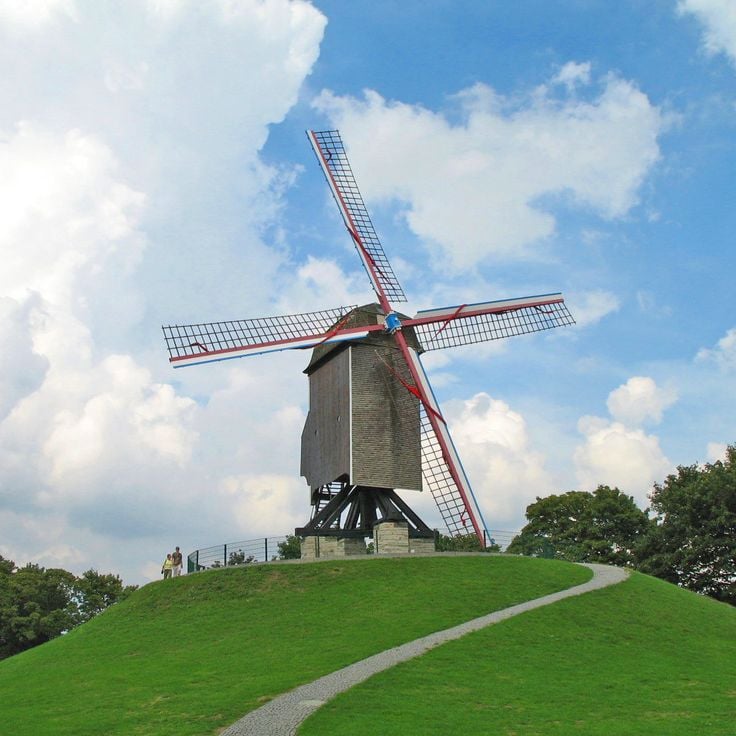
This wooden windmill from the 18th century sits on Bruges' city wall and still produces flour today. The building and its original mechanisms have been preserved. It tells the story of a time when mills were essential to supplying the city, and remains today as a living record of craftwork from centuries past.
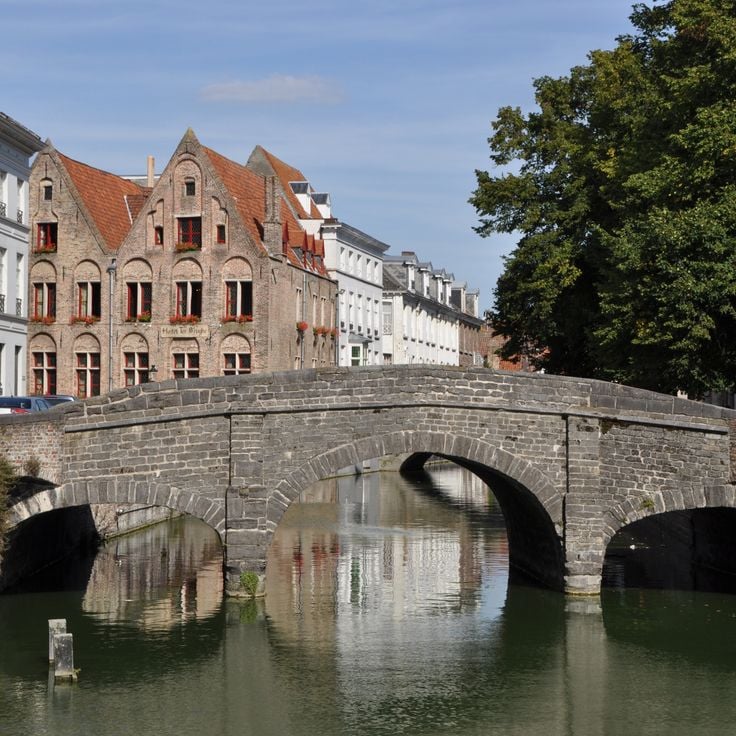
This stone bridge built in the 13th century in Bruges spans a canal between Rue des Augustins and Rue Mariastraat. It is among the oldest bridges in the city and reflects the early expansion of the canal network that shaped Bruges' commerce and growth. The Pont des Augustins sits in the heart of the medieval city and allowed residents and merchants to move between different neighborhoods.
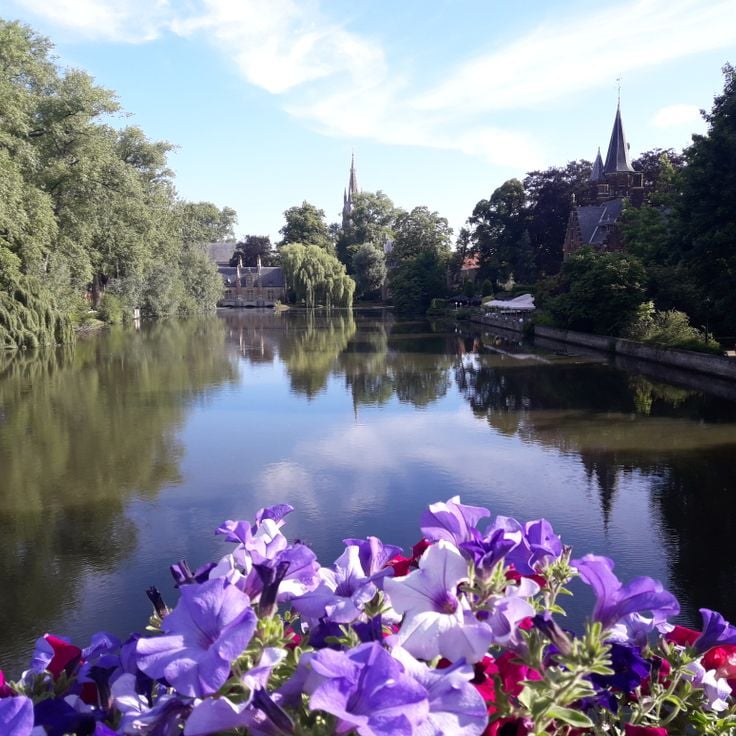
The Lake of Love in Bruges is a medieval body of water that once formed part of the city's fortifications and infrastructure. This water feature sits within the historic urban landscape, providing a quiet spot among the old buildings and streets. The lake has long held stories and local tales passed down through generations. Today, this place invites visitors to walk along its banks and understand how water shaped daily life in the medieval city.
The Musée de l'Église Notre-Dame occupies a Gothic church built between the 13th and 15th centuries. Its brick tower reaches 115.5 meters high and ranks among the tallest of its type. The museum houses a marble sculpture by Michelangelo. This building reflects the craftsmanship of the Middle Ages and Bruges' importance during that period as a major trading hub. The tower rises above the city and once signaled the power and prosperity of this community.
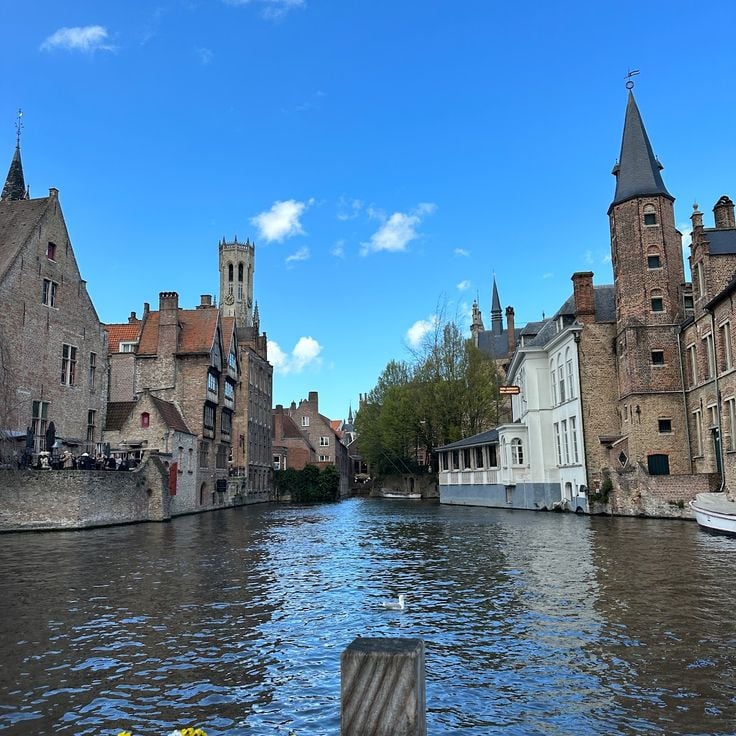
The Quai du Rosaire is a street along the canal in Bruges where merchants sold religious objects during the Middle Ages. The stone buildings reflect in the canal water. This place shows how the city functioned as an important trading center at that time. The old architecture and the water continue to shape this street's character today.
The Princely Beguinage Ten Wijngaarde is a religious community in Bruges founded in 1245. Women lived here in small houses arranged around a central courtyard. The buildings feature white walls typical of the period. This place shows how women organized their daily lives in a structured community separate from large monasteries. The tight arrangement of houses and the open central courtyard reveal the layout of this unique medieval way of living.
The canals of Bruges are waterways built in the Middle Ages that connect different parts of the city. They wind through the town and are crossed by stone bridges you can walk on or pass under by boat. These channels were once vital for trade and remain one of the most recognizable features of the city. Walking through Bruges, you encounter them throughout the streets. Traveling by boat lets you explore these waterways and see the old buildings from a water perspective.
This square in Bruges was home to the city's first fortress in the 9th century and now features the Gothic Town Hall and the Basilica of the Holy Blood. The Town Hall displays fine architectural details and stands as a symbol of civic power. The Basilica holds religious importance and draws visitors seeking to understand the spiritual life of medieval Bruges. The square itself is surrounded by old stone and brick buildings that frame centuries of history. Walking across these paving stones, you can sense how this was once the heart of the city's government, commerce, and community life.
The Salle de Concert in Bruges is a modern venue with two performance spaces dedicated to classical and contemporary music. It regularly hosts orchestras and chamber music throughout the year. This concert hall adds to the cultural vitality of the city and complements Bruges' medieval heritage with contemporary artistic expression.
These hospices in Bruges were built to provide shelter and care for elderly and poor residents. The buildings show Flemish architecture at its most practical and human, with interior courtyards where daily life unfolded and private chapels for residents to use. These hospices reveal how medieval Bruges took care of its vulnerable people, and they remain important records of the city's social past.
The Musée Gruuthuse displays arts, crafts, and domestic objects from the 15th to 19th centuries within a restored Gothic palace. The building once housed a wealthy merchant family and preserves their history to this day. The collections allow visitors to understand daily life and craftsmanship from past centuries. The rooms themselves tell the story of commerce's importance in Bruges' past.
The Grand-Place is the heart of Bruges, dominated by the Belfried, a medieval tower that has watched over the city for centuries. Stone buildings with ornate facades line the square, reflecting the prosperity of the Middle Ages. This was once the center of public life, where markets were held and merchants gathered. The old architecture and cobblestones tell the story of a busy trading city. Today, locals and visitors still gather here, making it the gathering place for the city.
This basilica in Bruges dates back to the 12th century and holds a cloth believed to contain holy blood. The relic is displayed to the public once a year during a procession on Ascension Day. Visitors can explore the medieval architecture of the church and learn about the religious history that has drawn people to this place for hundreds of years.
The Groeninge Museum in Bruges displays paintings from Flemish and Belgian art history from the 15th century to today. The collection shows how art developed in this region over hundreds of years. Here you find works by artists who lived or worked in Bruges, as well as paintings that reveal how the city kept its artistic importance through the centuries. The museum helps you understand Bruges cultural history through the eyes of its artists.
The Lace Centre in Bruges shows how lace has been made from the 16th century to today. Artisans work here and demonstrate their craft. The collection holds historical laces from Bruges and tells the story of this important craft that shaped the city.
The Museum of Popular Life in Bruges occupies former hospice buildings and shows how ordinary people lived in western Flanders. The collections display crafts, clothing, furniture, and everyday objects that belonged to residents over the centuries. Walking through these rooms gives you a sense of daily life away from the grand churches and public squares, revealing the homes and routines of the people who built this medieval city.
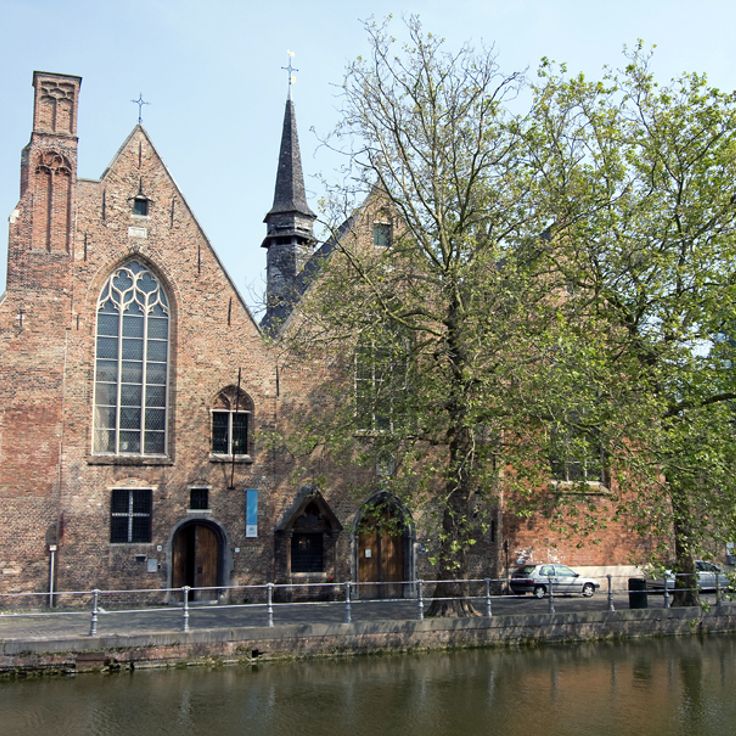
Saint-Gilles Church is a 15th century place of worship in Bruges that stands out for its impressive crossing tower and Gothic architectural features. This church represents the building style that shaped the city during its prosperous period. The tower rises above the surrounding houses and was a sign of the importance of religious institutions in medieval Bruges. The church reflects the craftsmanship and artistic ambitions that the inhabitants showed during the 15th century.
The Church of Sainte-Anne in Bruges was built between 1611 and 1628, with its interior decorated in the Baroque style between 1657 and 1661. This church reflects the artistic and religious life of Bruges during the early modern period. Walking through its doors, you encounter the craftsmanship of its time, visible in every detail of the space. The church stands as part of Bruges' layered history, showing how the city developed beyond its medieval foundations.
The Adornes estate is a noble residence from the 15th century in Bruges, showing the economic power of the wealthy merchant families who shaped the city during its prosperous years. Built before 1452, this building with its L-shaped layout and square staircase tower reflects how wealthy families lived and worked during the medieval period. Its design reveals the daily life and status of those who controlled Bruges' commercial life.
The English Convent in Bruges is a religious complex built in the 17th century with a church, cloisters, and a dome designed by architect H. Pulinx the Elder between 1736 and 1739. This building shows how religious communities lived and prayed within the city walls. The architecture blends earlier building styles with 18th-century design elements. Today, visitors can experience the quiet of this place and observe the careful craftsmanship in each room and corridor.
The Guild of Saint Sebastian in Bruges is a historic guildhouse of archers built in 1573. The building stands out for its distinctive polygonal staircase tower. It tells the story of guild traditions and craftsmanship in medieval Bruges, showing how organized groups of citizens created meeting spaces and shaped their communities. The structure reflects how important these guilds were to the social and economic life of the city.
This 19th-century neoclassical provincial palace stands on Bruges' main square and serves as an administrative center. The facade features elaborate stone ornaments that reflect the building's importance. The Hotel Provincial shapes the appearance of the square and connects with the medieval structures of the city.
The Cathedral of the Holy Saviour in Bruges is a religious building spanning nine centuries, with stone walls and massive towers that reflect the city's importance during the Middle Ages. Pointed windows mark its exterior. Inside, medieval tombs and Flemish paintings cover the walls, showing how this cathedral served both spiritual and artistic purposes in this major trading city.
The Beer Museum in Bruges spreads across three floors and tells the story of Belgian beer through the centuries. Visitors can see brewing equipment on display and experience a tasting room on the top floor. The museum reveals how beer production shaped the city and remains a place where visitors learn about this craft that is central to Belgian culture.
Historium in Bruges is an interactive museum that brings medieval Bruges to life through multimedia experiences and historical reenactments. Visitors discover how people lived and worked during the Middle Ages. The museum tells the story of when Bruges was a thriving trading center, with its streets filled with craftspeople, merchants, and citizens. The exhibitions move through different rooms displaying scenes from daily life, from the homes of townspeople to markets and workshops. It is a place where the city's history becomes real and tangible.
The Kruispoort is a key gateway that once protected medieval Bruges. Built around 1400, this stone gate still stands at the eastern edge of the old town. Its octagonal towers and barrel-vaulted passage show how builders of that era constructed their defenses. The gate was part of the city walls that kept Bruges secure and managed who entered and left. When you pass through it today, you can picture merchants and travelers arriving from the east centuries ago.
The Minnewater is an 18th-century stone bridge linking two important areas of medieval Bruges. With its iron railings, this crossing spans one of the city's characteristic canals and has become a quiet gathering spot for locals and visitors. The structure reflects the practical engineering of its time and shows how the city used its waterways to connect different neighborhoods.
This church was built between 1851 and 1864 in the neo-Gothic style and ranks among the first neo-Gothic churches in Belgium. The building features a tall spire and characteristic pointed arches. It stands in Bruges, a city with a remarkable medieval history, and contributes to the rich architectural heritage that reflects the importance of this city from the 13th to 15th century. The church exemplifies the architectural variety of Bruges, where historical layers from different periods overlap.
The Sashuis is a sluice house built in 1519 in Bruges to control water levels in the inner canals. The building displays typical late Gothic features with pointed gables and stepped dormer windows. Its purpose was crucial for managing the water system that runs through the medieval city. This structure combines practical engineering with architectural craft and shows the technical innovations that made Bruges prosper in the Middle Ages.
The Godshuis De Meulenaere is a hospice complex built in 1613 in Bruges, featuring a central chapel and two wings of single-room dwellings. This building shows how Bruges took care of its poor and sick during the 17th century. The structure is part of Bruges' medieval heritage and reveals the social organization of this prosperous trading city. Walking through this complex, you can understand how charity and daily life were managed in an important urban center of that era.
The Abbey of Sainte-Godelieve is a female monastery located in the historic center of Bruges. Its convent buildings date to the 17th century and were built according to plans from 1626. The abbey shows how religious communities lived and worked during this period. The church and cloister buildings are part of the medieval and early modern history of Bruges. Walking through these spaces reveals how monastic life developed in this prosperous city.
The Belfry and Cloth Hall form the heart of Bruges. This medieval structure combines a tall tower with a marketplace building beneath it. The tower served as the center of city life, acting as a watchtower, bell tower, and treasury vault. Below it, trade activities took place, especially the cloth trade that made Bruges wealthy between the 13th and 15th centuries. The carillon rings out regularly over the city. Together, these buildings show how closely economic power and city government were linked in that time.
The Town Hall of Bruges is a Gothic building constructed between 1376 and 1420. Its facade displays six pointed-arch windows and 48 niches filled with statues of Flanders' counts. This structure stands at the heart of the city and reflects Bruges' importance as a wealthy medieval trading center. The Town Hall served as the seat of city government and power, where major decisions affecting the community were made.
The Gand Gate in Bruges is a fortified gateway dating from the 13th century, once serving as one of the four principal entrances to the city walls. This stone structure features medieval defensive architecture including loopholes and a drawbridge. As part of Bruges' extensive fortifications, the gate reflects the defensive needs of a prosperous trading city during its peak era. Today, this monument stands connected to the other buildings and public spaces of Bruges, telling the story of the city's commercial importance and urban life in this significant medieval community.
This wooden windmill from the 18th century sits on Bruges' city wall and still produces flour today. The building and its original mechanisms have been preserved. It tells the story of a time when mills were essential to supplying the city, and remains today as a living record of craftwork from centuries past.
This stone bridge built in the 13th century in Bruges spans a canal between Rue des Augustins and Rue Mariastraat. It is among the oldest bridges in the city and reflects the early expansion of the canal network that shaped Bruges' commerce and growth. The Pont des Augustins sits in the heart of the medieval city and allowed residents and merchants to move between different neighborhoods.
The Lake of Love in Bruges is a medieval body of water that once formed part of the city's fortifications and infrastructure. This water feature sits within the historic urban landscape, providing a quiet spot among the old buildings and streets. The lake has long held stories and local tales passed down through generations. Today, this place invites visitors to walk along its banks and understand how water shaped daily life in the medieval city.
The Musée de l'Église Notre-Dame occupies a Gothic church built between the 13th and 15th centuries. Its brick tower reaches 115.5 meters high and ranks among the tallest of its type. The museum houses a marble sculpture by Michelangelo. This building reflects the craftsmanship of the Middle Ages and Bruges' importance during that period as a major trading hub. The tower rises above the city and once signaled the power and prosperity of this community.
The Quai du Rosaire is a street along the canal in Bruges where merchants sold religious objects during the Middle Ages. The stone buildings reflect in the canal water. This place shows how the city functioned as an important trading center at that time. The old architecture and the water continue to shape this street's character today.
The Princely Beguinage Ten Wijngaarde is a religious community in Bruges founded in 1245. Women lived here in small houses arranged around a central courtyard. The buildings feature white walls typical of the period. This place shows how women organized their daily lives in a structured community separate from large monasteries. The tight arrangement of houses and the open central courtyard reveal the layout of this unique medieval way of living.
The canals of Bruges are waterways built in the Middle Ages that connect different parts of the city. They wind through the town and are crossed by stone bridges you can walk on or pass under by boat. These channels were once vital for trade and remain one of the most recognizable features of the city. Walking through Bruges, you encounter them throughout the streets. Traveling by boat lets you explore these waterways and see the old buildings from a water perspective.
This square in Bruges was home to the city's first fortress in the 9th century and now features the Gothic Town Hall and the Basilica of the Holy Blood. The Town Hall displays fine architectural details and stands as a symbol of civic power. The Basilica holds religious importance and draws visitors seeking to understand the spiritual life of medieval Bruges. The square itself is surrounded by old stone and brick buildings that frame centuries of history. Walking across these paving stones, you can sense how this was once the heart of the city's government, commerce, and community life.
The Salle de Concert in Bruges is a modern venue with two performance spaces dedicated to classical and contemporary music. It regularly hosts orchestras and chamber music throughout the year. This concert hall adds to the cultural vitality of the city and complements Bruges' medieval heritage with contemporary artistic expression.
These hospices in Bruges were built to provide shelter and care for elderly and poor residents. The buildings show Flemish architecture at its most practical and human, with interior courtyards where daily life unfolded and private chapels for residents to use. These hospices reveal how medieval Bruges took care of its vulnerable people, and they remain important records of the city's social past.
The Musée Gruuthuse displays arts, crafts, and domestic objects from the 15th to 19th centuries within a restored Gothic palace. The building once housed a wealthy merchant family and preserves their history to this day. The collections allow visitors to understand daily life and craftsmanship from past centuries. The rooms themselves tell the story of commerce's importance in Bruges' past.
The Grand-Place is the heart of Bruges, dominated by the Belfried, a medieval tower that has watched over the city for centuries. Stone buildings with ornate facades line the square, reflecting the prosperity of the Middle Ages. This was once the center of public life, where markets were held and merchants gathered. The old architecture and cobblestones tell the story of a busy trading city. Today, locals and visitors still gather here, making it the gathering place for the city.
This basilica in Bruges dates back to the 12th century and holds a cloth believed to contain holy blood. The relic is displayed to the public once a year during a procession on Ascension Day. Visitors can explore the medieval architecture of the church and learn about the religious history that has drawn people to this place for hundreds of years.
The Groeninge Museum in Bruges displays paintings from Flemish and Belgian art history from the 15th century to today. The collection shows how art developed in this region over hundreds of years. Here you find works by artists who lived or worked in Bruges, as well as paintings that reveal how the city kept its artistic importance through the centuries. The museum helps you understand Bruges cultural history through the eyes of its artists.
The Lace Centre in Bruges shows how lace has been made from the 16th century to today. Artisans work here and demonstrate their craft. The collection holds historical laces from Bruges and tells the story of this important craft that shaped the city.
The Museum of Popular Life in Bruges occupies former hospice buildings and shows how ordinary people lived in western Flanders. The collections display crafts, clothing, furniture, and everyday objects that belonged to residents over the centuries. Walking through these rooms gives you a sense of daily life away from the grand churches and public squares, revealing the homes and routines of the people who built this medieval city.
Saint-Gilles Church is a 15th century place of worship in Bruges that stands out for its impressive crossing tower and Gothic architectural features. This church represents the building style that shaped the city during its prosperous period. The tower rises above the surrounding houses and was a sign of the importance of religious institutions in medieval Bruges. The church reflects the craftsmanship and artistic ambitions that the inhabitants showed during the 15th century.
The Church of Sainte-Anne in Bruges was built between 1611 and 1628, with its interior decorated in the Baroque style between 1657 and 1661. This church reflects the artistic and religious life of Bruges during the early modern period. Walking through its doors, you encounter the craftsmanship of its time, visible in every detail of the space. The church stands as part of Bruges' layered history, showing how the city developed beyond its medieval foundations.
The Adornes estate is a noble residence from the 15th century in Bruges, showing the economic power of the wealthy merchant families who shaped the city during its prosperous years. Built before 1452, this building with its L-shaped layout and square staircase tower reflects how wealthy families lived and worked during the medieval period. Its design reveals the daily life and status of those who controlled Bruges' commercial life.
The English Convent in Bruges is a religious complex built in the 17th century with a church, cloisters, and a dome designed by architect H. Pulinx the Elder between 1736 and 1739. This building shows how religious communities lived and prayed within the city walls. The architecture blends earlier building styles with 18th-century design elements. Today, visitors can experience the quiet of this place and observe the careful craftsmanship in each room and corridor.
The Guild of Saint Sebastian in Bruges is a historic guildhouse of archers built in 1573. The building stands out for its distinctive polygonal staircase tower. It tells the story of guild traditions and craftsmanship in medieval Bruges, showing how organized groups of citizens created meeting spaces and shaped their communities. The structure reflects how important these guilds were to the social and economic life of the city.
This 19th-century neoclassical provincial palace stands on Bruges' main square and serves as an administrative center. The facade features elaborate stone ornaments that reflect the building's importance. The Hotel Provincial shapes the appearance of the square and connects with the medieval structures of the city.
The Cathedral of the Holy Saviour in Bruges is a religious building spanning nine centuries, with stone walls and massive towers that reflect the city's importance during the Middle Ages. Pointed windows mark its exterior. Inside, medieval tombs and Flemish paintings cover the walls, showing how this cathedral served both spiritual and artistic purposes in this major trading city.
The Beer Museum in Bruges spreads across three floors and tells the story of Belgian beer through the centuries. Visitors can see brewing equipment on display and experience a tasting room on the top floor. The museum reveals how beer production shaped the city and remains a place where visitors learn about this craft that is central to Belgian culture.
Historium in Bruges is an interactive museum that brings medieval Bruges to life through multimedia experiences and historical reenactments. Visitors discover how people lived and worked during the Middle Ages. The museum tells the story of when Bruges was a thriving trading center, with its streets filled with craftspeople, merchants, and citizens. The exhibitions move through different rooms displaying scenes from daily life, from the homes of townspeople to markets and workshops. It is a place where the city's history becomes real and tangible.
The Kruispoort is a key gateway that once protected medieval Bruges. Built around 1400, this stone gate still stands at the eastern edge of the old town. Its octagonal towers and barrel-vaulted passage show how builders of that era constructed their defenses. The gate was part of the city walls that kept Bruges secure and managed who entered and left. When you pass through it today, you can picture merchants and travelers arriving from the east centuries ago.
The Minnewater is an 18th-century stone bridge linking two important areas of medieval Bruges. With its iron railings, this crossing spans one of the city's characteristic canals and has become a quiet gathering spot for locals and visitors. The structure reflects the practical engineering of its time and shows how the city used its waterways to connect different neighborhoods.
This church was built between 1851 and 1864 in the neo-Gothic style and ranks among the first neo-Gothic churches in Belgium. The building features a tall spire and characteristic pointed arches. It stands in Bruges, a city with a remarkable medieval history, and contributes to the rich architectural heritage that reflects the importance of this city from the 13th to 15th century. The church exemplifies the architectural variety of Bruges, where historical layers from different periods overlap.
The Sashuis is a sluice house built in 1519 in Bruges to control water levels in the inner canals. The building displays typical late Gothic features with pointed gables and stepped dormer windows. Its purpose was crucial for managing the water system that runs through the medieval city. This structure combines practical engineering with architectural craft and shows the technical innovations that made Bruges prosper in the Middle Ages.
The Godshuis De Meulenaere is a hospice complex built in 1613 in Bruges, featuring a central chapel and two wings of single-room dwellings. This building shows how Bruges took care of its poor and sick during the 17th century. The structure is part of Bruges' medieval heritage and reveals the social organization of this prosperous trading city. Walking through this complex, you can understand how charity and daily life were managed in an important urban center of that era.
The Abbey of Sainte-Godelieve is a female monastery located in the historic center of Bruges. Its convent buildings date to the 17th century and were built according to plans from 1626. The abbey shows how religious communities lived and worked during this period. The church and cloister buildings are part of the medieval and early modern history of Bruges. Walking through these spaces reveals how monastic life developed in this prosperous city.
The Belfry and Cloth Hall form the heart of Bruges. This medieval structure combines a tall tower with a marketplace building beneath it. The tower served as the center of city life, acting as a watchtower, bell tower, and treasury vault. Below it, trade activities took place, especially the cloth trade that made Bruges wealthy between the 13th and 15th centuries. The carillon rings out regularly over the city. Together, these buildings show how closely economic power and city government were linked in that time.
The Town Hall of Bruges is a Gothic building constructed between 1376 and 1420. Its facade displays six pointed-arch windows and 48 niches filled with statues of Flanders' counts. This structure stands at the heart of the city and reflects Bruges' importance as a wealthy medieval trading center. The Town Hall served as the seat of city government and power, where major decisions affecting the community were made.
The Gand Gate in Bruges is a fortified gateway dating from the 13th century, once serving as one of the four principal entrances to the city walls. This stone structure features medieval defensive architecture including loopholes and a drawbridge. As part of Bruges' extensive fortifications, the gate reflects the defensive needs of a prosperous trading city during its peak era. Today, this monument stands connected to the other buildings and public spaces of Bruges, telling the story of the city's commercial importance and urban life in this significant medieval community.
This wooden windmill from the 18th century sits on Bruges' city wall and still produces flour today. The building and its original mechanisms have been preserved. It tells the story of a time when mills were essential to supplying the city, and remains today as a living record of craftwork from centuries past.
This stone bridge built in the 13th century in Bruges spans a canal between Rue des Augustins and Rue Mariastraat. It is among the oldest bridges in the city and reflects the early expansion of the canal network that shaped Bruges' commerce and growth. The Pont des Augustins sits in the heart of the medieval city and allowed residents and merchants to move between different neighborhoods.