National Historical and Archaeological Reserve "Pliska", Archaeological reserve and museum in Pliska, Bulgaria
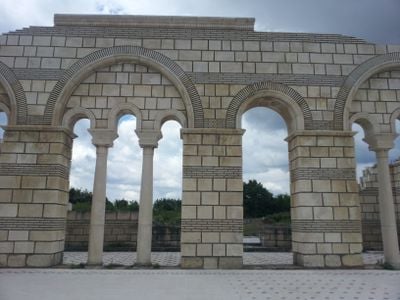
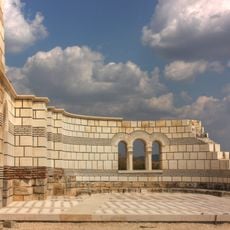
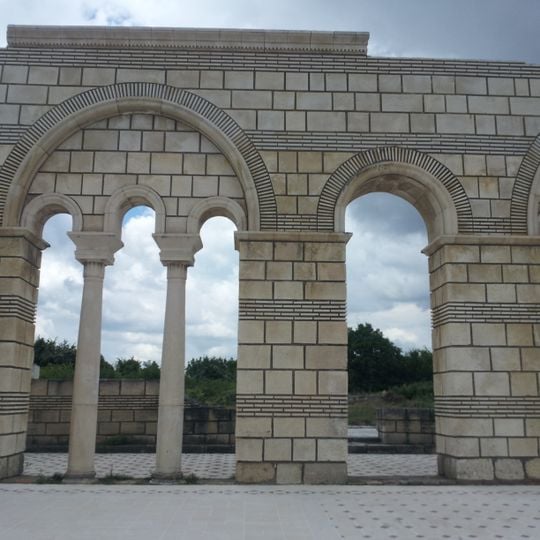
Pliska is an archaeological reserve 28 km northeast of Shumen and 3 km from the modern town of Pliska. Its Inner Town covers 0.5 sq km within walls about 12 m high, with a 2.6 m thick brick citadel wall. The best-preserved building is the Great Palace; the Large Basilica, the largest Christian church in Southeast Europe at the time of Bulgaria's conversion, lies 1.3 km from the Inner Town's east gate. The site is an open-air museum.
Khan Asparuh established the first capital of the Bulgarian state here in 681 after settling in the region. The city held this important role until the administrative center moved elsewhere in 893.
The name Pliska comes from the medieval Bulgarian form Pliskusa, used by Byzantine writers Georgios Kedrenos and Anna Komnena. Since 2007 the reserve has hosted a summer archaeological seminar where Bulgarian secondary-school pupils excavate alongside archaeologists and attend lectures by historians, under the patronage of the president in 2007.
The reserve lies 28 km northeast of Shumen and 3 km from the modern town of Pliska, which shares its name. The excavated remains are kept as an open-air museum that can be visited outside working hours. The site is part of the Hundred National Tourist Objects list.
The site is part of Bulgaria's Hundred National Tourist Objects. Since 2007, a summer archaeological seminar has let secondary-school students excavate alongside professional archaeologists and attend lectures by Bulgarian historians; the 2007 edition was held under the patronage of the President of Bulgaria.
The community of curious travelers
AroundUs brings together thousands of curated places, local tips, and hidden gems, enriched daily by 93,471 contributors worldwide.