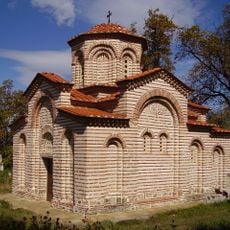
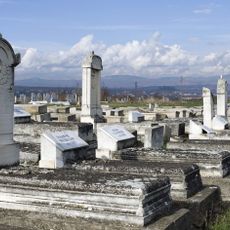
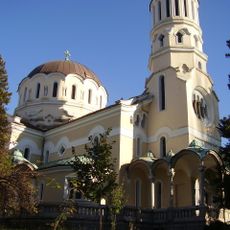
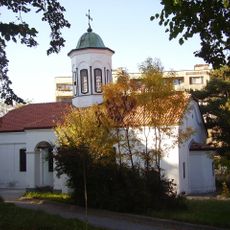
Pautaliya, Archaeological site in Kyustendil, Bulgaria.
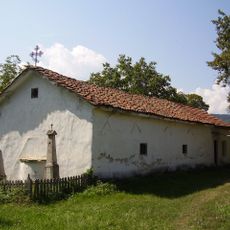
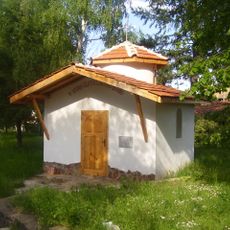
Pautaliya is an ancient Roman city whose 2nd-century walls enclosed 29.3 hectares in an elongated polygon. Its streets, wider than those of other Roman cities in Bulgaria, followed an orthogonal grid. A second fortification of 2.1 hectares was built on Hisarlaka hill in the late 4th century. Excavations have revealed seven churches, including a 5th–6th-century building with a floor mosaic of over 40 square metres.
Pautalia grew from a Thracian settlement of the Dentheletae around hot springs. In 106 CE Trajan granted it city status, adding the name Ulpia. It minted coins from Antoninus Pius to Caracalla and, under Aurelian, ranked third in Dacia Mediterranea after Serdica and Naissus. The last written mention dates to 553.
The settlement served as a gathering place for worship and healing, drawing people from surrounding regions who sought relief through sacred springs. Religious practices here blended traditions from the local population with those of Roman newcomers.
The archaeological site can be explored on the ground while ongoing excavations continue to uncover artifacts that are preserved in the Regional History Museum of Kyustendil. Visitors can see coins, sculptures, and everyday objects displayed there.
The site featured an advanced bathing system that used underground heating channels to warm water from natural springs for medical purposes. This engineering demonstrates how central thermal healing was to daily life here.
The community of curious travelers
AroundUs brings together thousands of curated places, local tips, and hidden gems, enriched daily by 93,962 contributors worldwide.