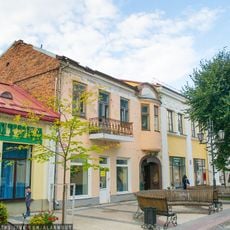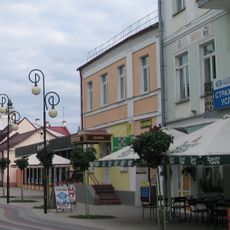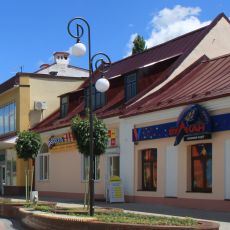
Church of St. Stanislaus in Pinsk, Baroque Catholic church in Pinsk, Belarus.
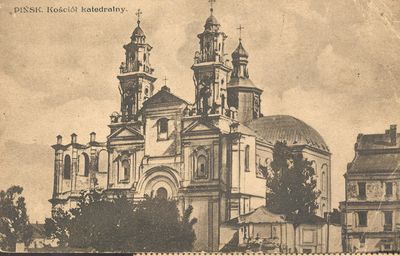
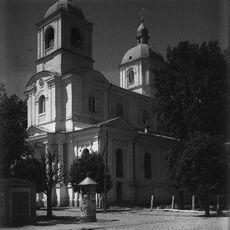
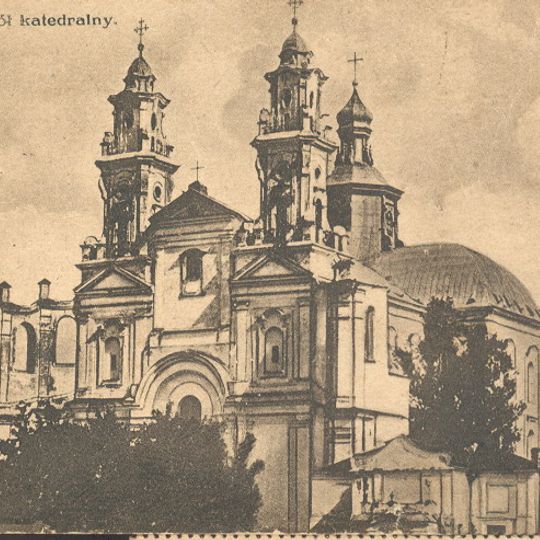
The Church of St. Stanislaus was a brick church built in Pinsk from 1635 to 1648 for the Jesuit college, with a volume of 40,000 m³, a height of 28 m and a facade up to 25 m wide. Its facade had two 11-metre three-tier towers and side wings ending in semicircular walls with arched openings. Inside were paired columns, carved wooden walls and a vault fresco of Jesus raising Lazarus. It was blown up in 1953.
Begun in 1635 at the Jesuit college in Pinsk with funds from Albrycht Stanisław Radziwiłł, chancellor of the Grand Duchy of Lithuania, and completed in 1648, it was then the Grand Duchy's largest church. The saint Andrew Bobola was buried in its crypt in May 1657, later moved to Warsaw. After the Jesuit order was suppressed in 1773, it passed to the Basilians and in 1800 was consecrated as an Orthodox Epiphany monastery. It was blown up in 1953 during the city's reconstruction.
The church belonged to the Jesuit college in Pinsk, and its interior was decorated with woodcarving and a vault fresco of Jesus raising Lazarus. The Jesuit painters Jakub Bretzer and Ignatius Doretti are thought to have worked on the interiors. The building was blown up in 1953 during the city's reconstruction.
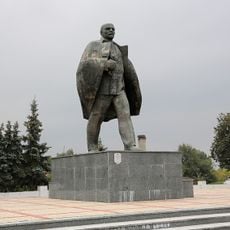
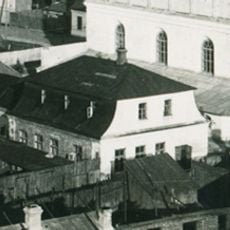
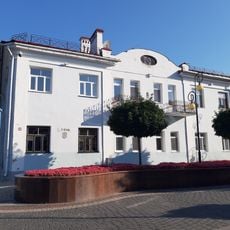
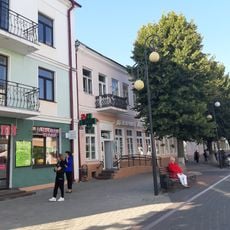
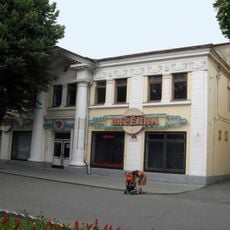
The church no longer stands: it was blown up in 1953 during the reconstruction of Pinsk, when a monument to Lenin was installed on the square. Nothing of the building can be visited today, so look instead for the site in the city centre and for photographs and drawings of the 28-metre facade in local museums and publications.
The church no longer exists: it was blown up in 1953 during the reconstruction of Pinsk, when a monument to Lenin was installed on the square. Its two 11-metre three-tier towers and 28-metre crosses survived only in photographs and drawings.
The community of curious travelers
AroundUs brings together thousands of curated places, local tips, and hidden gems, enriched daily by 94,463 contributors worldwide.