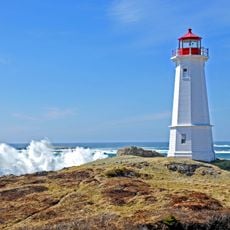
Fortress of Louisbourg, Historic fortress and national site in Cape Breton, Canada
Louisbourg is a reconstructed 18th-century fortified town on the rocky Atlantic coast of Cape Breton. More than 60 timber and stone buildings sit behind earthworks and bastions, including barracks, fishermen's cottages, a chapel, an inn and watchtowers overlooking the sea.
France founded the settlement in 1713 as Havre à l'Anglois and made it the capital of Île Royale in 1718; the walls were built mainly between 1720 and 1740. A New England force took the fortress on 16 June 1745, and the Treaty of Aix-la-Chapelle returned it to France in 1748. British forces under Jeffrey Amherst besieged it from 8 June 1758 and accepted its surrender on 26 July; British engineers then destroyed the fortifications.
Costumed interpreters play soldiers, merchants, fishers or bakers and speak with guests as if the 18th century never ended. The reconstructed lanes smell of wood smoke, fresh bread and fish brought in from the harbor.
The complex opens daily from late May through mid-October and usually requires a few hours to explore on foot. Fog or rain can make paths muddy, so sturdy footwear helps.
Archaeologists found more than 4 million objects in the old ditches, including buttons, pipes, nails and coins that now fill the reconstructed rooms. Some of the walls run below modern cottages on the edge of town.
The community of curious travelers
AroundUs brings together thousands of curated places, local tips, and hidden gems, enriched daily by 94,070 contributors worldwide.