Zoo Sauvage de St-Félicien, Animal conservation center in Saint-Félicien, Canada
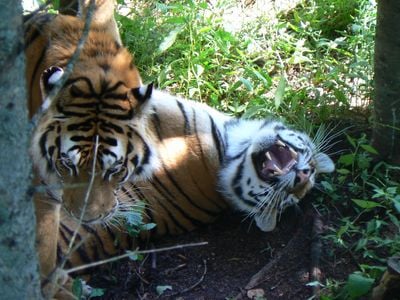
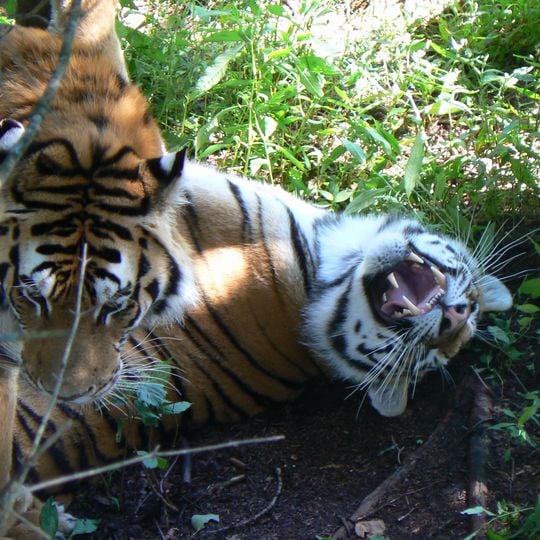
Zoo Sauvage de St-Félicien covers 485 hectares at Saint-Félicien, Quebec, and holds close to 1,000 animals of 80 boreal species. Its Nature Park Trails run 7 kilometres, crossed aboard a screened-in little train through recreated Canadian regions where the animals roam free. Since 2007 an Asian section has housed Japanese macaques, joined by Japanese cranes in 2008 and Amur tigers in 2009.
The zoo was founded in 1960 by Ghislain Gagnon and six others on an abandoned fox farm lent by Haldaige Laflamme. In 1972 it added the Nature Park Trails and six historic villages, and in 1989 it took the name Zoo Sauvage. The exotic collection was dropped in 1995, and the Centre de conservation de la biodiversité boréale was founded in 2001.
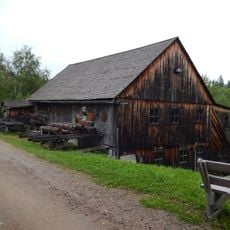
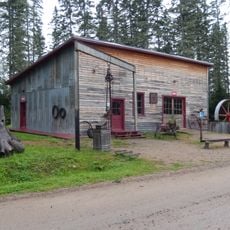
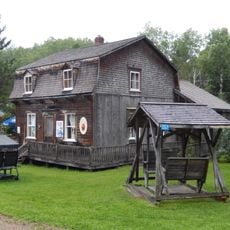
The zoo's name changed to Zoo Sauvage in 1989 to mark its new focus on education, research and natural and cultural patrimony. The Parc des sentiers de la nature includes reproductions of six historic sites, among them a lumberjack camp, a colonist farm, a trading post and an Amerindian village, and a scene of the great forest fire that ravaged the Saguenay-Lac-Saint-Jean region in 1870. The Boréalium, opened in 2003, shows a multi-sensory film of the zoo through the four seasons.
The 7 km Nature Park Trails are covered aboard a screened-in small train through recreated Canadian regions where animals roam free; the welcome pavilion for the trails is named after founder Ghislain Gagnon. Walking paths also cross the site, and the Boréalium, opened in 2003, holds two cinemas, one with a large 3D screen, plus exhibition halls.
The facility has built special pools for polar bears with underwater windows where you can watch them swim. This setup is one of the few ways to observe these animals from this perspective.
The community of curious travelers
AroundUs brings together thousands of curated places, local tips, and hidden gems, enriched daily by 93,795 contributors worldwide.