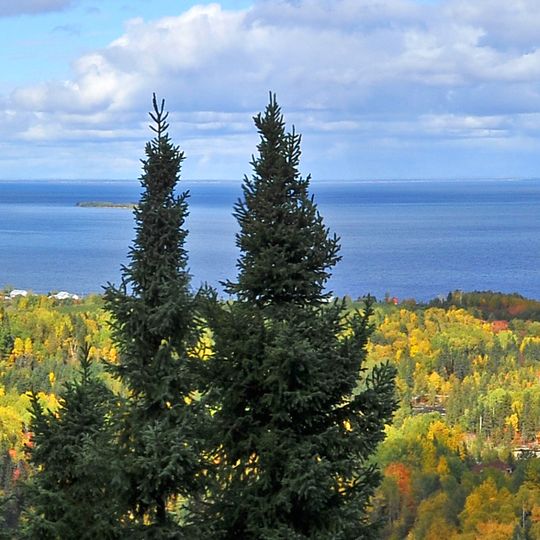
Lac Saint-Jean, Lake in Saguenay–Lac-Saint-Jean, Quebec, Canada
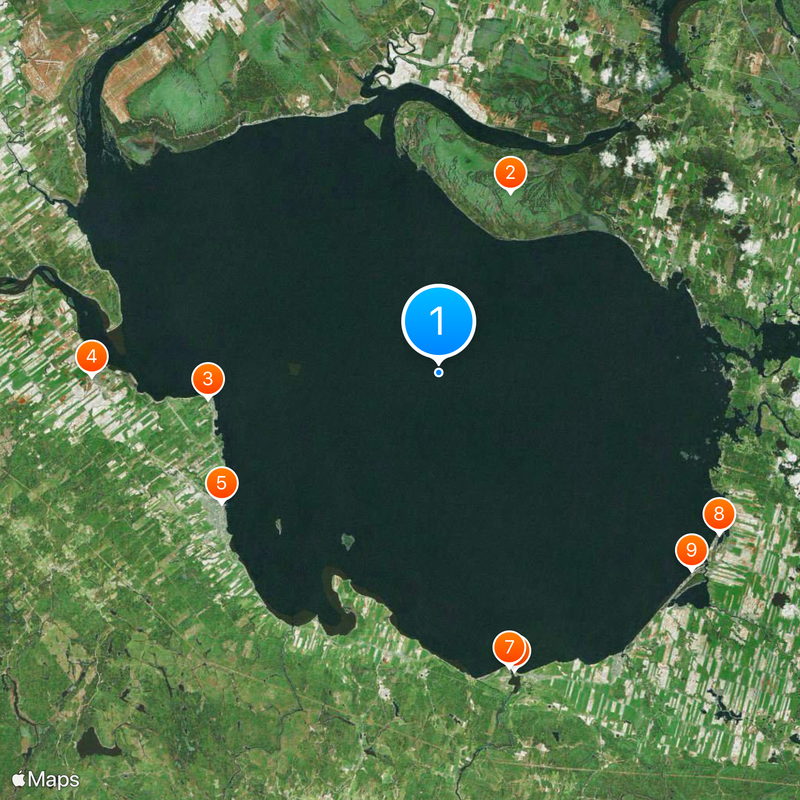
Lac Saint-Jean is a large freshwater basin in the Saguenay–Lac-Saint-Jean region of Quebec, fed by several tributaries flowing from the hinterland. Its round shape and shallow shoreline zones define the landscape around the surrounding municipalities, while two artificial outlets channel the water into the Saguenay River.
The Innu called the lake Piekuakami before European arrival. Jesuit Jean de Quen reached its shores in 1647 and gave it the French name it bears. Fur trading dominated until the 19th century, when colonization of the Saguenay–Lac-Saint-Jean region began and continued intensively into the early 20th century, with forestry and agriculture as main industries.
The Innu name Piekuakamu, meaning "flat lake", is recalled in the region's toponymy alongside the French name given by the Jesuit Jean de Quen. Louis Hémon's 1914 novel Maria Chapdelaine, set on the lake's shores, was translated into some twenty languages and fixed the area in French-language literature.
The water is regulated by dams at two outlets, which keep levels controlled throughout the year and prevent flooding. Visitors find public access points along the shoreline that offer views of the open water and opportunities for swimming or boating.
The lake's Innu name, Piekuakamu, means "flat lake", referring to its shallow depth of 63.1 m at most. The novelist Louis Hémon set his 1914 novel Maria Chapdelaine in the area around the lake; the book was later translated into twenty languages.
The community of curious travelers
AroundUs brings together thousands of curated places, local tips, and hidden gems, enriched daily by 94,240 contributors worldwide.