Port-Royal National Historic Site, Open-air museum in Port Royal, Nova Scotia, Canada
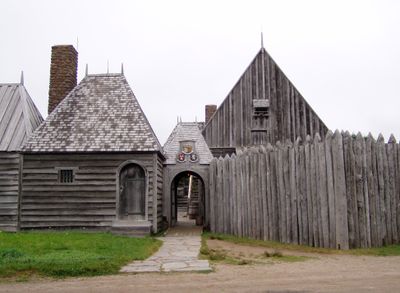
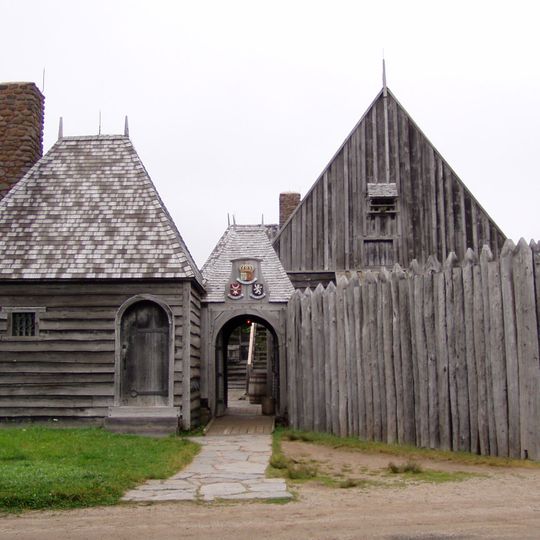
Port-Royal National Historic Site is an open-air museum in Port Royal, Annapolis County, Nova Scotia. The reconstructed wooden structures form a courtyard where furnishings and objects from the early period of French settlement are on display.
Pierre Du Gua de Monts led the founding of the Habitation at Port-Royal in 1605, after a harsh winter at Île-Saint-Croix, with Samuel de Champlain, Louis Hébert and Jean de Biencourt de Poutrincourt among the settlers. It served as the centre of the Acadian colony until English forces from Virginia destroyed it in 1613. The site was designated a national historic site in 1925, and a replica was built on the original location between 1939 and 1941 using plans discovered in France.
The site's name comes from Port-Royal, the Acadian colony centred on the habitation from 1605 to 1613. Costumed interpreters demonstrate farming, building, cooking, fur trading and Mi'kmaq life, and the Mi'kmaq Nation and chief Membertou helped the settlers build the original stockade. During the winter of 1606–07 Champlain set up l'Ordre de Bon Temps, a club whose feasts every few days brought together the colony's leading men and their Mi'kmaq neighbours.
Guided tours with costumed interpreters run from May through October and show craft techniques from that era. Visitors interested in the rooms can explore the living quarters and workshops at their own pace.
The square layout with a covered walkway was a novelty in North American settlement design for that period. This arrangement protected residents from wind and snow and made winter work easier.
The community of curious travelers
AroundUs brings together thousands of curated places, local tips, and hidden gems, enriched daily by 93,990 contributors worldwide.