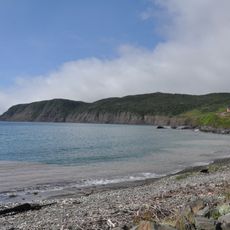
Fort Saint Louis, French colonial fort in Placentia, Canada
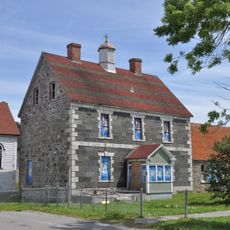
Fort Saint Louis was a stone fort begun in 1690 inside the harbour of Plaisance (now Placentia), built to replace an older wooden fort. Its enclosure ran nearly 250 metres and took in two bastions, the governor's headquarters and the garrison buildings. The ramparts stood four metres high and the walls were two metres thick.
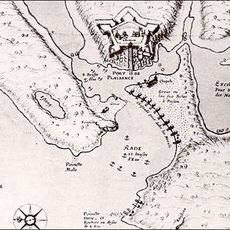
Fort Saint Louis was begun in 1690, the third French fort raised around the cove of Plaisance after Fort Plaisance (1662) and Fort Royal (1687). Built in stone inside the harbour, it replaced an earlier wooden fort and was attacked in 1692 during King William's War, at the Battle of Placentia. The Treaty of Utrecht forced the French out in 1713; the settlers moved to Île Royale, where Louisbourg was begun.
The name Plaisance, later anglicised to Placentia after 1713, came from the French word for pleasantness, and the harbour it guarded stayed a French fishing and trading base until the Treaty of Utrecht. The fort's garrison lived beside the governor's headquarters inside the 250-metre enceinte, and some thirty guns stood on the walls.
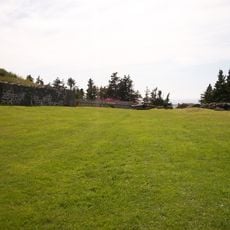
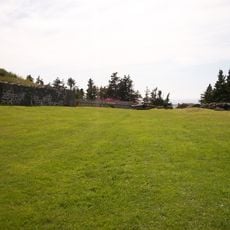
The site is easily accessible and allows visitors to see colonial military structures from the late 1600s up close. Wear sturdy shoes since the grounds are uneven and the ruins are scattered across the area.
Fort Saint Louis was attacked in 1692 during King William's War, at the Battle of Placentia, and the sources record no capture of the fort. Its roughly thirty guns were mounted behind walls two metres thick, a heavier armament than the earlier wooden Fort Plaisance it was built to reinforce.
The community of curious travelers
AroundUs brings together thousands of curated places, local tips, and hidden gems, enriched daily by 93,892 contributors worldwide.