Southwold Earthworks, Indigenous archaeological site in Iona, Canada
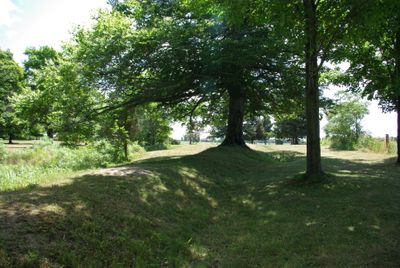
Southwold Earthworks is the remains of a Neutral village occupied about AD 1450–1550, entered from Iona Road some 3 km south of Iona, Ontario. A double oval ring of raised earthworks encloses the site; these embankments served as foundations for a double palisade that completely circled the village. The enclosed area was about 0.8 hectares, with the main entrance at the northeast corner and two other openings letting a small stream pass between the palisade rows.
The site was inhabited and fortified between 1450 and 1550 by the Attiwandaron, also known as the Neutrals to early French observers. This period represents a significant era of settlement activity before external conflicts reshaped the region.
The Oneida oral tradition holds that Southwold was not a year-round village but a seasonal place of pilgrimage, its palisade screening healing and purification rites from outside view. Archaeologists note the site sits on flat land with no natural defences and shows no sign of attack.
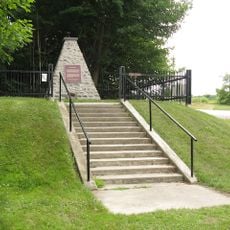
The entrance is on Iona Road, about three kilometres south of Iona and roughly 20 km west of St. Thomas. The earthworks lie on flat ground near a tributary of Talbot Creek, with the main opening at the northeast corner and two smaller gaps on the northwest and south sides.
Archaeologists found no sign the village was ever attacked, and little refuse from occupation despite an estimated 800 residents. Oneida oral tradition holds that Southwold was not a year-round village but a seasonal place of pilgrimage, its palisade screening healing and purification rituals from outside view.
The community of curious travelers
AroundUs brings together thousands of curated places, local tips, and hidden gems, enriched daily by 93,641 contributors worldwide.