Eramosa, Silurian stratigraphic unit in Ontario, Canada
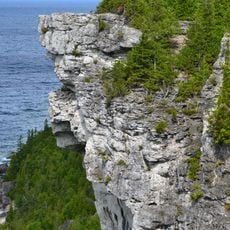
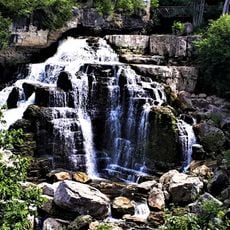
Eramosa is a Silurian stratigraphic unit of the Lockport Formation, exposed along the Niagara Escarpment in Ontario and western New York State. Its rocks are mostly dolomites, ranging from grey-weathering fine-grained dolomite at Ancaster to shaley, bituminous, brown-weathering bioturbated dolomite, with bituminous shale interbeds as the most characteristic feature. Williams named it in 1915 for exposures along the Eramosa River northeast of Guelph.
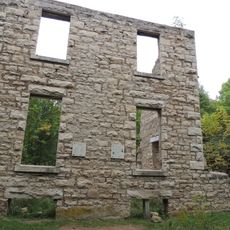
The formation developed during the Silurian period as seafloor sediment in ancient shallow marine environments millions of years ago. In the late 1800s, quarries became important sources of building stone for construction in nearby towns.
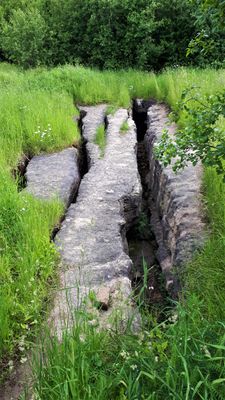
The Eramosa Karst Conservation Area preserves multiple caves and geological features within the formation, representing Ontario's natural geological heritage.
The area is accessible through regional fieldwork and geological resources documented by the Ontario Geological Survey. Visitors interested in geology can access information through local museums or scientific guides in the region.
The exceptionally preserved fossils lie in a rock layer about 8 m thick that runs for roughly 16 km across the South Bruce Peninsula. Among the finds are eurypterids, a lobopodian with preserved patterning, and an arthropod resembling Parioscorpio, known from the Waukesha biota.
The community of curious travelers
AroundUs brings together thousands of curated places, local tips, and hidden gems, enriched daily by 94,013 contributors worldwide.