Site patrimonial du Moulin-Paradis, site patrimonial du Québec
The Moulin-Paradis is a watermill complex in Kamouraska, Quebec, built from wood and stone and exemplifying rural industrial structures of the 19th century. The site comprises the main mill building, an adjacent forge workshop, and historical residences arranged around the water-powered machinery.
The mill was built in 1861 and processed grain for local farmers for decades before ceasing operations in 1948. The site received official heritage recognition in 2006, preserving its role as architectural evidence of early rural industrialization in Quebec.
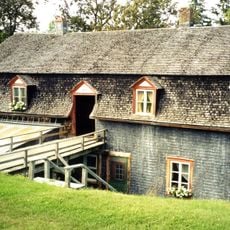
The name Paradis comes from the family that owned the mill, and the site is now run as a heritage park where the mill, forge and outbuildings are shown together. Visitors can see the wooden ramp and the shingled walls of the mill, and the site hosts guided tours and demonstrations of milling and forging during the summer season.
The mill stands on the Kamouraska riverbank, its shingled facade facing the water; the wooden ramp on the left climbs to the central opening, while the lower-right door and multi-pane window sit at ground level. Visitors approach on foot along the river side; the grounds are outdoor and unstaffed, so check local signage in Kamouraska village before setting out.
The mill's wooden ramp, visible on the left of the facade, let farmers haul grain sacks up to the central opening rather than carry them through the lower door. The building's grey cedar shingle cladding and steep roof were practical choices for snow and rain in the Kamouraska climate.
The community of curious travelers
AroundUs brings together thousands of curated places, local tips, and hidden gems, enriched daily by 94,456 contributors worldwide.