Bürgenstock, Mountain summit near Lake Lucerne, Switzerland
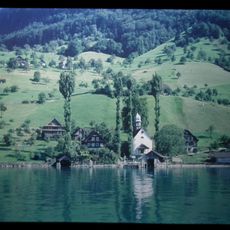
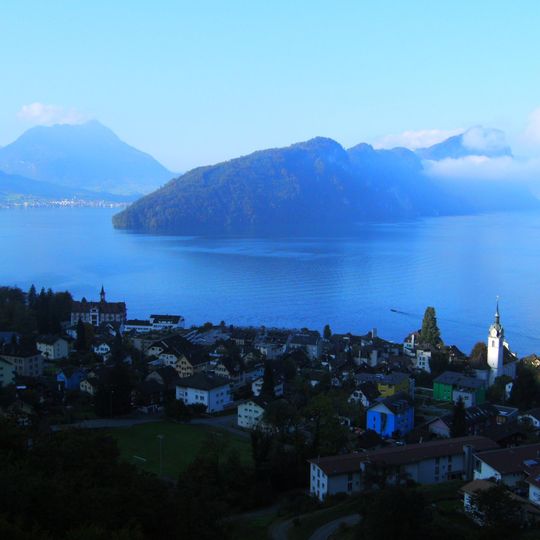
Bürgenstock is a 10 km long mountain ridge rising to 1,128 m above Lake Lucerne, which surrounds it on the north, east and southeast. Its northern slope drops steeply into the lake, while the southern slope is gentler. The ridge is densely forested, with a few lighter clearings near the top.
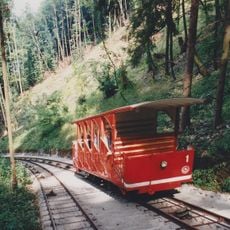
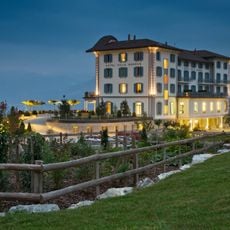
The name Bürgenberg appears in a 1378 arbitration that ended a 38-year dispute between Lucerne and Nidwalden over the Kehrsiten–Mattgrat area. Aloys Businger first documented the name Bürgenstock in 1836, and it entered the official Siegfried Map on sheet 377 in 1896. In 1872 Bucher & Durrer founded the hotel complex on Alp Tritt, and the Bürgenstock Bahn funicular from Kehrsiten followed in 1888.
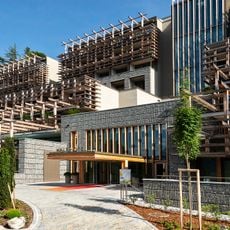
The name Bürgenstock combines Bürgen, the peninsula, with Stock, the local term for a mountain whose summit stands clearly apart from the surrounding relief; it appeared in print in 1836 in Aloys Businger's book Der Kanton Unterwalden. Since 1872 the Alp Tritt has held a hotel and conference complex, today the Bürgenstock Resort, and the mountain has been a holiday and congress destination since then.
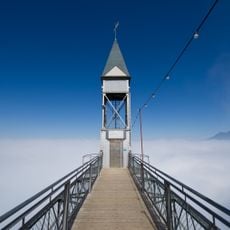
The Bürgenstock funicular has linked Kehrsiten-Bürgenstock on the lake to the resort area since 1888. The Hammetschwand lift, Europe's highest outdoor elevator, climbs the cliff face; a cliff-side path connects it with the summit. The northern slope drops steeply into Lake Lucerne, so lake access is limited to boat stations.
The Hammetschwand Lift, Europe's highest outdoor elevator, climbs roughly 153 m up the rock face below the Hammetschwand summit; it opened in 1905 and was rebuilt in 1935. A cliff path, the Felsenweg, built between 1900 and 1905, leads to its base. The lift connects the resort area with the summit viewpoint above Lake Lucerne.
The community of curious travelers
AroundUs brings together thousands of curated places, local tips, and hidden gems, enriched daily by 92,783 contributors worldwide.