Former Benedictine Abbey of All Saints, Benedictine monastery and museum in Schaffhausen, Switzerland.
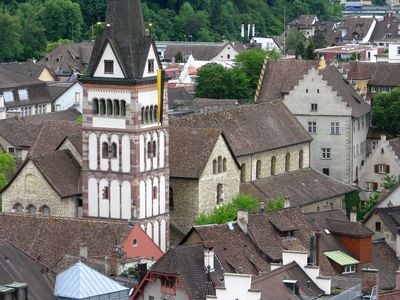
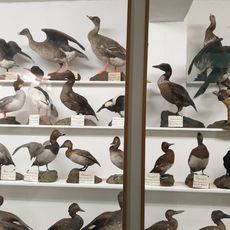
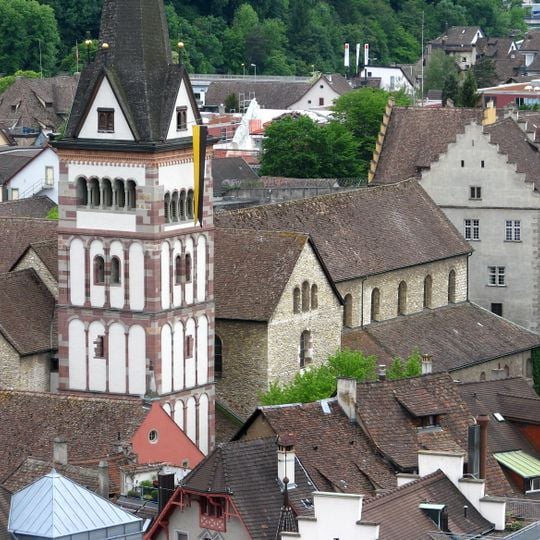
The former Benedictine abbey, founded in 1049, centres on the Münster Allerheiligen, a three-aisled Romanesque basilica built from 1090 and consecrated in the early 12th century. Its square tower rises above lower wings with steep red-tiled roofs; the complex also includes a cloister, convent buildings and the monastery garden, and now houses the Museum zu Allerheiligen.
Eberhard von Nellenburg and his wife Ita founded the Benedictine abbey; Pope Leo IX, Eberhard's uncle, consecrated an altar on the site on 22 November 1049, and the first church was consecrated in 1064. In 1080 their son Burkhard gave up the family's proprietary rights and had the monastery reformed by William of Hirsau, transferring Schaffhausen with its mint and market to the abbey. After 1189 it was an imperial abbey; in 1524 it became a collegiate foundation of twelve canons, dissolved in 1529 with the Reformation.
The monastery houses important art collections and displays works spanning different eras that document the region's artistic development. Visitors can see how religious communities supported the arts and developed their tastes over centuries.
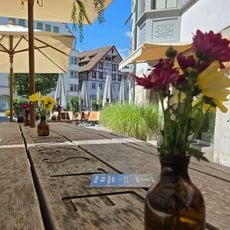
The complex sits in the centre of Schaffhausen's old town, with the Münster, cloister, monastery garden and museum entered from the same grounds. The cloister garden served as the cemetery for privileged citizens from 1577 to 1874. The town became the monastery's legal successor after the foundation was dissolved in 1529.
Eberhard von Nellenburg became a Benedictine monk in his own abbey after 1075 and died there in 1078 or 1079; he was buried in the outdoor crypt built as the family's burial chamber. Allerheiligen had replaced Reichenau Abbey as the Nellenburg burial place.
The community of curious travelers
AroundUs brings together thousands of curated places, local tips, and hidden gems, enriched daily by 94,554 contributors worldwide.