Cistercian Abbey Magerau, Cistercian monastery in Fribourg, Switzerland
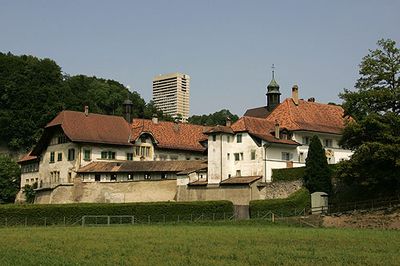
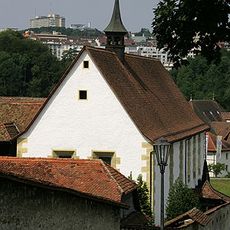
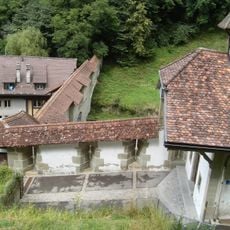
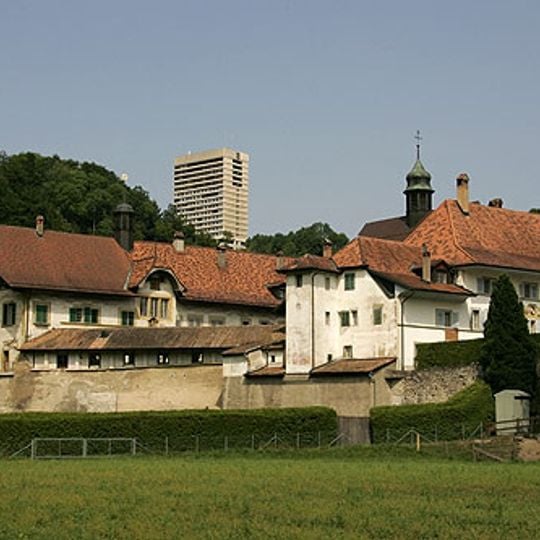
Cistercian Abbey Magerau is a monastic complex in Switzerland situated on a river at the boundary between French-speaking and German-speaking regions. The main church dates to the 13th century, while most other buildings date from the 17th century and line the waterway.
The monastery was founded in 1255 and received support from a local count whose backing helped establish it. In 1261 the community joined the Cistercian Order and came under the authority of another abbey in the region.
The name Magerau, or Maigrauge, comes from the French "Auge maigre" (lean valley), given by Count Hartmann V of Kyburg when he granted the land in 1259. The community is bilingual and runs a guesthouse open to all, a host-bakery, an organic garden and a monastery shop selling a herbal elixir called Green Water.
Visitors can stay overnight at the monastery guesthouse or browse the workshops where nuns make handcrafted products for sale. Access to the grounds is available during daytime hours, and it is respectful to be mindful of the community's daily routines.
The abbey's most prized artwork, a near life-size wooden figure of the dead Christ in a painted, hinged coffin, dates from the 14th century. Since August 2009 a faithful copy has stood in the monastery; the original is kept in the Museum for Art and History in Fribourg.
The community of curious travelers
AroundUs brings together thousands of curated places, local tips, and hidden gems, enriched daily by 94,486 contributors worldwide.