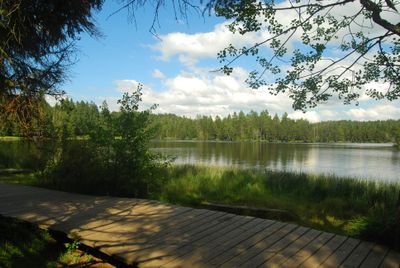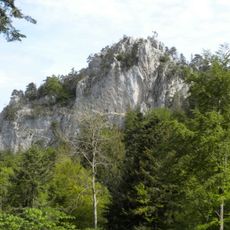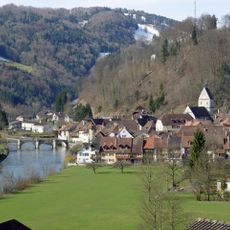
Etang de la Gruère, Nature reserve lake in Saignelégier, Switzerland.
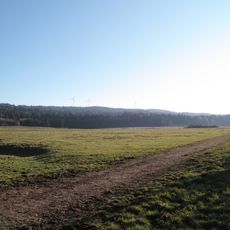
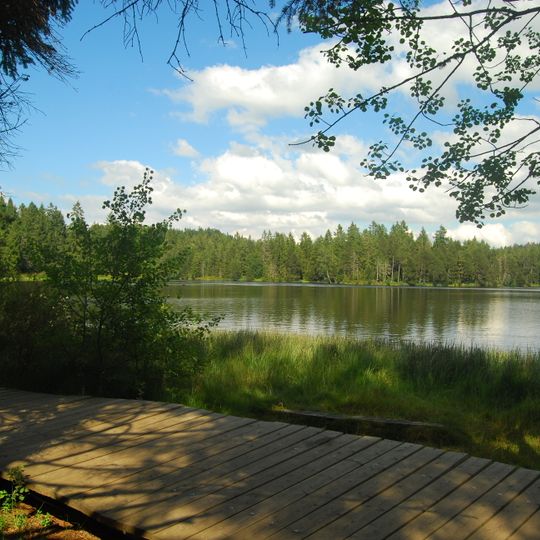
The Etang de la Gruère is an artificial lake nestled within a peat bog landscape near Saignelégier, accessible via walking trails that wind through the wetland. The water body sits among characteristic bog vegetation, bordered by woodland edges and open areas.
The lake was created in the 17th century when local residents built a dam to power a water mill in the region. This engineered water body has endured through the centuries and remains a defining feature of the bog landscape.
The name recalls the "gruaux" (groats) of oats once ground at the mill the pond supplied. Peat was cut here for heating until 1943, when the marsh was drained; since the 1980s, regeneration work has filled the extraction galleries. Around 100,000 to 150,000 people visit yearly to walk, picnic, swim, fish for pike, perch, carp and tench, or skate in winter.
A signposted nature trail circles the lake, and the reserve spans about 100 hectares across Saignelégier, Tramelan, Le Bémont and Montfaucon. The outflow disappears into a sinkhole about 200 m from the lake and resurfaces in the Tramelan basin. Swimming, ice skating and fishing are practised; the fish, including pike, perch, carp and tench, were introduced by humans.
The peat around the lake is 6 to 8 metres thick, not nine, and its lowest layers date back 12,000 to 15,000 years. Pollen preserved in the peat lets researchers reconstruct the region's climate and forest history. The lake's outflow runs only about 200 metres above ground before vanishing into a deep sinkhole and resurfacing in the Tramelan basin.
The community of curious travelers
AroundUs brings together thousands of curated places, local tips, and hidden gems, enriched daily by 95,042 contributors worldwide.