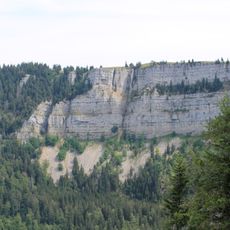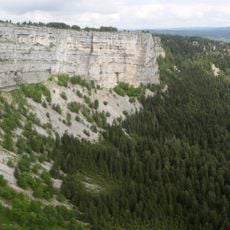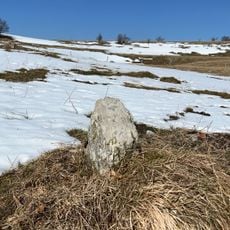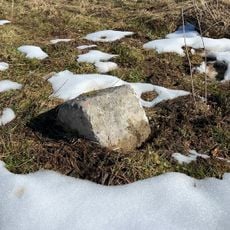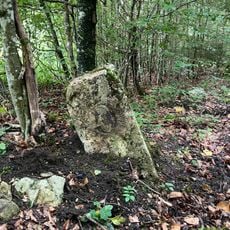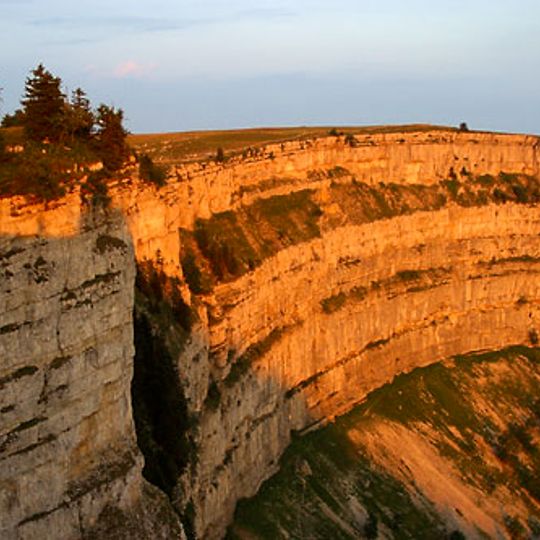
Creux du Van, Natural rocky cirque in Neuchâtel, Switzerland.
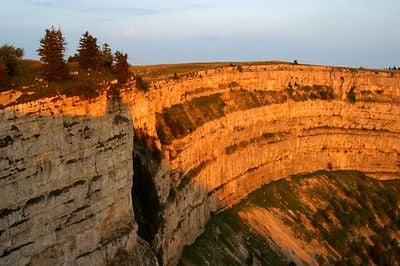
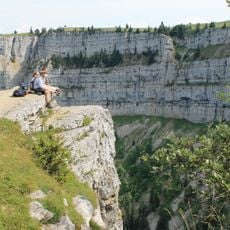
The Creux du Van is a horseshoe-shaped rock cirque about 1,200 m wide and 500 m deep, with limestone walls dropping roughly 160 m vertically over a total length of some four kilometres. The rim is flat and grassy, the floor is covered with moraine and landslide debris where firs and beeches grow, and the Fontaine Froide spring lies in the middle.
The cirque is the eroded end of the Soliat anticline, where dissolution of limestone and later frost shattering opened the rock. During the last glaciation a small glacier occupied the head of the combe, and its ice carried away limestone debris that formed the moraine damming the Areuse valley. In 1870 Louis Guillaume bought part of the floor as a reserve; the Club jurassien added 25 hectares in 1876, and the reserve was enlarged to 15.5 km2 in 1972.
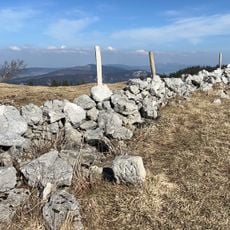
The name comes from Franco-Provençal van, meaning "rock", and until 1884 official Swiss maps wrote Creux du Vent. A dry-stone wall about two kilometres long along the upper rim, built by an international volunteer group, is called the Wall of Friendship. Ibex released in 1965 are tame enough to approach closely.
The cirque is best reached on foot from Noiraigue via the Sentier des quatorze contours, or from La Ferme Robert at the bottom via the Sentier du Single. A car park at the Ferme du Soliat, five minutes from the rim, is reached from Couvet or Saint-Aubin-Sauges. A secured path leads from that car park to the top of the rock wall.
The Fontaine Froide spring rises in the middle of the cirque floor and its water stays at a constant 4 °C all year. Ibex released here in 1965 are unusually tame and can often be approached closely. The last bear in the canton of Neuchâtel was shot in this area in 1770.
The community of curious travelers
AroundUs brings together thousands of curated places, local tips, and hidden gems, enriched daily by 92,632 contributors worldwide.