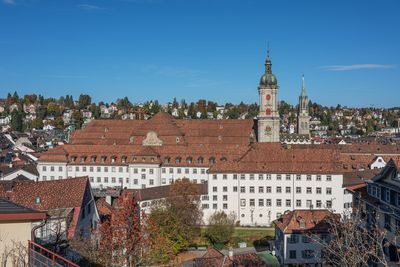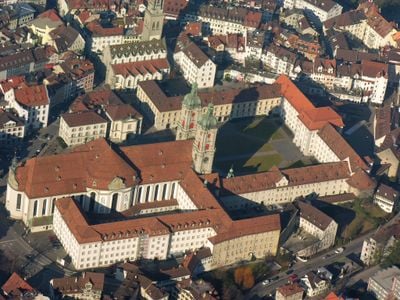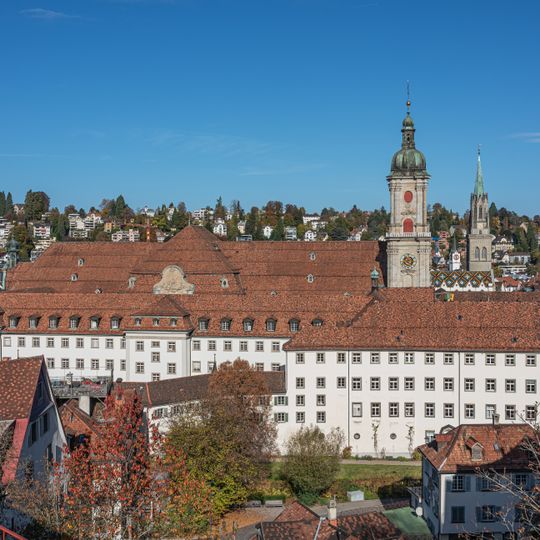
Abbey of Saint Gall, Benedictine abbey and UNESCO World Heritage site in St. Gallen, Switzerland
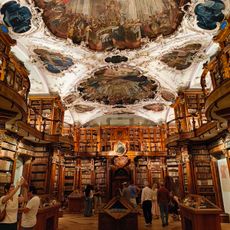
Abbey of Saint Gall is a Benedictine monastery and UNESCO World Heritage site in Switzerland, comprising a large religious complex with a Catholic cathedral and a renowned library. The library holds approximately 160,000 volumes in light-colored rooms featuring delicate Rococo decorations and contains significant medieval manuscripts.
Around 612 the Irish monk Gallus settled by the Steinach and founded a hermitage; his cell became a monastery around 719, when the Thurgau tribune Waltram installed Otmar as its head. In 747 Pippin imposed the Benedictine rule, and in 818 Louis the Pious granted the abbey imperial immediacy. A fire destroyed much of the complex in 937, and in 1207 the abbot was raised to Prince of the Holy Roman Empire.
The library has served for centuries as a destination where scholars from across Europe came to study ancient manuscripts and rare texts. Visitors today can observe how these precious works are housed within the light-colored rooms adorned with delicate decorative details.
Most visitors purchase a combination ticket that grants access to the library, vaulted cellar, and exhibition space, while cathedral entry is free. It helps to allow time for walking through the different areas and exploring the rooms at a relaxed pace.
The Plan of St. Gall, kept in the abbey library, is the only surviving major architectural drawing from between the fall of the Western Roman Empire and the 13th century. It was never built: it shows an ideal monastery layout, drawn on parchment, with a scale of about 1:192.
The community of curious travelers
AroundUs brings together thousands of curated places, local tips, and hidden gems, enriched daily by 93,606 contributors worldwide.