Sihlsee, Reservoir in Schwyz, Switzerland
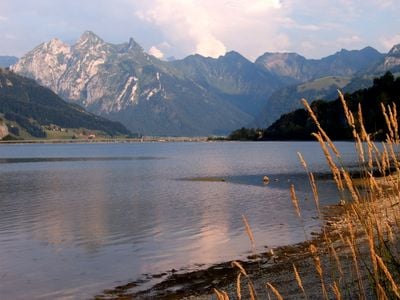
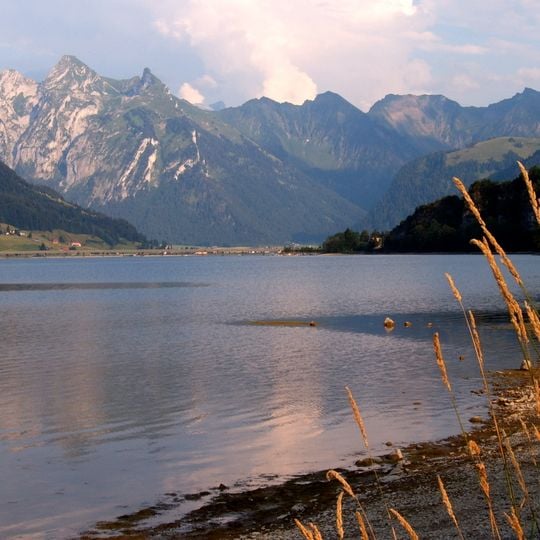
Sihlsee is a reservoir in the upper Sihl valley near Einsiedeln, canton of Schwyz, held back by a concrete dam 33 metres high and 124 metres long. It covers 10.72 square kilometres, making it Switzerland's largest reservoir by surface area, with a maximum length of 8.5 kilometres, a width of 2.5 kilometres and a depth of 23 metres. Its still, blue-grey water reaches a shoreline bordered by gravel and dry grasses.
Construction of the Sihlsee began in 1932, with roads, two viaducts, the dam and two closing dikes built before impounding started on 30 April 1937. Around 500 people had to leave the area and 1,300 more were affected; 93 houses, 124 barns and 55 farms were flooded. The lake feeds the Etzelwerk in Altendorf, which supplies traction current to the SBB network.
The lake takes its name from the Sihl, the river that feeds it. Since 1937 the passenger boat Angelika has carried up to 40 seated passengers on the water. The dammed lake also gave rise to a compensation custom: when the water level drops too low in summer, the SBB pay the district of Einsiedeln a daily "Mückengeld" (mosquito money), because mosquitoes lay eggs in the exposed mud.
The dam wall stands at the northern end near Willerzell, and roads built for the reservoir run around the shore, crossed by two viaducts. The water level is kept at or above 887.34 m between 1 June and 31 October, so exposed mudflats appear mainly outside that period. A passenger boat, the Angelika, with 40 seats, also runs on the lake.
The reservoir was considered the largest artificial lake in Switzerland when completed and fundamentally changed the upper Sihl valley. Today, old photographs still show the villages and fields that were submerged at the time.
The community of curious travelers
AroundUs brings together thousands of curated places, local tips, and hidden gems, enriched daily by 92,681 contributors worldwide.