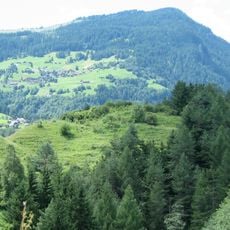
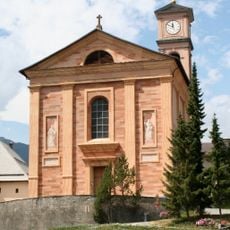
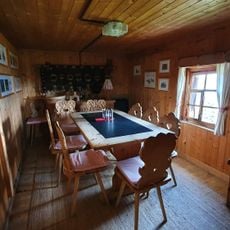
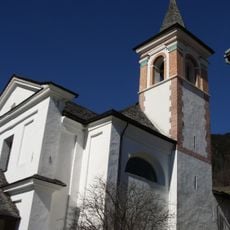
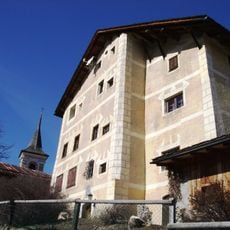
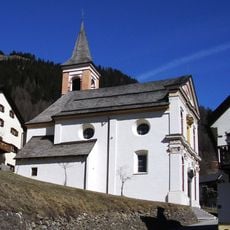
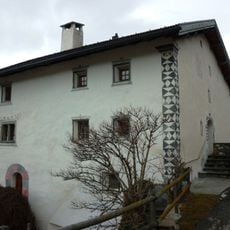
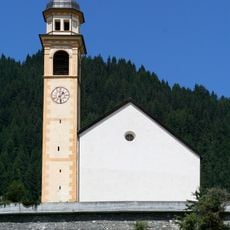
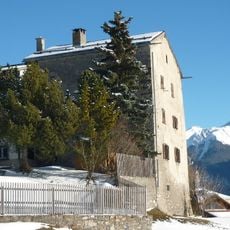
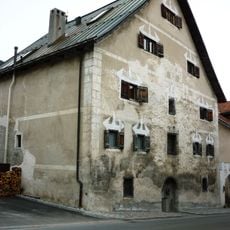
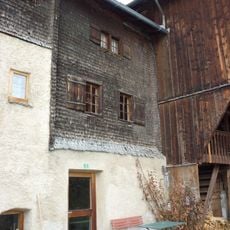
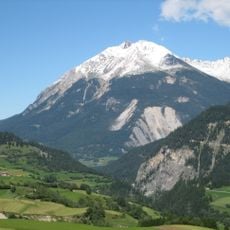
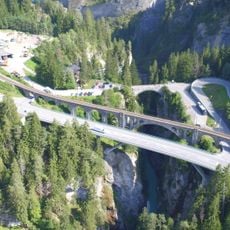
Schinschlucht, Canyon in Grisons, Switzerland.
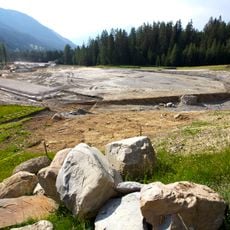
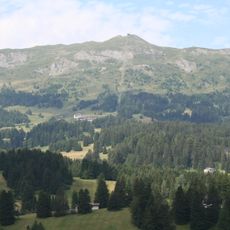
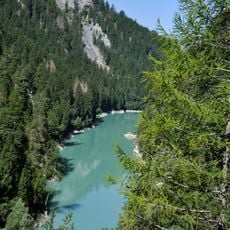
Schinschlucht is a roughly nine-kilometre gorge in the Swiss canton of Grisons through which the Albula flows northwest from Tiefencastel to Sils im Domleschg. Its name comes from the Schyn, an almost vertical rock face over 20 metres wide and about 800 metres high on the north side. The Albula drops from 830 to 670 metres above sea level along this stretch, and the Solis reservoir lies in the upper section.
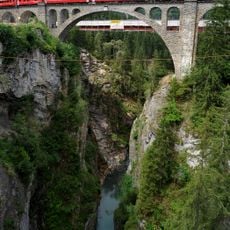
The Schinschlucht links two routes already marked on the late Roman Tabula Peutingeriana: the upper road via Lenzerheide and the lower road through Domleschg. A 1330 Vazer Urbar mentions a crossing at 'hof bi dien bruggen' between Obervaz and Solis, just below today's Solis bridges. The Rhaetian Railway crosses the gorge on the Solis Viaduct and passes through 13 tunnels; since 2008 the route is part of the UNESCO World Heritage.
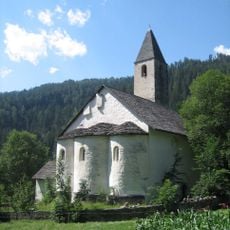
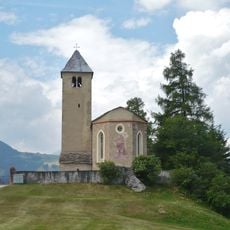
The gorge's name comes from the Schyn, a nearly vertical rock wall about 800 m high and over 20 m wide on the north side, crossed by the old path known as the Alten Schyn some 500 m above the valley floor. Above the Albula stand the ruins of Burg Campell, the site of Nivagl and the Carolingian monastery church of Sankt Peter von Mistail, all part of the UNESCO World Heritage region.
The Rhaetian Railway is the easiest way to reach and explore the area, with several stations along the gorge that allow for short walks between stops. The hiking paths along the river are easy to follow and offer beautiful views from many different angles.
The name Schinschlucht comes from the Schyn, a nearly vertical rock wall over 20 m wide and about 800 m high on the north side. The old path Alte Schyn crosses this wall some 500 m above the valley floor; it is now a secured hiking route.
The community of curious travelers
AroundUs brings together thousands of curated places, local tips, and hidden gems, enriched daily by 93,965 contributors worldwide.