Oppidum Mont Vully, Celtic oppidum on Mont Vully in the canton of Fribourg, Switzerland
Oppidum Mont Vully is a Celtic fortified settlement spanning across the mountaintop, surrounded by defensive walls with gateways that controlled entry to the site. The structures were built from stone blocks and wooden posts arranged to create an effective defensive system.
The Helvetii built the oppidum on Mont Vully and used it from the second half of the 2nd century BC to the first half of the 1st century BC, roughly a hundred years. The burnt site was probably abandoned by its inhabitants in 58 BC during their attempted migration, at the same time as other settlements in the region. After Caesar forced the Helvetii back following the Battle of Bibracte, a new oppidum was built near Avenches instead.
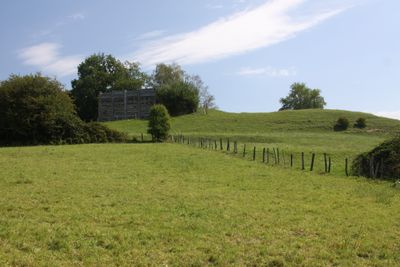
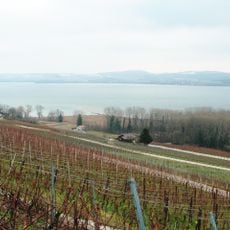
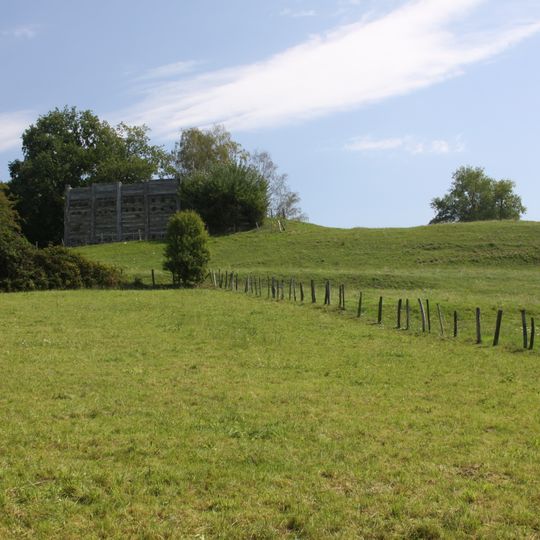
The site's name comes from Bas-Vully below Mont Vully, called Wistenlacherberg in German. Visitors can see a full-size reconstruction of the southern corner of the Zangentor, the gate with two inward-projecting wings. Excavation has uncovered the foundations of two towers, and beside one a trackway was cut into the molasse rock.
The site sits on a mountaintop and is accessible by foot or mountain bike along established trails that wind through the area. A reconstructed section of the southern gateway allows visitors to understand how the fortification originally looked.
The rampart walls were built using a specialized construction method that combined stone and wood in a way that allowed them to support each other structurally. This building approach made the walls more resistant to damage than solid stone construction alone.
The community of curious travelers
AroundUs brings together thousands of curated places, local tips, and hidden gems, enriched daily by 94,502 contributors worldwide.