Lorraine Bridge, Road bridge in Breitenrain-Lorraine, Switzerland.
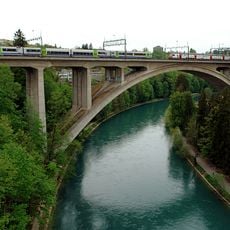
Lorraine Bridge is a 178 m long, 18 m wide concrete arch bridge over the Aare in Bern, with a roadway 37.5 m above the water. Its elliptical main arch spans 82 m, built from unreinforced concrete boxes hoisted into place by cable crane. Thin longitudinal and transverse walls carry the deck, and a walkable service duct runs between arch crown and roadway. Two Paul Kunz limestone sculptures stand at the southern bridgehead.
Built between 1928 and 1930, the bridge replaced an earlier iron crossing at this location. This construction period shaped the design that remains visible in its structure today.
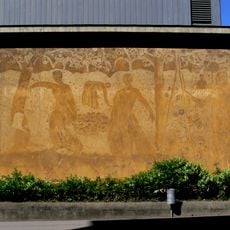
The bridge's name comes from the Lorraine quarter it links to the city centre. Two shell-limestone sculptures by artist Paul Kunz stand at the southern bridgehead, and nesting boxes for alpine swifts were installed on the structure.
The bridge is fully accessible for vehicles and pedestrians and handles daily commuter traffic. Heavy congestion can occur during peak hours, so timing your crossing is helpful.
At the end of the 1940s, excavation for a new greenhouse in the Botanical Garden directly below the bridge undermined the pier foundations. Four piers buckled and a fifth was left leaning, causing a 20-metre-long, 7-metre-wide collapse of the road and pavement.
The community of curious travelers
AroundUs brings together thousands of curated places, local tips, and hidden gems, enriched daily by 92,716 contributors worldwide.